
An enclosure can meet its drawing and still arrive with a scratched front panel, a bent mounting flange, or mixed hardware. For OEM purchasing and quality teams, packaging belongs in the supplied-part specification because receiving problems can delay installation and obscure whether damage occurred before or during transport.
Specify aluminum enclosure packaging around the shipped configuration, vulnerable features, surface acceptance criteria, transport arrangement, and receiving checks. Review a representative packed sample before repeat supply, and document the approved packing method alongside the enclosure revision. The following checks help turn a general request for protective packaging into an actionable requirement.
Which Enclosure Features Need Protection First?
Start with the features whose damage would affect appearance, fit, or use. A flat cosmetic panel, a projecting rack ear, and an exposed sealing land need different attention even when they belong to the same enclosure.
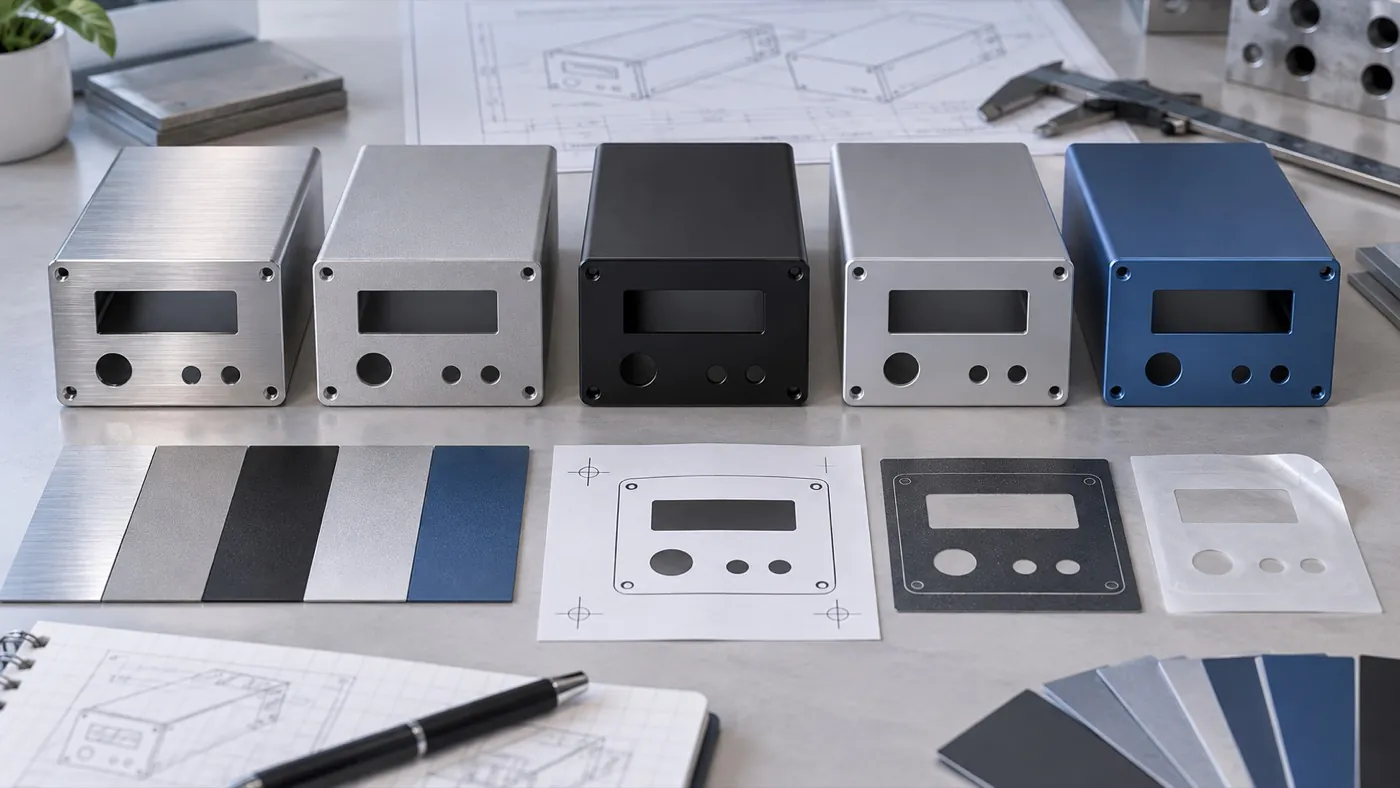
Concept illustration: identify the surfaces and markings that receiving inspection must assess.
- Mark cosmetic zones. Identify the front panel, visible sides, and printed areas on the drawing. Agree on appearance criteria rather than treating every internal and external surface as equally critical.
- Identify projecting features. List fins, mounting flanges, handles, and rack ears that could contact adjacent parts or the package wall. Ask how those features will be supported without becoming unintended load-bearing points.
- Protect functional interfaces. Highlight threaded holes, panel locating features, sealing surfaces, and connector openings that need inspection after unpacking.
- Define the supplied condition. Distinguish an empty body, a body with separate panels, and separately supplied hardware. PUMAYCASE supplies enclosures and customized parts; it does not install electronics or provide finished-product assembly.
Statement: Cosmetic surfaces and functional interfaces should both be identified in packaging requirements.
Answer: True
Explanation: A part may have acceptable overall dimensions while damage to a visible panel or functional interface makes it unsuitable for the customer's product.
What Information Should a Packaging Specification Include?
A useful specification identifies what is packed, how configurations are separated, and what evidence the buyer will review. It should be specific enough for repeat orders without prescribing an untested package solely from photographs.
| Requirement | Information to provide | Decision it supports |
|---|---|---|
| Part definition | Part numbers, drawing revisions, finish, and supplied accessories | Correct contents and protection needs |
| Shipment configuration | Quantity per version and preferred grouping | Separation of similar-looking variants |
| Appearance acceptance | Visible surfaces and approved comparison method | Consistent receiving decisions |
| Handling conditions | Destination, transport arrangement, and receiving constraints | Package and shipment review |
| Verification | Sample packing review and any required tests | Evidence needed before release |
- Separate requirements from proposals. The buyer can define vulnerable features and acceptance criteria while the supplier proposes a packing arrangement for review.
- Name approval owners. Purchasing, quality, and the team installing the electronics may have different concerns. Resolve them before approving the package.
- Include unpacking requirements. State whether parts must be issued individually, in matched sets, or by production batch. Packaging that suits shipment may need adjustment for the receiving workflow.
Statement: A request for “export packaging” fully defines how customized enclosure parts should be packed.
Answer: False
Explanation: It leaves the part configuration, protection, grouping, labeling, and acceptance requirements open to interpretation.
How Should Bodies, Panels, and Hardware Be Separated?
Review individual protection and restraint together. Carrier guidance recommends separately wrapping multiple items and positioning them away from each other and the outer container; the specific arrangement still needs to suit the actual parts and shipping service. [1]
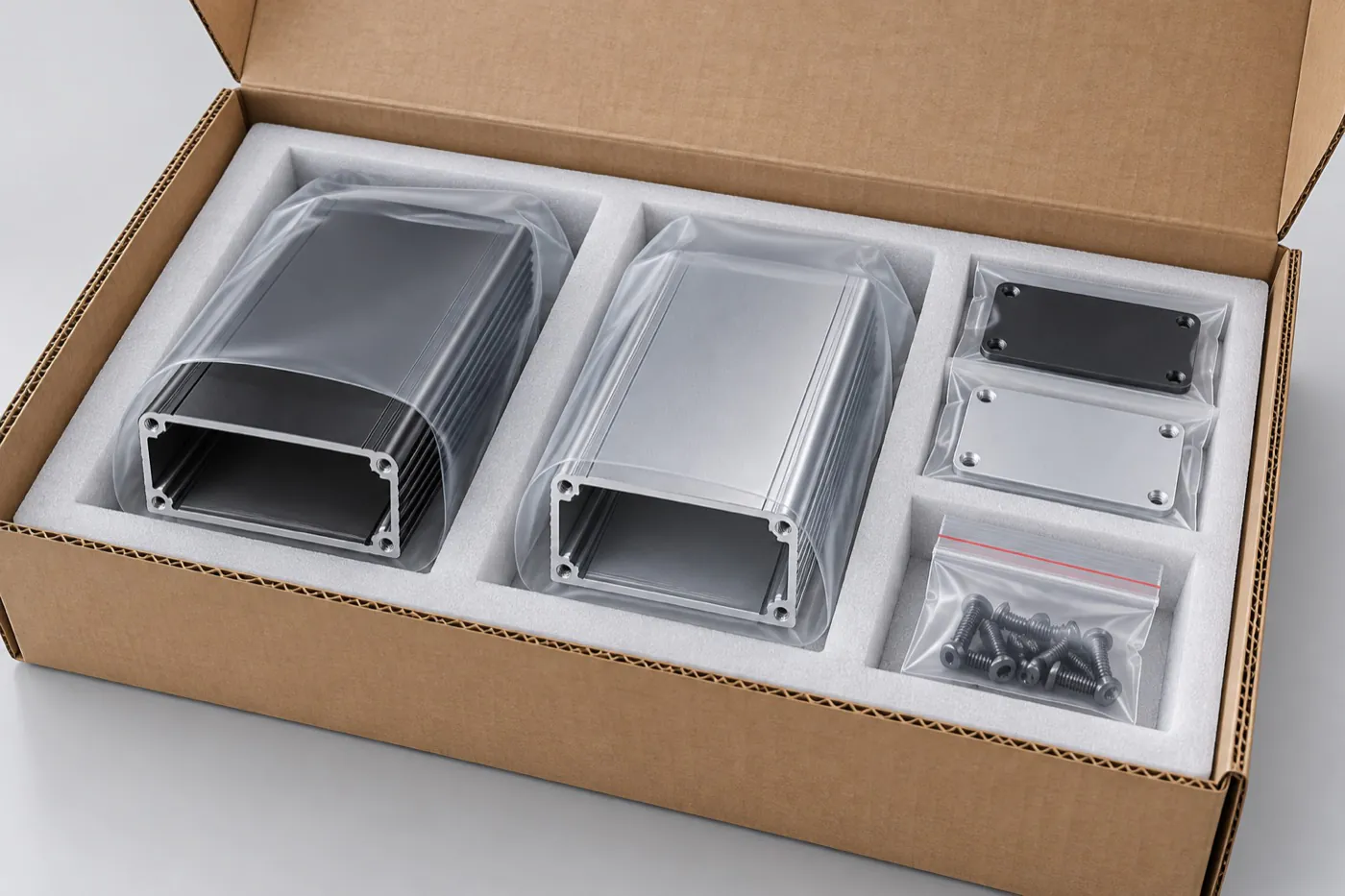
Concept packaging layout, not a validated shipping design or a customer shipment.
- Separate loose components. Specify whether end panels, brackets, and hardware are individually protected or supplied in identified sets. Avoid leaving metal fasteners loose beside cosmetic surfaces.
- Review contact materials. Ask for a sample of the sleeve, separator, or insert against the actual finish. Check for visible marking, residue, or unacceptable contact pressure after the agreed review conditions.
- Check the complete packed arrangement. Protection should address movement within the package as well as direct contact between parts. A sleeve alone does not establish impact protection.
- Keep removal practical. Confirm that the receiving team can remove parts without pulling on fins, thin flanges, or other vulnerable features.
Statement: Individually sleeving enclosure parts is sufficient evidence that the complete package will withstand transport.
Answer: False
Explanation: Surface separation is only one requirement. Restraint, cushioning, outer packaging, and the intended handling conditions also need review.
How Should Transport and Receiving Conditions Affect the Plan?
Share the intended shipment arrangement before approving packaging. A parcel shipment and a grouped pallet shipment may involve different handling and receiving constraints; neither transport label establishes that a proposed package is suitable.
| Condition to review | Question for the responsible parties |
|---|---|
| Individual parcels | Is the complete package appropriate for the chosen service? |
| Grouped cartons or pallets | How will cartons be secured and handled as a unit? |
| Storage before installation | What storage conditions and unpacking sequence are expected? |
| Multiple part variants | Can the receiver identify each version without opening every protective layer? |
- Confirm the transport scope. Identify who selects the service, prepares shipment documents, and coordinates delivery. Do not infer these responsibilities from an enclosure quotation alone.
- Describe the receiving facility. State relevant unloading, appointment, carton-size, or handling constraints so they can be considered before dispatch.
- Review exposure concerns explicitly. If moisture or extended storage is a project concern, request a suitable protection proposal and supporting verification rather than assuming a general plastic wrap solves it.
- Separate timing milestones. Manufacturing completion, dispatch, and destination arrival are different events. Use the companion enclosure lead-time planning guide when coordinating those dates.
Statement: The intended receiving and transport conditions should be considered before packaging approval.
Answer: True
Explanation: Those conditions help define the arrangement that needs review and the information required for shipment coordination.
What Should Be Checked When the Enclosures Arrive?
Inspect the shipment against agreed requirements before releasing parts for installation. Record the outer package condition and the affected part details so a later investigation can distinguish an observed issue from an assumed cause.
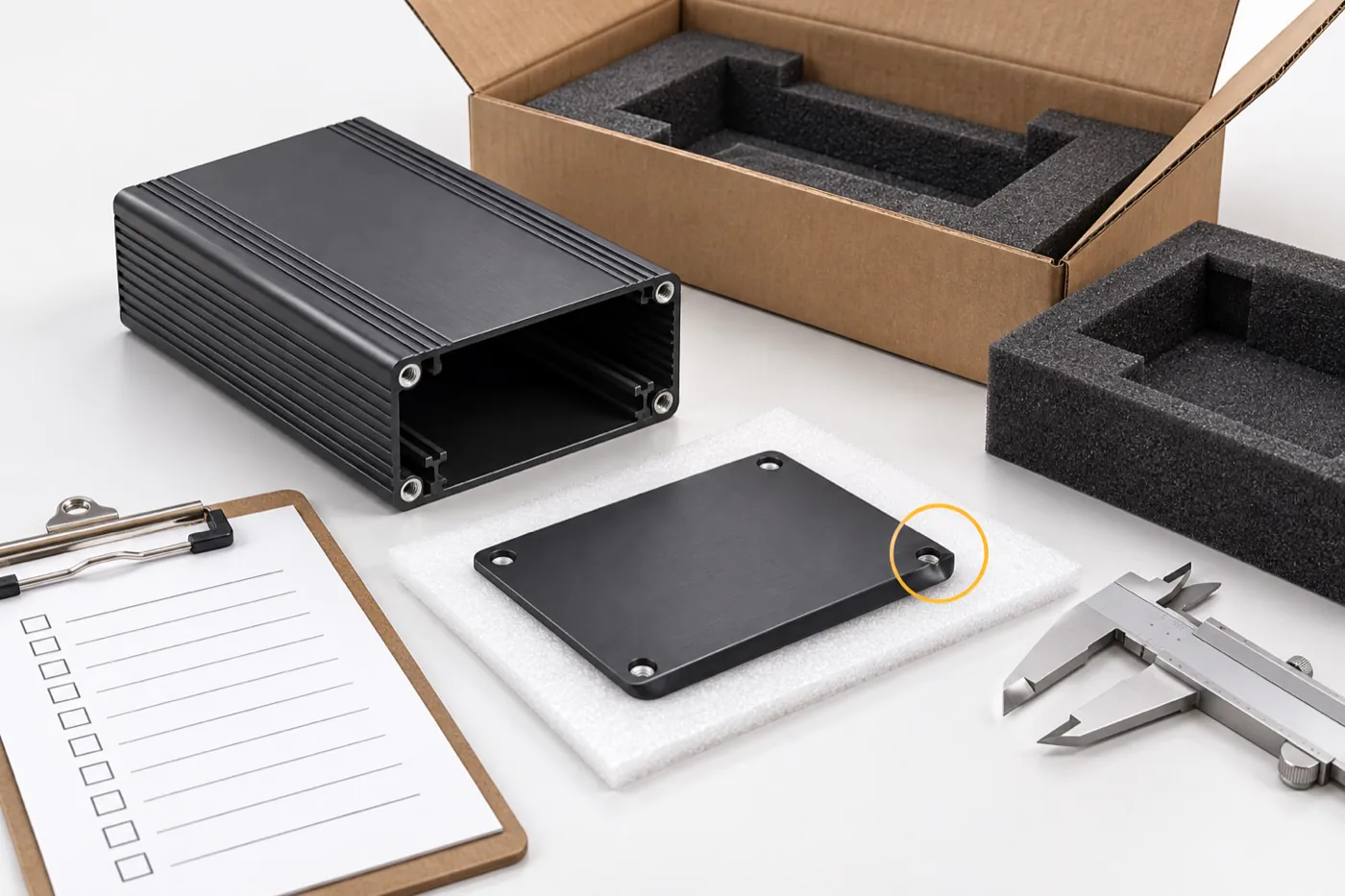
Illustrative receiving check; the highlighted panel corner is an example of a feature to examine.
- Record package identity and condition. Retain carton labels, packing-list references, and photographs of visible damage before disturbing the contents where practical.
- Check contents by configuration. Confirm quantities, part numbers, revisions, panel variants, and separately supplied hardware against the order.
- Inspect relevant surfaces and features. Look for scratches, dents, distorted flanges, damaged threads, and affected openings using the agreed inspection method and acceptance criteria.
- Separate suspect parts. Keep affected items and useful packaging evidence identifiable while the responsible teams review the issue. Avoid assigning blame solely from the first photograph.
Statement: An undamaged outer carton proves that every enclosed part meets its acceptance requirements.
Answer: False
Explanation: Part identity, appearance, and relevant functional features still require the agreed receiving checks.
How Should a Packing Sample Be Approved?
Approve the combination of actual enclosure configuration and proposed packaging. A photo can explain the layout, but any required handling or transport performance needs an agreed verification method and acceptance criteria.
| Review evidence | What to confirm before approval |
|---|---|
| Representative parts | Geometry, finish, hardware, and quantity match the intended pack |
| Packing layout | Contact points, separators, protection, and identification are visible |
| Unpacking review | Parts can be removed and identified without avoidable handling damage |
| Required verification | Method, responsible party, tested configuration, and acceptance criteria are documented |
- Use the intended configuration. A different body length, heavier part, or revised panel can change the package review. Record any differences between the sample and the production shipment.
- Define evidence before testing. Agree on which inspections or tests are needed and who performs them. This article does not establish that any particular package has passed a standard.
- Close review findings. Record required changes and whether they need another sample review. Approval of the enclosure dimensions should not silently become approval of the packaging.
What Should Be Carried Forward Into Repeat Orders?
Retain the approved packing requirements with the enclosure's controlled production documents. Repeat procurement is easier when each order identifies the approved configuration and any changes that could affect protection or receiving.
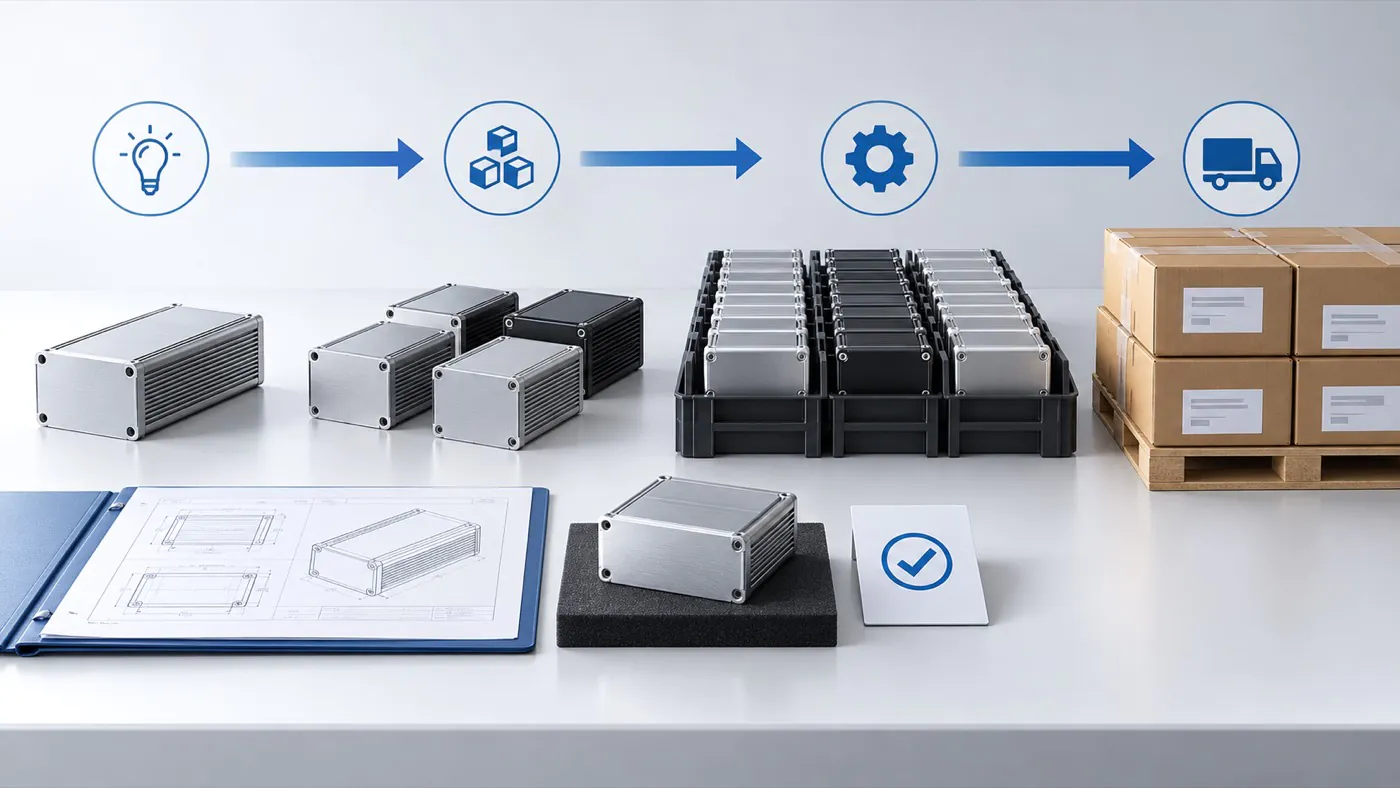
Concept supply sequence; actual packing and order requirements are confirmed for each project.
- Reference the packing revision. Retain the layout, materials specification where agreed, grouping, labels, and approval evidence.
- Review changes before release. Reassess different lengths, finishes, accessory quantities, or transport arrangements instead of assuming the previous package remains appropriate.
- Use receiving feedback. Describe the location and pattern of damage or handling difficulties so the next change addresses a defined issue.
PUMAYCASE supports customized packaging as part of enclosure supply. The agreed scope should identify the parts and protection requirements without implying electronics assembly or guaranteed damage-free delivery.
Conclusion
Specify aluminum enclosure packaging by identifying vulnerable features, defining the supplied configuration, reviewing separation and protection, and agreeing on sample approval and receiving checks. Preserve those requirements for repeat orders and reassess meaningful changes. Share your enclosure drawings, finish requirements, quantities, destination, and receiving constraints with PUMAYCASE to review the packaging scope alongside the enclosure order.
References
- FedEx — General Packaging Guidelines. General carrier guidance, not evidence of a PUMAYCASE carrier partnership or tested package.