

An enclosure schedule can slip when it assumes that drawings, finishes, and samples are already approved. OEM buyers need to identify the supplied configuration, outstanding decisions, and the milestone represented by each date.
Plan custom aluminum enclosure lead times around requirement review, sample approval, production, and transport. Evaluate whether an existing profile fits, agree on release conditions, and update the plan when the configuration changes. A preliminary estimate is not a guaranteed arrival date.
What Must Be Defined Before a Delivery Estimate Is Useful?
A delivery estimate needs a defined part configuration, order scope, and starting condition. A date based on an unreviewed drawing is different from a date based on an approved sample and an unchanged repeat order.
| Scheduling input | What the buyer should provide | What it helps resolve |
|---|---|---|
| Mechanical definition | Current drawings, PCB envelope, connector locations, and mounting requirements | Whether the proposed enclosure can be adapted |
| Order scope | Part numbers, quantities by version, and required accessories | Which items must be available together |
| Finish and marking | Finish requirements, artwork, and acceptance references | Which approvals remain outstanding |
| Requested milestone | Sample dispatch, production completion, or destination arrival | What the requested date means |
- Identify the drawing revision. Link the request to controlled files and list unresolved features to distinguish preliminary review from production release.
- Separate variants. Different openings, lengths, colors, or artwork can create separate configurations. State quantities for each version.
- Name the delivery milestone. Ask whether the estimate covers completed enclosure parts, dispatch, or arrival. Include the destination when requesting transport information.
- Expose customer dependencies. Tell the supplier when PCB dimensions, connectors, and mounting details will become final.
Statement: A useful enclosure delivery estimate identifies both the configuration and the milestone being estimated.
Answer: True
Explanation: The supplier and buyer need a shared definition of the work and the event represented by the date.
When Can an Existing Profile Help the Project Schedule?
An existing profile can reduce the need to develop a new extrusion when its cross-section and structural features suit the product. It still requires a fit review, confirmation of material availability, and an assessment of the proposed machining and finish.
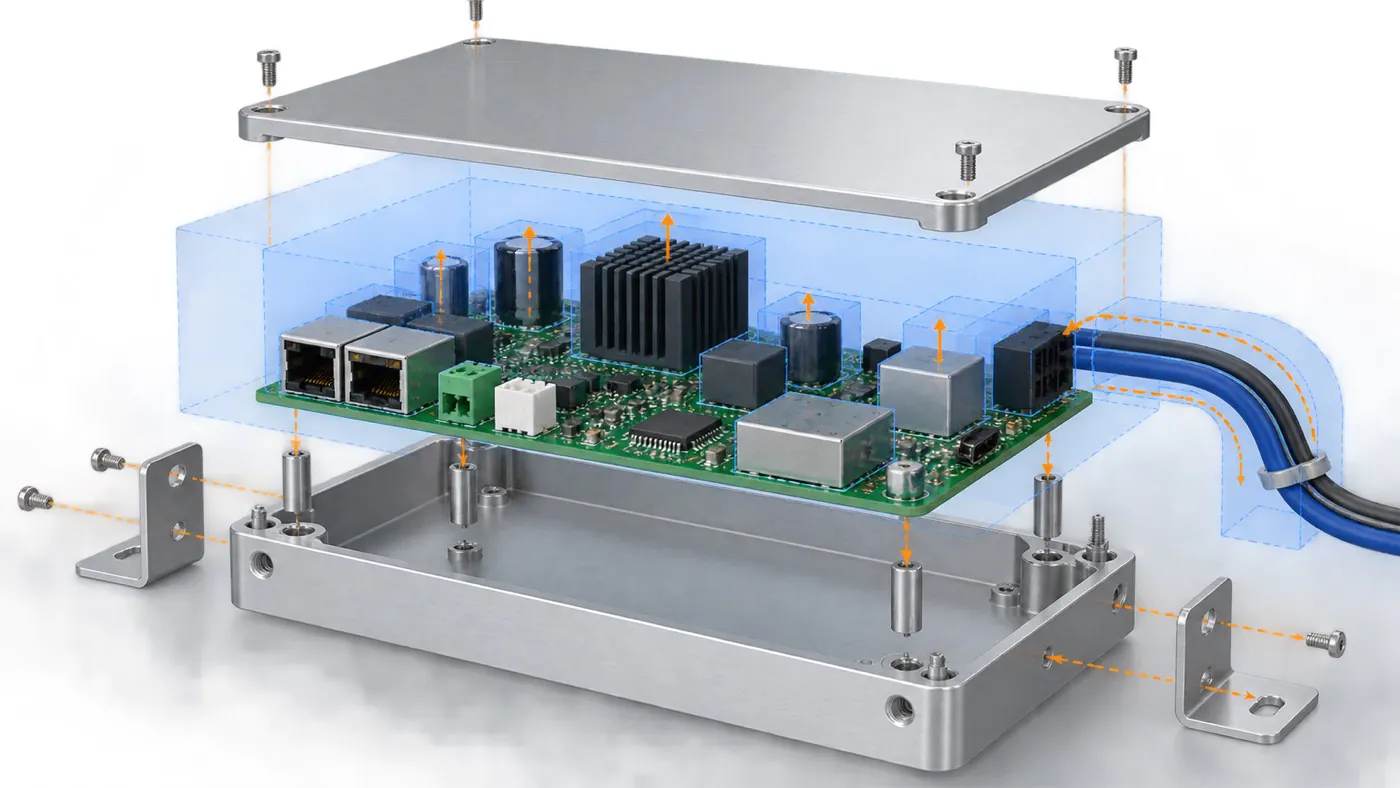
Conceptual clearance review: compare the complete product envelope with the selected enclosure before scheduling customization.
- Check the complete PCB envelope. Include component heights, connector bodies, mounting features, and the access needed for the customer's installation process. Board length and width alone do not establish fit.
- Distinguish length from cross-section. Cutting a suitable profile to an appropriate length does not make its width, height, wall features, or PCB slots freely adjustable. A cross-section mismatch may require a different profile or manufacturing approach.
- Review the required openings. Connector cutouts, display windows, and fastening details must be assessed against the selected structure. Their feasibility cannot be inferred from a similar-looking enclosure photograph.
- Confirm availability separately. A standard design does not establish stock availability. Confirm the required material and configuration before using availability in the schedule.
PUMAYCASE evaluates existing profiles and enclosure options before considering dedicated tooling or other custom manufacturing routes. That approach is relevant when an available design meets the requirements; it is not a universal promise of lower cost or shorter delivery.
Statement: Choosing an existing enclosure profile guarantees immediate dispatch.
Answer: False
Explanation: Material availability, configuration, machining, finish, and approval requirements still need to be confirmed for the order.
Which Approval Gates Should Appear in the Schedule?
The schedule should show the decisions that permit work to proceed, including design release, sample acceptance, and production authorization. Each gate needs an owner and a clear definition of what is approved.
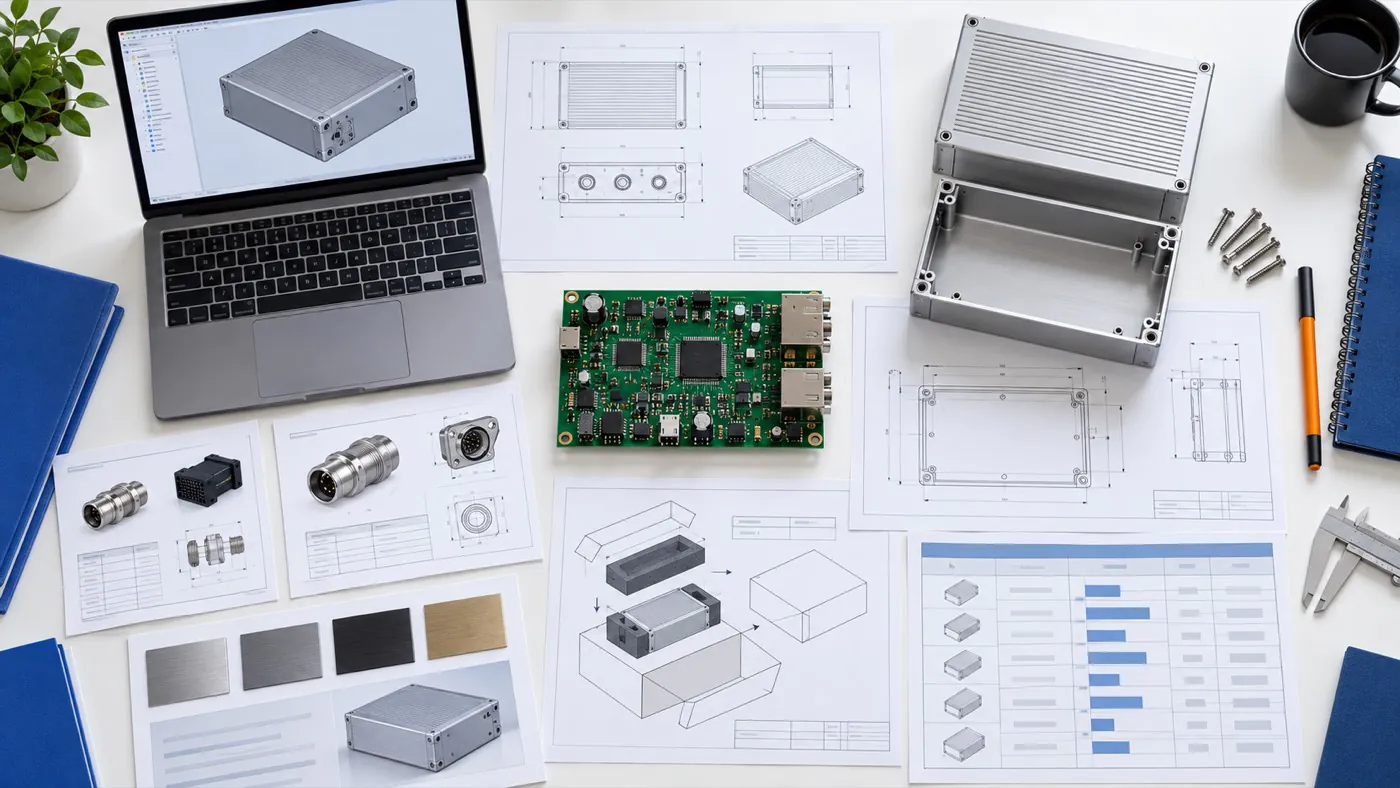
Illustrative review package; drawings and approval records must identify the configuration being released.
| Approval gate | Evidence to review | Release decision |
|---|---|---|
| Design release | Controlled drawings and agreed open questions | Configuration ready for the agreed next stage |
| Sample review | Fit checks, finish appearance, and marking review | Accept, revise, or request further verification |
| Production release | Approved configuration and documented changes | Authorize the specified quantity and version |
| Shipment readiness | Agreed inspection and packing records | Resolve exceptions before dispatch |
- Assign a reviewer. Identify who approves mechanical details and appearance, and allow time for their review.
- Define acceptance before sampling. Record the critical dimensions, connector fit, mounting conditions, and visible surfaces that matter to the product. Avoid relying on a general request for good quality.
- Separate enclosure checks from system checks. The customer should plan installation and any required complete-product verification. PUMAYCASE does not provide PCB installation, wiring, or finished electronics assembly.
- Record conditional approvals. If a sample is accepted with changes, identify those changes explicitly and agree whether another sample or other evidence is needed before production.
Statement: Sample acceptance automatically approves every later drawing change.
Answer: False
Explanation: Approval applies to the reviewed configuration. Later changes need their own impact assessment and release decision.
How Do Finish and Marking Requirements Affect Readiness?
Finish and marking are part of the enclosure specification, so their requirements should be reviewed before production is released. Unresolved color, artwork, or appearance criteria can leave a mechanically suitable part short of approval.
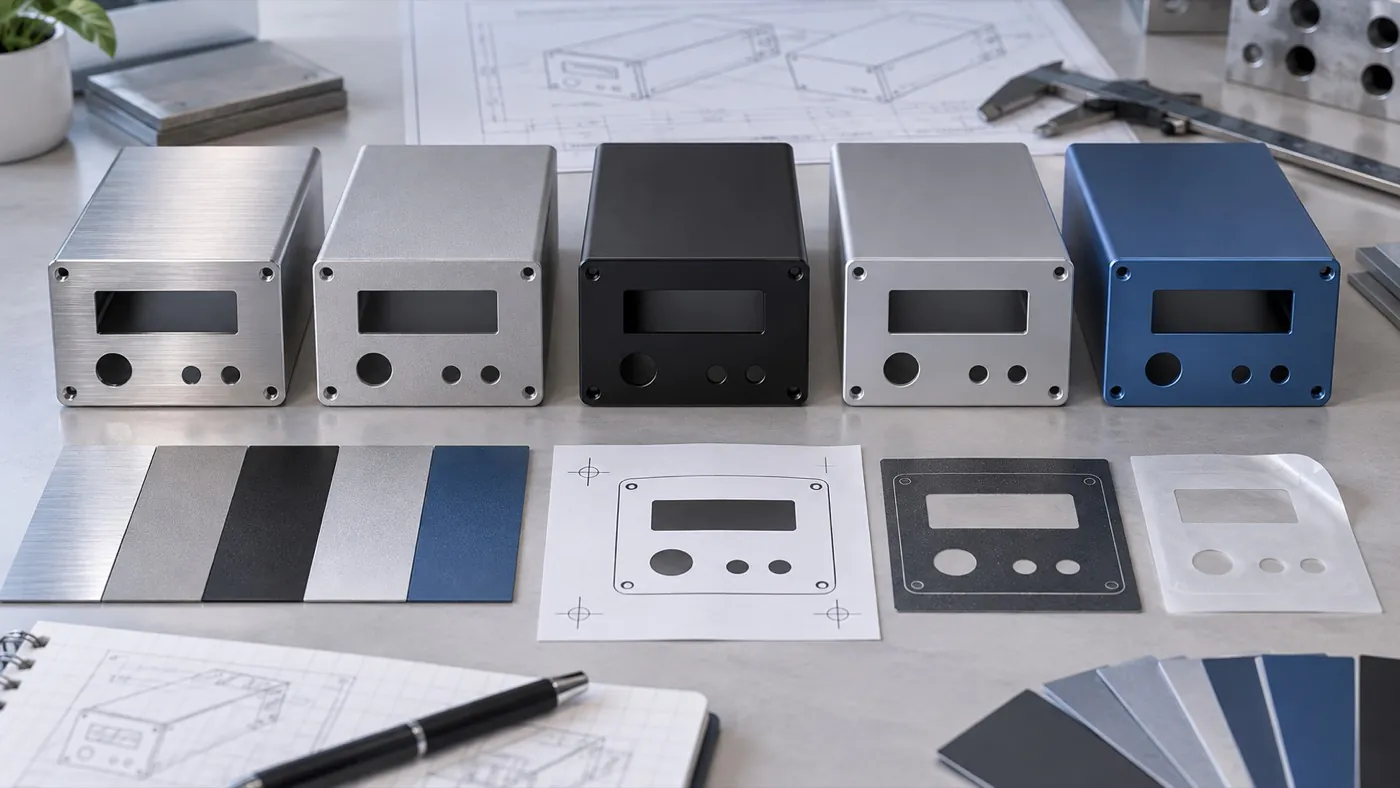
Illustrative finish comparison; approved physical references and artwork define the actual order requirements.
- Specify the finish on each relevant part. State whether the body and panels share the same requirements. Identify the surfaces that are visible during normal use and any functional interfaces that need separate review.
- Provide controlled artwork. Include wording, orientation, placement, and revision. Check connector labels against the electronic design before approval.
- Agree on appearance evaluation. Define how color and surface appearance will be compared, using an agreed reference where appropriate. A screen image alone may be insufficient to resolve an acceptance dispute.
- Confirm the process combination. Brushing, blasting, anodizing, powder coating, screen printing, and laser marking have different uses. Suitability and sequencing should be confirmed for the selected configuration.
Statement: Finish and artwork approvals belong in the enclosure release plan.
Answer: True
Explanation: They define the supplied part and its acceptance criteria, rather than being optional details to resolve after production.
How Should Packing and Transport Be Separated From Manufacturing?
Treat production completion, packing, dispatch, and delivery as distinct events. A manufacturing estimate alone does not establish when a shipment will reach the customer's receiving location.
| Milestone | Meaning to confirm |
|---|---|
| Production completion | Specified enclosure parts have completed the agreed manufacturing work |
| Packing readiness | Agreed protection, grouping, and labels are ready |
| Dispatch | The shipment is handed to the agreed transport arrangement |
| Destination arrival | The shipment reaches the specified receiving location |
- Describe the receiving requirements. Provide the destination, receiving contact, labeling needs, and any delivery appointment requirements. Confirm whether all versions must arrive together.
- Review surface protection. Identify cosmetic surfaces and features that need protection from contact during handling. Agree on packaging appropriate to the part geometry and shipping arrangement.
- Clarify the shipping scope. Ask which transport arrangements and documents are included in the quotation and which party coordinates the remaining steps. Do not infer them from a general statement about logistics support.
- Use the correct event for planning. If the supplier quotes dispatch, add a separately confirmed transport plan before using that date in a product launch schedule. Track revised information rather than silently treating an estimate as unchanged.
Statement: A confirmed production-completion date is the same as a confirmed destination-arrival date.
Answer: False
Explanation: Packing, dispatch, and transport are separate steps whose scope and timing must also be confirmed.
What Should Buyers Recheck When a Design or Order Changes?
Recheck the affected specification, work status, and approvals whenever the order changes. The impact depends on what changed and which activities have already been released or completed.
| Change | Information to send | Question to resolve |
|---|---|---|
| Connector or mounting position | Revised drawing and change identification | Which existing work or inspections are affected? |
| Finish or marking | New specification or artwork revision | Is another approval reference required? |
| Quantity or product mix | Updated quantities by part number | Does the agreed production plan remain applicable? |
| Delivery destination or packing | Revised receiving and packaging requirements | Which dispatch arrangements need updating? |
- Issue a clear change notice. Identify the replaced revision and changed features explicitly.
- Ask about work already started. Confirm which parts or processes are affected before assuming that the original schedule remains valid.
- Agree on the next release. Document whether further review, sample work, or acceptance evidence is required. Record the revised milestone once the impact has been assessed.
What Information Makes Repeat Orders Easier to Coordinate?
A repeat order is easier to review when it points to an approved configuration and clearly states what has changed. “Same as last time” should be supported by part numbers, revisions, and the relevant acceptance records.
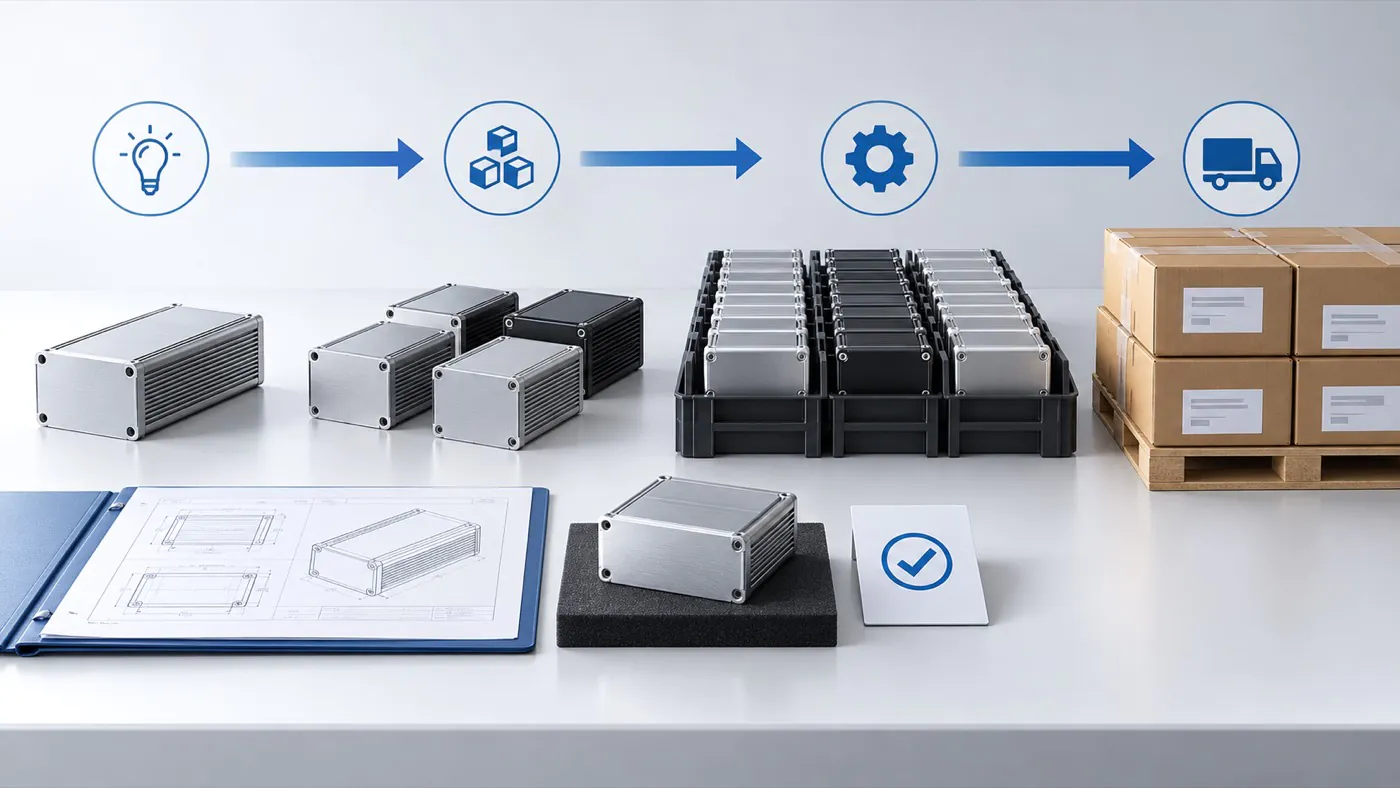
Conceptual supply stages, not a record of a customer order or a promised production schedule.
- Reference the approved part. Include the drawing revision, finish specification, artwork revision, and any approved deviations that remain applicable.
- State the current order requirement. Provide quantities by variant and the requested delivery milestone. Confirm availability and timing for the new order rather than carrying forward an old quotation unchanged.
- Carry forward useful acceptance evidence. Retain sample approval notes, relevant inspection criteria, and packaging requirements so the next order can be reviewed against the same expectations.
- Flag product changes early. New connectors, PCB revisions, or labels may require another configuration review.
PUMAYCASE supports enclosure supply from sample development through small-batch production and repeat procurement. Quantities, manufacturing requirements, and schedules are confirmed for each project and order.
Conclusion
Plan custom aluminum enclosure lead times around a defined configuration, clear approval gates, and separately confirmed manufacturing and transport milestones. Evaluate existing profiles where they fit, release drawings and artwork consistently, and reassess the plan when requirements change. Share your current drawings, quantities by version, finish requirements, destination, and requested milestone with PUMAYCASE to review an appropriate enclosure and supply plan.