Remote Pump Controller Aluminum Enclosure: How Can Engineers Keep IP67 Protection and Easy Maintenance?
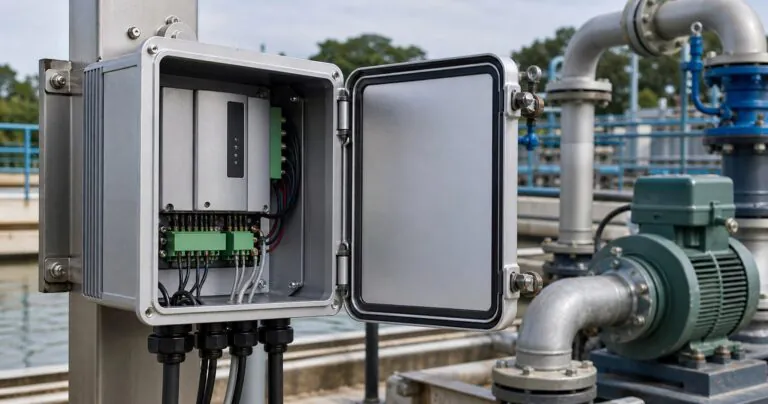
Remote pump controllers often fail outdoors. Water, heat, and rushed service work make the risk worse. A remote pump controller aluminum enclosure can reduce that risk.
A remote pump controller aluminum enclosure protects sensing, control, and communication electronics while keeping cable access, heat transfer, and field maintenance practical for outdoor pump systems.
I see more teams adding remote monitoring to pumps, irrigation systems, wastewater stations, and small industrial water systems. This is good for maintenance, but it also puts more electronics outside. The enclosure is no longer a simple box. It becomes part of the reliability plan.
How Should Engineers Plan IP67 Sealing for Field Maintenance?
Pump controllers need service access. Each opened cover can disturb the gasket and cable glands. Engineers need a sealing plan that survives real maintenance work.
Engineers should plan IP67 sealing with controlled gasket compression, correct cable gland sizing, protected screw points, and clear service steps before CNC machining starts.
I often see one mistake in early pump controller projects. The team asks for IP67, but the drawing only shows holes and outside dimensions. It does not show gasket section, screw torque, cable outside diameter, or the space needed for a technician to replace one cable in the field.
What should be fixed before the first sample?
The cable entry is usually the weak point. A pump controller may have power input, sensor input, relay output, RS485, Ethernet, or antenna cable. Each cable may need a different gland size. If the cable gland is too large, the rubber insert cannot grip the cable. If it is too small, the installer may damage the cable jacket during assembly.
The cover also matters. A flat end plate is easy to machine, but it must give the gasket a clean and continuous compression path. If screws are too far apart, the middle area may lift slightly. If the wall is too thin near the screw boss, repeated opening may damage the thread.
| Design point | Common problem | Better choice |
|---|---|---|
| Cable gland size | Gland does not match cable OD | Confirm cable OD before machining |
| Gasket groove | Compression is uneven | Use a continuous groove or controlled gasket land |
| Cover screws | Field service damages threads | Use enough screw depth and clear torque notes |
| End plate cutouts | Holes are too close | Leave sealing land around every connector |
The IEC explanation of IP ratings is useful because it reminds engineers that IP codes describe protection against solids and water. But the test rating does not replace good assembly control. In my work, I treat the drawing, gasket, cable glands, and assembly note as one system.
For customers who need this kind of outdoor protection, I usually suggest starting with waterproof aluminum enclosures and then adding CNC holes only after the cable and connector list is stable.
How Can Aluminum Help Heat Dissipation in a Sealed Pump Controller?
Sealed pump controllers trap heat. If the team removes vents for waterproofing, the PCB can run hotter. Aluminum helps move heat to the outside surface.
Aluminum helps sealed pump controllers by spreading heat from relays, power modules, and communication boards into the enclosure body, so the outer surface can release heat.
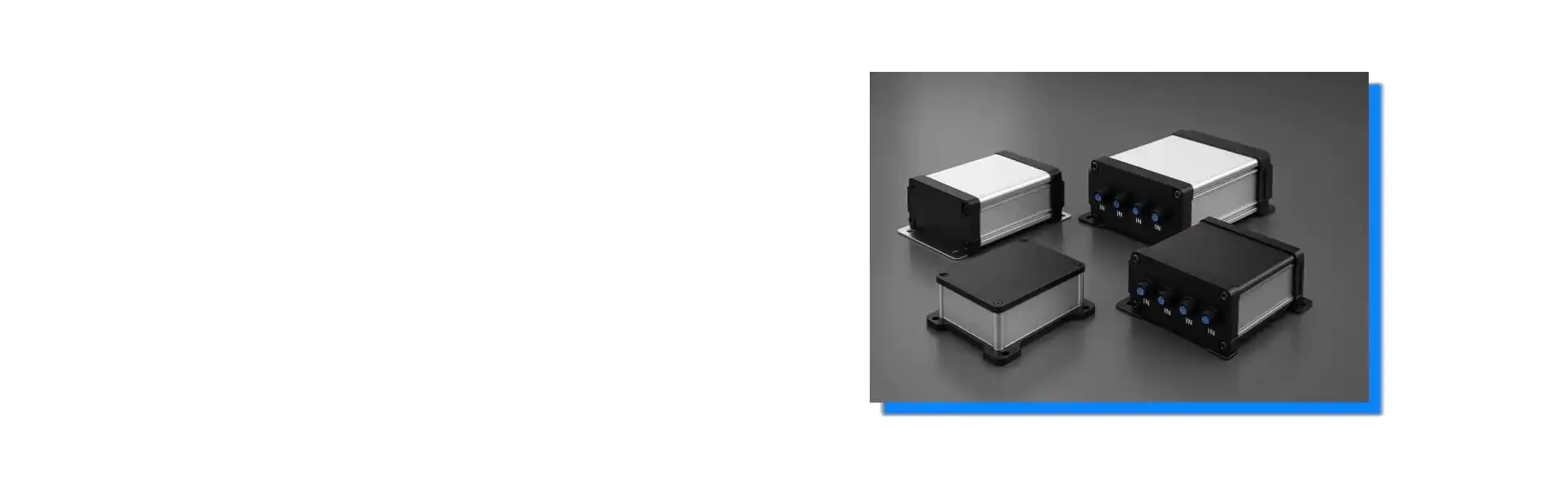
Remote pump controllers may look small, but they can create real heat. A relay, power supply, VFD signal board, cellular module, or LoRa module can raise the internal temperature. Outdoor installation makes this harder because sunlight and ambient heat add to the load.
Where should the heat go?
I ask engineers to identify the hot parts before they choose the enclosure size. If the board has a power module near one side, we can place that area close to the aluminum wall. If the heat source sits in the middle with only air around it, the enclosure material cannot help much.
Aluminum is useful because it has good thermal conductivity compared with many plastics. Engineering ToolBox lists aluminum thermophysical data, including thermal conductivity values, on its aluminum properties reference. In real enclosure design, this does not mean every aluminum box will stay cool. The heat path still needs contact, surface area, and enough wall thickness.
| Heat source | Risk in sealed enclosure | Practical enclosure action |
|---|---|---|
| Power supply | Local hot spot | Place near wall or add thermal pad |
| Relay area | Warm air pocket | Keep clearance and avoid cable crowding |
| Cellular module | Heat plus RF layout limits | Separate antenna plan from heat path |
| Sun exposure | Higher shell temperature | Use lighter anodized color when possible |
For many pump controller projects, an extruded aluminum enclosure is a good starting point because the body gives a stable heat-spreading path and the end plates remain easy to customize. If the device is installed in direct sun, I also ask about mounting direction. A small change in orientation can reduce heat stress more than a larger enclosure.
The U.S. Department of Energy keeps pump system resources on its pump systems page. I like this reference because it shows how important pump reliability and system efficiency are in industrial work. The controller enclosure supports that reliability by protecting the electronics that collect status, fault, and maintenance data.
What CNC Details Reduce Prototype Delay for Pump Controller Enclosures?
Prototype delays often start with small drawing gaps. A missing tolerance, wrong connector spacing, or late label change can stop assembly. CNC planning keeps the schedule moving.
CNC details reduce delay when engineers confirm connector models, cable gland size, PCB position, mounting holes, surface finish, and marking files before the enclosure sample is machined.
I built PUMAYCASE after years of working with aluminum profiles and custom enclosure projects. One thing became very clear to me. Engineers do not lose time only because machining is slow. They lose time because the supplier receives unclear information and must ask many basic questions after the project has already become urgent.
What should Jeff send to the supplier?
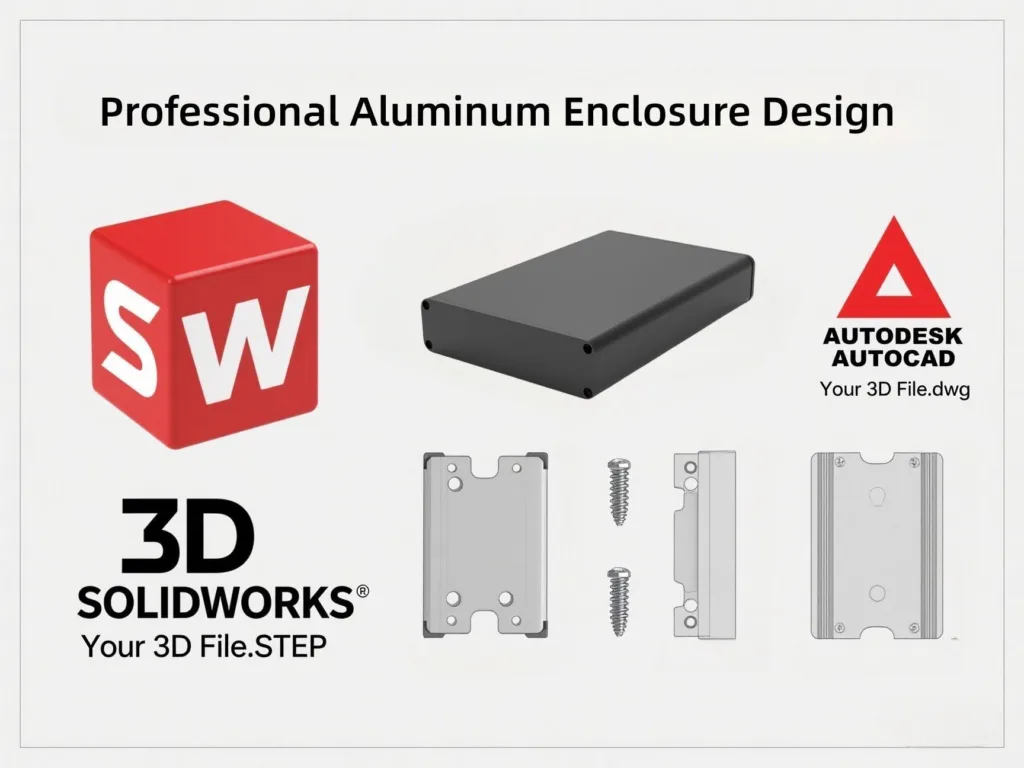
For a remote pump controller, the supplier should receive more than a general box size. I prefer to receive the PCB size, connector datasheets, cable gland model, mounting method, expected IP rating, surface color, logo file, and quantity plan. If the customer has 3D files, that is even better. If not, a clear 2D drawing with hole dimensions and tolerance notes can still work.
The enclosure drawing should also show which holes are functional and which are only for labels or LEDs. A hole for an M12 connector needs a different discussion than a hole for a light pipe. A slot for a cable gland needs enough wrench clearance. A label area needs a clean flat surface after anodizing.
| Information to confirm | Why it matters | What I check |
|---|---|---|
| Connector datasheet | Prevents wrong cutout | Thread, panel thickness, sealing washer |
| PCB location | Prevents assembly conflict | Standoff height and side clearance |
| Cable direction | Helps field wiring | Gland spacing and bend radius |
| Finish and marking | Avoids late rework | Anodizing color, laser marking, silk screen |
| First batch quantity | Controls lead time | Prototype, pilot run, or small batch |
The current smart infrastructure trend makes this more important. NIST explains that connected infrastructure and manufacturing rely on communication and sensing networks on its smart infrastructure and manufacturing page. More connected pump stations mean more small outdoor control boxes. Many of them need quick changes before field testing.
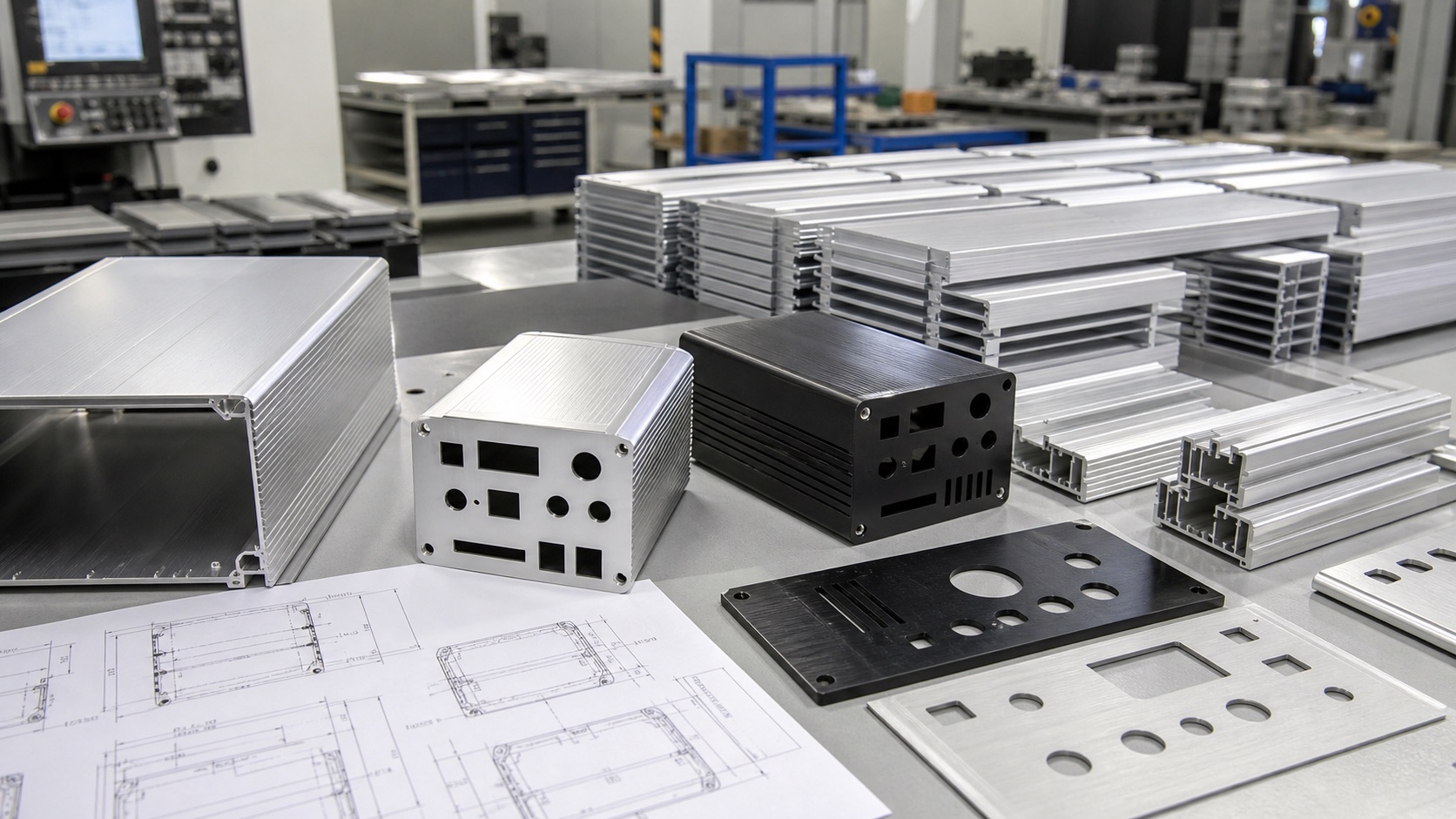
This is where CNC aluminum enclosure machining helps. We can keep the standard aluminum body, then machine custom end plates for connectors, LEDs, switches, vents, or mounting holes. This saves time compared with opening a new mold. It also supports small-batch production when the product is still changing.
When a project needs faster communication, I also suggest using custom aluminum enclosure solutions with a drawing review step before production. A short review can catch a cable gland conflict or heat path problem before the first sample leaves the factory.
Conclusion
A remote pump controller aluminum enclosure works best when IP sealing, heat path, CNC details, and field maintenance are planned together from the first drawing.