Table of contents
- Step 1: Start with the Real Application
- Step 2: Choose Existing Mold or New Custom Structure
- Step 3: Confirm the Engineering Drawing
- Step 4: Make Prototype Samples
- Step 5: Improve the Design Before Batch Production
- Step 6: Surface Finishing, Printing, and Brand Details
- Step 7: Prepare for Stable Mass Production
- Why Work with an Aluminum Enclosure Factory
- Engineering Review Checklist
- Technical Notes and References
Engineering Review Checklist
Before Jeff sends this enclosure design for sampling, I suggest checking the points below. These details often decide whether the first sample can move forward or needs rework.
| Check Point | Why It Matters | PUMAYCASE Review Focus |
|---|---|---|
| Drawing-to-production control | 2D drawings, 3D models, tolerances, finish notes, and inspection points should be aligned before sampling. | Confirm drawings, assembly limits, surface treatment, and production risk before machining. |
| Connector and cable layout | Small position errors can stop assembly or sealing. | Check hole size, edge distance, nut clearance, and gasket path. |
| Surface treatment | Anodizing, marking, and masking can affect fit and grounding. | Confirm color, finish, conductive contact zones, and cosmetic requirements. |
| Lead time and batch plan | Prototype changes can delay pilot production. | Use CNC updates and modular aluminum enclosure parts where possible. |
Engineering judgment: enclosure quality is easier to protect before the first sample than after a failed test.
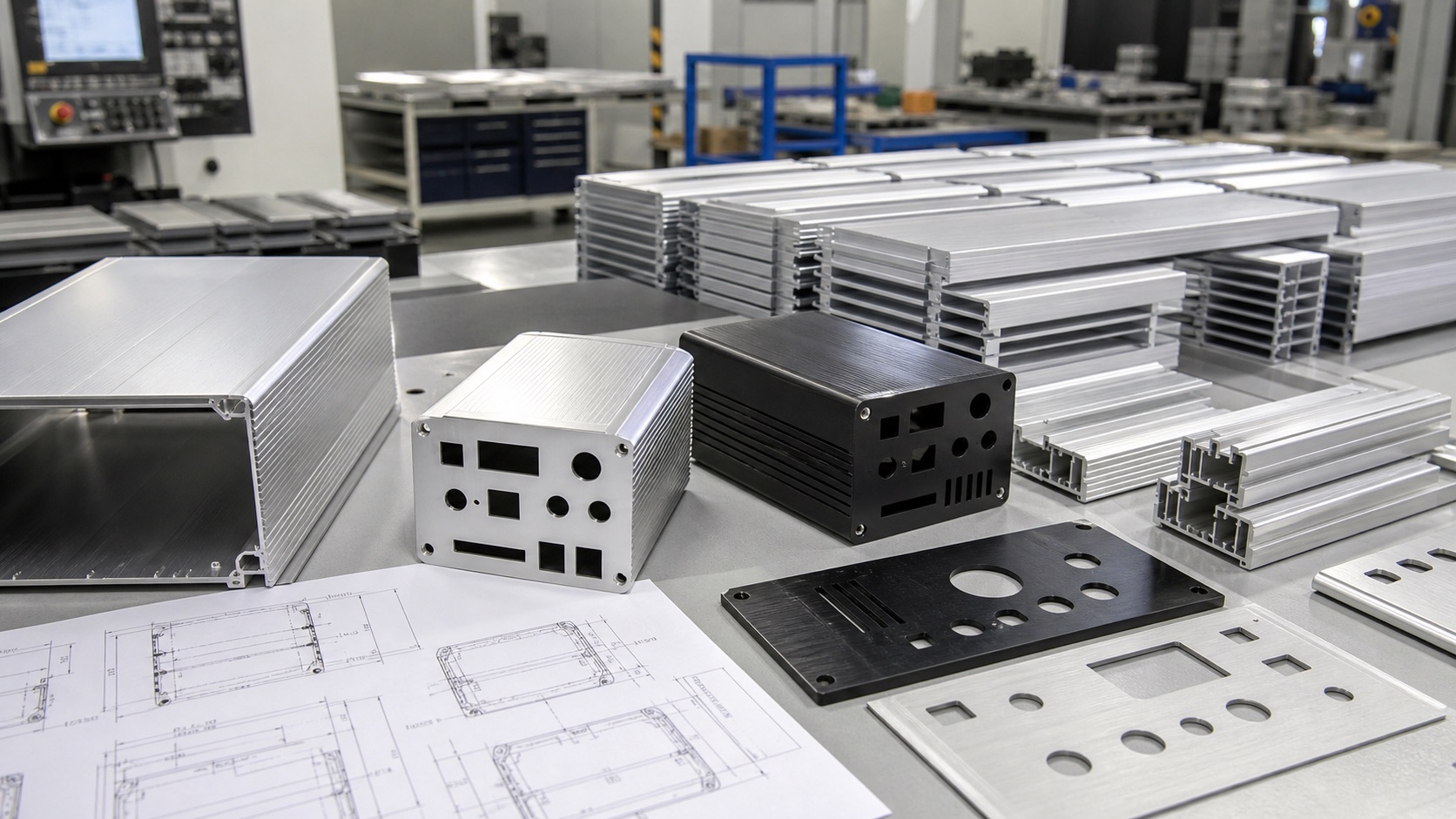
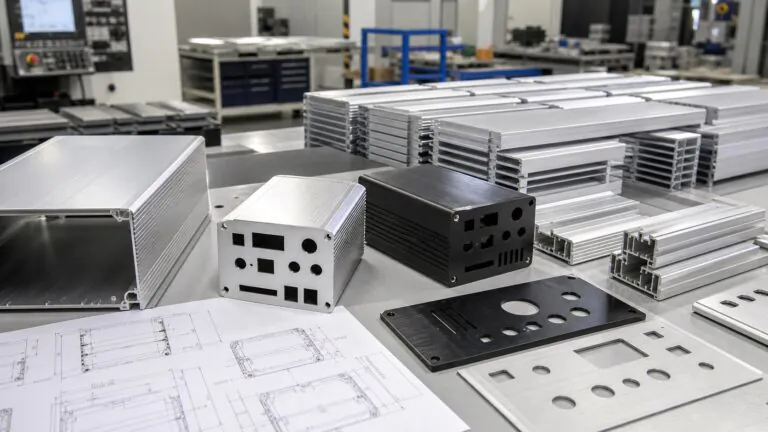
For many electronics teams, the enclosure is not just a box. It controls PCB fit, connector alignment, heat dissipation, assembly speed, product appearance, field reliability, and the buyer's first impression of the finished device. When an OEM project moves from a prototype to repeat orders, the enclosure must be stable enough for production, but flexible enough to support changes in ports, labels, mounting holes, and surface finish.
This is why OEM aluminum enclosure manufacturing needs a clear process. A good supplier should help engineers move from drawings or early product ideas to a practical enclosure solution, then support samples, revisions, batch production, and long-term repeat purchasing.
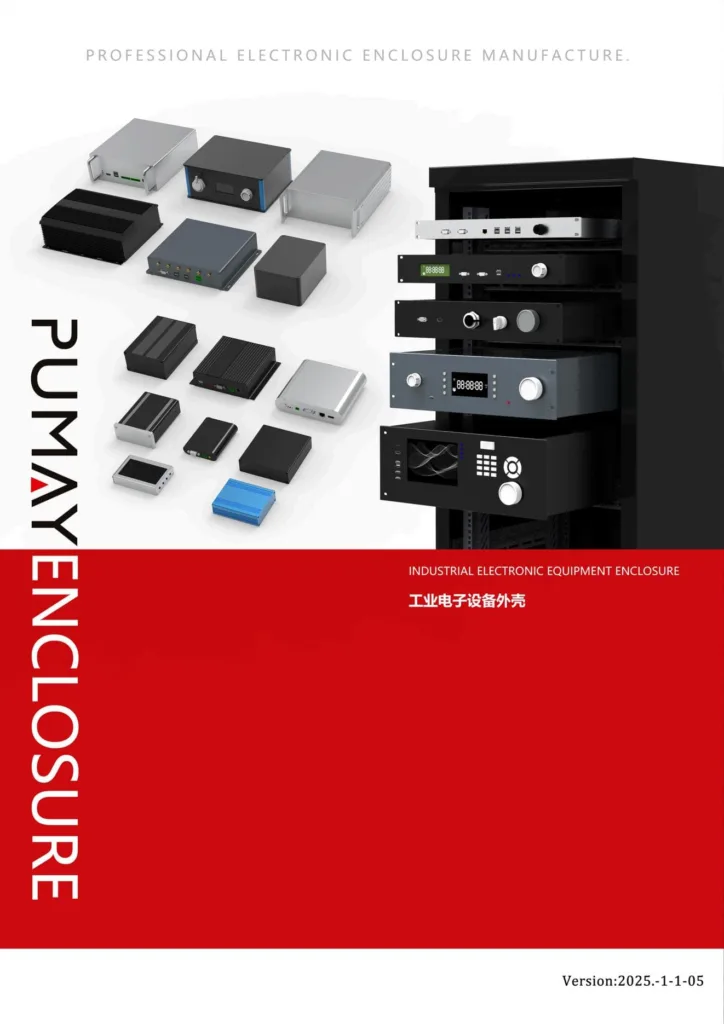
PUMAYCASE works with B2B buyers that need custom aluminum enclosures, tube extrusion enclosures, instrument chassis, 19 inch rackmount chassis, amplifier boxes, and CNC machined enclosure parts. The typical customer is an electronics company, industrial IoT hardware team, automation supplier, audio equipment manufacturer, university lab, or OEM device builder that needs reliable metal housings with customized holes, finish, and logo options.
Step 1: Start with the Real Application
The manufacturing process should begin before any metal is cut. The first question is not only "what size do you need?" but "what will this enclosure protect?"
For industrial automation and IoT devices, the enclosure may need IP65, IP67, or IP68 protection, cable gland holes, DIN rail mounting, wall mounting, and stable heat transfer. For audio and amplifier products, appearance consistency, brushed finish, anodizing color, and panel alignment are often more important. For communication, test equipment, and instrument products, front panel layout, display windows, rack dimensions, and connector access can decide whether the enclosure works in the final system.
Useful information to send at the start includes:
| Project detail | Why it matters |
|---|---|
| PCB size and component height | Confirms internal clearance and mounting method |
| Connector layout | Defines CNC cutouts and front/rear panel design |
| Quantity plan | Helps choose existing mold, CNC prototype, or new extrusion tooling |
| Environment | Affects waterproofing, gasket, finish, and corrosion resistance |
| Assembly method | Impacts screws, end panels, brackets, and internal structure |
| Branding requirement | Confirms laser marking, silk screen printing, or custom color |
Even if the project is early, a supplier can usually review basic dimensions, photos, sketches, STEP files, DXF drawings, or PDF panel drawings.
Step 2: Choose Existing Mold or New Custom Structure
One major decision in OEM aluminum enclosure manufacturing is whether to use an existing aluminum profile mold or create a new custom structure.
Using an existing enclosure mold is often the fastest and most cost-effective path for sample orders, small batches, and early-stage product validation. The main body already exists, while the panels, holes, finish, logo, and accessories can be customized. This approach can reduce tooling cost and shorten lead time.
A new custom extrusion or chassis structure may be required when:
- The PCB or heat sink design cannot fit any existing profile
- The product needs a special wall thickness or internal rail design
- The enclosure shape is part of the product identity
- The order quantity can justify new tooling investment
- The device requires a very specific sealing, mounting, or assembly structure
For many B2B buyers, the practical route is to start with an existing aluminum enclosure, complete the electronics validation, confirm market demand, and then consider custom tooling when volume becomes stable.
Step 3: Confirm the Engineering Drawing
Before production, the enclosure drawing should make every key requirement clear. This does not always mean the buyer must provide a perfect 3D model. A good manufacturer can work from several file types, but the drawing must remove ambiguity.
Important drawing details include:
- Overall enclosure length, width, and height
- Front and rear panel thickness
- Connector hole sizes and positions
- Display, switch, LED, antenna, and cable gland cutouts
- PCB mounting holes or internal slots
- Ventilation slots or heat dissipation features
- Screw positions and countersink requirements
- Surface finish and color
- Logo position and marking method
- Tolerance notes for critical holes
For CNC cutouts, the manufacturer should check whether the design leaves enough material around holes and edges. A hole that is too close to a panel edge may cause deformation, weak assembly, or visible defects after finishing.
Step 4: Make Prototype Samples
Prototype samples are important because enclosure problems often appear only during assembly. A drawing can look correct, but the real PCB, connector, cable, screw, gasket, and label may still create conflicts.
During the sample stage, buyers should check:
- Does the PCB fit without stress?
- Are all connectors centered in the cutouts?
- Can cables be inserted and removed easily?
- Does the enclosure close without interference?
- Are screws aligned and easy to assemble?
- Is the surface finish suitable for the product brand?
- Are logo and panel markings clear?
- Is heat dissipation acceptable in the real operating environment?
For waterproof or outdoor projects, the sample stage should also include gasket review, cable gland fit, and sealing path inspection. If a formal IP rating is required, test requirements should be discussed early.
Step 5: Improve the Design Before Batch Production
The best time to fix enclosure details is after the sample review and before mass production. Small changes at this stage can improve assembly speed, reduce defects, and make repeat orders easier.
Common design improvements include:
- Adjusting connector hole positions by 0.2 mm to 1 mm
- Increasing panel thickness for better strength
- Adding ventilation slots for heat management
- Changing screw type for easier assembly
- Moving logo or silk screen text away from cutouts
- Improving packaging to protect anodized surfaces
- Standardizing accessories for repeat orders
This stage should be treated as engineering optimization, not only visual approval. A good enclosure must look correct, assemble correctly, and remain consistent in future batches.
Step 6: Surface Finishing, Printing, and Brand Details
Aluminum enclosures are widely used because they combine mechanical protection, heat dissipation, and a professional appearance. Surface finishing turns the machined enclosure into a finished product component.
Common options include anodizing, brushing, painting, powder coating, laser marking, silk screen printing, and custom logo processing. The best choice depends on appearance requirements, operating environment, budget, and quantity.
For industrial electronics, black or natural anodizing is common because it is clean, durable, and professional. For audio products, brushed texture, consistent color, and front panel printing may be more important. For instruments and lab devices, readable labels, accurate panel markings, and scratch-resistant surfaces help users operate the equipment correctly.
Buyers should confirm color samples when appearance is critical, especially for repeat orders or product series.
Step 7: Prepare for Stable Mass Production
Mass production is not only about making more pieces. It requires repeatable materials, machining, finishing, assembly, inspection, and packaging. The supplier should keep the confirmed drawing, sample approval, finish requirement, and packing method consistent for future orders.
For stable production, buyers should confirm:
| Production item | Recommended check |
|---|---|
| Final drawing | Keep one approved version with revision number |
| Critical dimensions | Mark connector holes, PCB mounts, and fit points |
| Finish standard | Confirm color, texture, and acceptable variation |
| Logo and printing | Approve final artwork before batch work |
| Accessories | Confirm screws, panels, brackets, feet, and gaskets |
| Packaging | Protect visible surfaces and corners |
| Inspection | Check dimensions, appearance, assembly, and quantity |
If the enclosure will be purchased repeatedly, it is useful to keep the same model code, drawing revision, and packaging requirement in each purchase order.
Why Work with an Aluminum Enclosure Factory
For OEM buyers, working directly with an aluminum enclosure factory can reduce communication loss and improve technical response. Instead of only buying a standard empty case, buyers can discuss size selection, CNC cutouts, surface finish, logo options, prototype samples, and repeat production in one workflow.
PUMAYCASE supports electronic enclosures, tube extrusion enclosures, instrument chassis, 19 inch rackmount chassis, amplifier boxes, and CNC machining services. The company focuses on B2B wholesale and OEM customization for customers in North America, Europe, Finland, New Zealand, India, and other markets.
For engineers and purchasing teams, this means a project can start with a drawing, sample, or product idea, then move step by step toward a manufacturable aluminum enclosure.
FAQ
What files should I send for an OEM aluminum enclosure quotation?
Send STEP, IGES, DXF, PDF, or clear drawings if available. If the project is early, send PCB dimensions, connector layout, required quantity, photos, and finish requirements.
Can I start with a small sample order?
Yes. Many OEM projects begin with 1 to 10 samples so the buyer can check fit, assembly, appearance, and function before batch production.
Can existing enclosure molds still support custom design?
Yes. Existing aluminum enclosure profiles can often be customized with CNC panel cutouts, body holes, anodizing, printing, logo marking, accessories, and packaging.
When do I need a new custom mold?
You may need a new mold when no existing profile fits the PCB, heat, mounting, sealing, or appearance requirements, or when volume is large enough to justify the tooling cost.
Can PUMAYCASE manufacture enclosures for industrial IoT and automation devices?
Yes. PUMAYCASE supports aluminum enclosures for industrial controllers, gateways, sensor nodes, communication modules, and other electronics that need custom machining and durable housing.
Request an OEM Aluminum Enclosure Quotation
If you are developing an electronic product and need a custom aluminum enclosure, send your drawing, PCB size, connector layout, quantity, finish requirement, and target application to PUMAYCASE.
Contact PUMAYCASE to review your enclosure structure and request a quotation for samples or production.
Technical Notes and References
I use these references as a starting point when I discuss enclosure protection, aluminum material choices, surface treatment, EMC, machining, or thermal design with engineers. The final design should still be checked against the real product environment and test plan.
For PUMAYCASE projects, I also suggest sending the PCB size, connector list, heat source location, target IP rating, surface finish requirement, and expected order quantity before sampling. This helps my team return clearer enclosure, CNC machining, and sealing comments.
If you need practical support, you can start from our custom aluminum enclosure solutions, CNC aluminum enclosure machining, or waterproof aluminum enclosures.
Table of contents
- Step 1: Start with the Real Application
- Step 2: Choose Existing Mold or New Custom Structure
- Step 3: Confirm the Engineering Drawing
- Step 4: Make Prototype Samples
- Step 5: Improve the Design Before Batch Production
- Step 6: Surface Finishing, Printing, and Brand Details
- Step 7: Prepare for Stable Mass Production
- Why Work with an Aluminum Enclosure Factory
- Engineering Review Checklist
- Technical Notes and References
- Conclusion
Engineering Review Checklist
Before Jeff sends this enclosure design for sampling, I suggest checking the points below. These details often decide whether the first sample can move forward or needs rework.
| Check Point | Why It Matters | PUMAYCASE Review Focus |
|---|---|---|
| Drawing-to-production control | 2D drawings, 3D models, tolerances, finish notes, and inspection points should be aligned before sampling. | Confirm drawings, assembly limits, surface treatment, and production risk before machining. |
| Connector and cable layout | Small position errors can stop assembly or sealing. | Check hole size, edge distance, nut clearance, and gasket path. |
| Surface treatment | Anodizing, marking, and masking can affect fit and grounding. | Confirm color, finish, conductive contact zones, and cosmetic requirements. |
| Lead time and batch plan | Prototype changes can delay pilot production. | Use CNC updates and modular aluminum enclosure parts where possible. |
Engineering judgment: enclosure quality is easier to protect before the first sample than after a failed test.
For many electronics teams, the enclosure is not just a box. It controls PCB fit, connector alignment, heat dissipation, assembly speed, product appearance, field reliability, and the buyer's first impression of the finished device. When an OEM project moves from a prototype to repeat orders, the enclosure must be stable enough for production, but flexible enough to support changes in ports, labels, mounting holes, and surface finish.
This is why OEM aluminum enclosure manufacturing needs a clear process. A good supplier should help engineers move from drawings or early product ideas to a practical enclosure solution, then support samples, revisions, batch production, and long-term repeat purchasing.
PUMAYCASE works with B2B buyers that need custom aluminum enclosures, tube extrusion enclosures, instrument chassis, 19 inch rackmount chassis, amplifier boxes, and CNC machined enclosure parts. The typical customer is an electronics company, industrial IoT hardware team, automation supplier, audio equipment manufacturer, university lab, or OEM device builder that needs reliable metal housings with customized holes, finish, and logo options.
Step 1: Start with the Real Application
The manufacturing process should begin before any metal is cut. The first question is not only "what size do you need?" but "what will this enclosure protect?"
For industrial automation and IoT devices, the enclosure may need IP65, IP67, or IP68 protection, cable gland holes, DIN rail mounting, wall mounting, and stable heat transfer. For audio and amplifier products, appearance consistency, brushed finish, anodizing color, and panel alignment are often more important. For communication, test equipment, and instrument products, front panel layout, display windows, rack dimensions, and connector access can decide whether the enclosure works in the final system.
Useful information to send at the start includes:
| Project detail | Why it matters |
|---|---|
| PCB size and component height | Confirms internal clearance and mounting method |
| Connector layout | Defines CNC cutouts and front/rear panel design |
| Quantity plan | Helps choose existing mold, CNC prototype, or new extrusion tooling |
| Environment | Affects waterproofing, gasket, finish, and corrosion resistance |
| Assembly method | Impacts screws, end panels, brackets, and internal structure |
| Branding requirement | Confirms laser marking, silk screen printing, or custom color |
Even if the project is early, a supplier can usually review basic dimensions, photos, sketches, STEP files, DXF drawings, or PDF panel drawings.
Step 2: Choose Existing Mold or New Custom Structure
One major decision in OEM aluminum enclosure manufacturing is whether to use an existing aluminum profile mold or create a new custom structure.
Using an existing enclosure mold is often the fastest and most cost-effective path for sample orders, small batches, and early-stage product validation. The main body already exists, while the panels, holes, finish, logo, and accessories can be customized. This approach can reduce tooling cost and shorten lead time.
A new custom extrusion or chassis structure may be required when:
- The PCB or heat sink design cannot fit any existing profile
- The product needs a special wall thickness or internal rail design
- The enclosure shape is part of the product identity
- The order quantity can justify new tooling investment
- The device requires a very specific sealing, mounting, or assembly structure
For many B2B buyers, the practical route is to start with an existing aluminum enclosure, complete the electronics validation, confirm market demand, and then consider custom tooling when volume becomes stable.
Step 3: Confirm the Engineering Drawing
Before production, the enclosure drawing should make every key requirement clear. This does not always mean the buyer must provide a perfect 3D model. A good manufacturer can work from several file types, but the drawing must remove ambiguity.
Important drawing details include:
- Overall enclosure length, width, and height
- Front and rear panel thickness
- Connector hole sizes and positions
- Display, switch, LED, antenna, and cable gland cutouts
- PCB mounting holes or internal slots
- Ventilation slots or heat dissipation features
- Screw positions and countersink requirements
- Surface finish and color
- Logo position and marking method
- Tolerance notes for critical holes
For CNC cutouts, the manufacturer should check whether the design leaves enough material around holes and edges. A hole that is too close to a panel edge may cause deformation, weak assembly, or visible defects after finishing.
Step 4: Make Prototype Samples
Prototype samples are important because enclosure problems often appear only during assembly. A drawing can look correct, but the real PCB, connector, cable, screw, gasket, and label may still create conflicts.
During the sample stage, buyers should check:
- Does the PCB fit without stress?
- Are all connectors centered in the cutouts?
- Can cables be inserted and removed easily?
- Does the enclosure close without interference?
- Are screws aligned and easy to assemble?
- Is the surface finish suitable for the product brand?
- Are logo and panel markings clear?
- Is heat dissipation acceptable in the real operating environment?
For waterproof or outdoor projects, the sample stage should also include gasket review, cable gland fit, and sealing path inspection. If a formal IP rating is required, test requirements should be discussed early.
Step 5: Improve the Design Before Batch Production
The best time to fix enclosure details is after the sample review and before mass production. Small changes at this stage can improve assembly speed, reduce defects, and make repeat orders easier.
Common design improvements include:
- Adjusting connector hole positions by 0.2 mm to 1 mm
- Increasing panel thickness for better strength
- Adding ventilation slots for heat management
- Changing screw type for easier assembly
- Moving logo or silk screen text away from cutouts
- Improving packaging to protect anodized surfaces
- Standardizing accessories for repeat orders
This stage should be treated as engineering optimization, not only visual approval. A good enclosure must look correct, assemble correctly, and remain consistent in future batches.
Step 6: Surface Finishing, Printing, and Brand Details
Aluminum enclosures are widely used because they combine mechanical protection, heat dissipation, and a professional appearance. Surface finishing turns the machined enclosure into a finished product component.
Common options include anodizing, brushing, painting, powder coating, laser marking, silk screen printing, and custom logo processing. The best choice depends on appearance requirements, operating environment, budget, and quantity.
For industrial electronics, black or natural anodizing is common because it is clean, durable, and professional. For audio products, brushed texture, consistent color, and front panel printing may be more important. For instruments and lab devices, readable labels, accurate panel markings, and scratch-resistant surfaces help users operate the equipment correctly.
Buyers should confirm color samples when appearance is critical, especially for repeat orders or product series.
Step 7: Prepare for Stable Mass Production
Mass production is not only about making more pieces. It requires repeatable materials, machining, finishing, assembly, inspection, and packaging. The supplier should keep the confirmed drawing, sample approval, finish requirement, and packing method consistent for future orders.
For stable production, buyers should confirm:
| Production item | Recommended check |
|---|---|
| Final drawing | Keep one approved version with revision number |
| Critical dimensions | Mark connector holes, PCB mounts, and fit points |
| Finish standard | Confirm color, texture, and acceptable variation |
| Logo and printing | Approve final artwork before batch work |
| Accessories | Confirm screws, panels, brackets, feet, and gaskets |
| Packaging | Protect visible surfaces and corners |
| Inspection | Check dimensions, appearance, assembly, and quantity |
If the enclosure will be purchased repeatedly, it is useful to keep the same model code, drawing revision, and packaging requirement in each purchase order.
Why Work with an Aluminum Enclosure Factory
For OEM buyers, working directly with an aluminum enclosure factory can reduce communication loss and improve technical response. Instead of only buying a standard empty case, buyers can discuss size selection, CNC cutouts, surface finish, logo options, prototype samples, and repeat production in one workflow.
PUMAYCASE supports electronic enclosures, tube extrusion enclosures, instrument chassis, 19 inch rackmount chassis, amplifier boxes, and CNC machining services. The company focuses on B2B wholesale and OEM customization for customers in North America, Europe, Finland, New Zealand, India, and other markets.
For engineers and purchasing teams, this means a project can start with a drawing, sample, or product idea, then move step by step toward a manufacturable aluminum enclosure.
FAQ
What files should I send for an OEM aluminum enclosure quotation?
Send STEP, IGES, DXF, PDF, or clear drawings if available. If the project is early, send PCB dimensions, connector layout, required quantity, photos, and finish requirements.
Can I start with a small sample order?
Yes. Many OEM projects begin with 1 to 10 samples so the buyer can check fit, assembly, appearance, and function before batch production.
Can existing enclosure molds still support custom design?
Yes. Existing aluminum enclosure profiles can often be customized with CNC panel cutouts, body holes, anodizing, printing, logo marking, accessories, and packaging.
When do I need a new custom mold?
You may need a new mold when no existing profile fits the PCB, heat, mounting, sealing, or appearance requirements, or when volume is large enough to justify the tooling cost.
Can PUMAYCASE manufacture enclosures for industrial IoT and automation devices?
Yes. PUMAYCASE supports aluminum enclosures for industrial controllers, gateways, sensor nodes, communication modules, and other electronics that need custom machining and durable housing.
Request an OEM Aluminum Enclosure Quotation
If you are developing an electronic product and need a custom aluminum enclosure, send your drawing, PCB size, connector layout, quantity, finish requirement, and target application to PUMAYCASE.
Contact PUMAYCASE to review your enclosure structure and request a quotation for samples or production.
Technical Notes and References
I use these references as a starting point when I discuss enclosure protection, aluminum material choices, surface treatment, EMC, machining, or thermal design with engineers. The final design should still be checked against the real product environment and test plan.
For PUMAYCASE projects, I also suggest sending the PCB size, connector list, heat source location, target IP rating, surface finish requirement, and expected order quantity before sampling. This helps my team return clearer enclosure, CNC machining, and sealing comments.
If you need practical support, you can start from our custom aluminum enclosure solutions, CNC aluminum enclosure machining, or waterproof aluminum enclosures.