Customizing the color and material of a panel is essential for achieving the desired functionality and aesthetics1. It enhances product appeal2 and ensures compatibility with specific environments.
Yes, aluminum panels can be customized in various colors and materials3, depending on your project requirements.
Table of contents
- What Color Options Are Available for Aluminum Panels?
- What Materials Are Available for Panels?
- Can I Combine Different Materials and Colors in One Panel?
- How to Choose the Right Color and Material for My Panel?
- Engineering Review Checklist
- Technical Notes and References
- Conclusion
Engineering Review Checklist
Before Jeff sends this enclosure design for sampling, I suggest checking the points below. These details often decide whether the first sample can move forward or needs rework.
| Check Point | Why It Matters | PUMAYCASE Review Focus |
|---|---|---|
| Panel machining quality | Hole position, burr control, surface finish, marking method, and inspection data should be defined before batch production. | Confirm drawings, assembly limits, surface treatment, and production risk before machining. |
| Connector and cable layout | Small position errors can stop assembly or sealing. | Check hole size, edge distance, nut clearance, and gasket path. |
| Surface treatment | Anodizing, marking, and masking can affect fit and grounding. | Confirm color, finish, conductive contact zones, and cosmetic requirements. |
| Lead time and batch plan | Prototype changes can delay pilot production. | Use CNC updates and modular aluminum enclosure parts where possible. |
Engineering judgment: enclosure quality is easier to protect before the first sample than after a failed test.
Understanding your options helps you create a product that stands out while meeting performance standards.
What Color Options Are Available for Aluminum Panels?
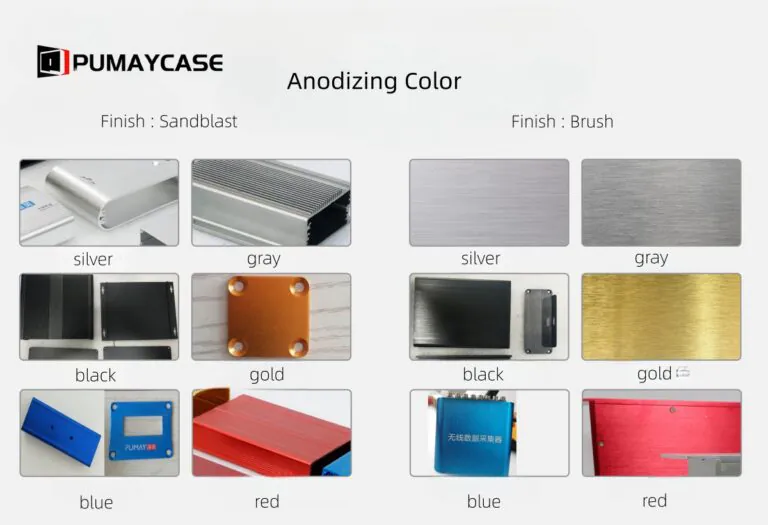
Color customization is achieved through surface treatments such as anodizing and powder coating.
Available colors include standard options like black, silver, gold, blue, and gray, as well as custom colors for unique branding.
- Anodized Colors: Durable and corrosion-resistant; offers a metallic finish in colors like silver, black, blue, and red.
- Powder Coating: Provides a thicker, more protective layer and a matte or glossy finish in virtually any color.
If a specific color is required, we offer color matching services to meet your branding needs.
What Materials Are Available for Panels?
The most common material for panels is aluminum, but other options are available for specific applications.
Aluminum panels are known for their lightweight, strength, and corrosion resistance.
- Aluminum (6061 or 5052): Ideal for general applications, combining strength and excellent thermal properties.
- Stainless Steel: Offers superior strength and corrosion resistance, suitable for harsh environments.
- Plastic (ABS, PC): Lightweight and cost-effective for non-metal applications or insulation purposes.
Material Comparison
| Material | Strength | Weight | Corrosion Resistance | Cost Efficiency |
|---|---|---|---|---|
| Aluminum | High | Light | Excellent | High |
| Stainless Steel | Very High | Heavy | Superior | Moderate |
| Plastic (ABS/PC) | Moderate | Light | Low to Moderate | Very High |
Can I Combine Different Materials and Colors in One Panel?
Absolutely! Hybrid designs are popular for combining functionality and aesthetics.
For example, you can use aluminum for the main panel structure and add plastic components for insulation or specific design features.
We also offer multi-color printing and surface engraving to personalize your panels further.
How to Choose the Right Color and Material for My Panel?
Consider these factors when selecting:
- Application Environment – For outdoor use, choose anodized aluminum or stainless steel for maximum durability.
- Design Requirements – Custom colors and finishes can match your product design or company branding.
- Budget – Aluminum provides an excellent balance between performance and cost.
Conclusion
Customizable colors and materials for aluminum panels help you achieve both functional and aesthetic goals. Whether you need standard options or unique customizations, Pumaycase offers flexible solutions to meet your needs.
Technical Notes and References
I use these references as a starting point when I discuss enclosure protection, aluminum material choices, surface treatment, EMC, machining, or thermal design with engineers. The final design should still be checked against the real product environment and test plan.
For PUMAYCASE projects, I also suggest sending the PCB size, connector list, heat source location, target IP rating, surface finish requirement, and expected order quantity before sampling. This helps my team return clearer enclosure, CNC machining, and sealing comments.
This link will help you understand the importance of customization in meeting both aesthetic and functional needs. ↩
Discover why product appeal is crucial in design and how it can impact market success. ↩
Exploring this resource will provide insights into how customization can enhance both aesthetics and functionality of aluminum panels. ↩
If you need practical support, you can start from our custom aluminum enclosure solutions, CNC aluminum enclosure machining, or waterproof aluminum enclosures.