
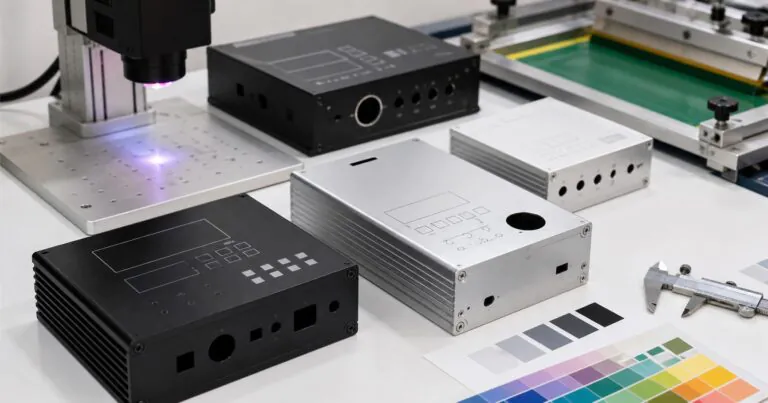
An OEM front panel can be dimensionally correct yet difficult to use if its port names, model identification, or control legends are misplaced or unreadable. Engineers specifying an anodized aluminum enclosure need to decide how each mark will appear after the panel is machined and finished, and how the customer will check the result before repeat orders.
Choose laser marking for project-approved identification where the tested appearance and readability suit the finish; choose screen printing when approved color graphics or larger interface legends are needed. Neither process guarantees a particular lifetime or contrast on every surface. The decision should follow the artwork, panel geometry, finish, use environment, and sample acceptance requirements.
Why should marking be planned with the enclosure drawing?
Marking should be planned with the enclosure drawing because a correct graphic in the wrong location can interfere with a connector, fastener, display, or user control. A single controlled panel revision should show both machining and marking positions.
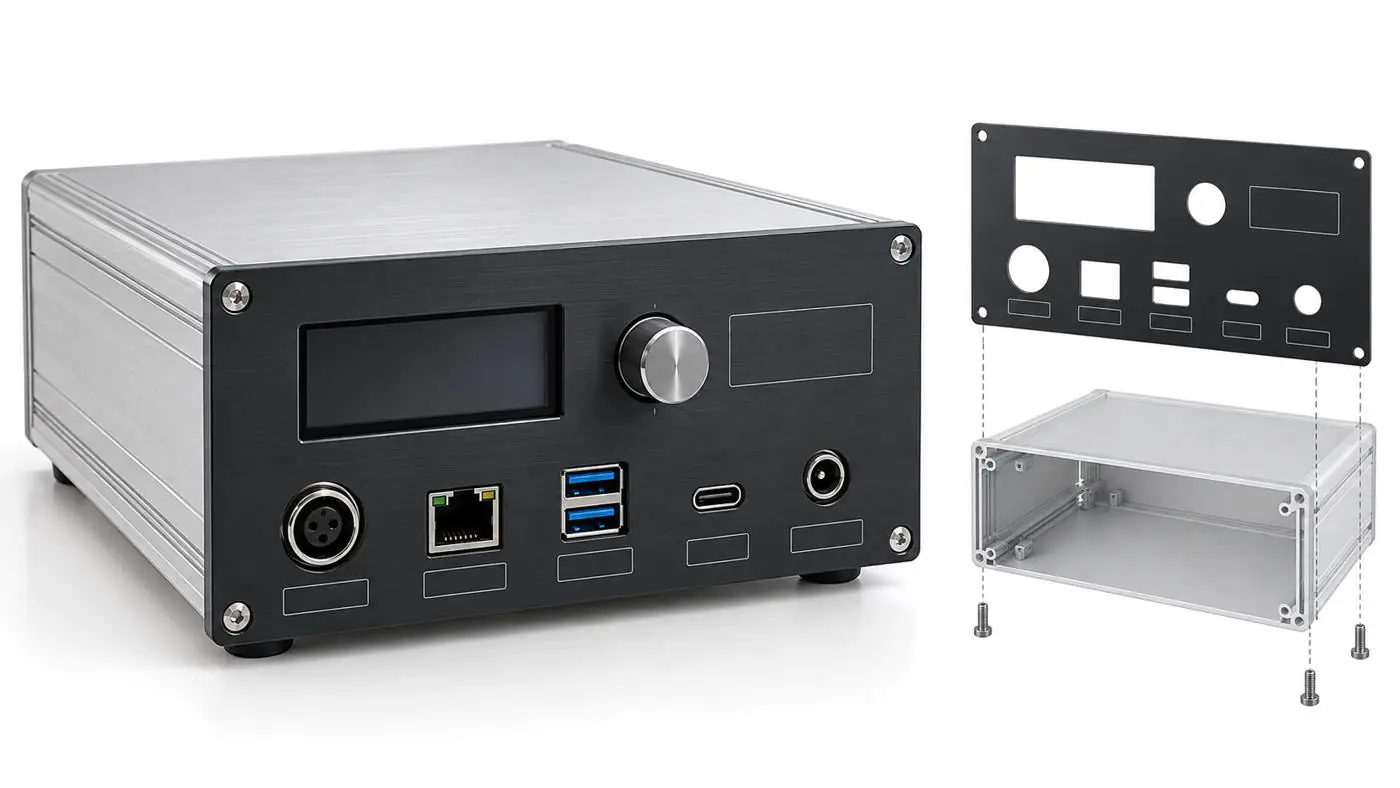
Illustration: Reserve usable marking areas while defining the panel openings and hardware.
- Locate marks from the same datums as cutouts. Dimension the logo, model number, port names, and symbols relative to defined panel edges or features. This helps prevent artwork drift when a connector position changes.
- Keep labels visible after customer assembly. Check connector nuts, protective boots, knobs, and mounting brackets against the finished panel layout. PUMAYCASE can provide panel adaptation, but the customer remains responsible for installing and validating the electronics.
- Separate permanent and variable information. A fixed logo may use a different production file from serial or batch identification. State which fields change by SKU or order instead of assuming every panel uses one artwork file.
- Control the file revision. The CNC drawing, finish specification, and marking artwork should carry matching revision identifiers before sampling and repeat production.
Statement: Marking artwork can be approved independently of the final connector and control layout.
Answer: False
Explanation: Connector hardware or a panel revision can cover or shift a mark. Review the artwork against the controlled enclosure drawing and the customer's assembled configuration.
Which requirements determine the marking method?
The method depends on what the marking must communicate, the available surface, the specified finish, and the conditions under which it must remain legible. Start with these requirements rather than choosing a process by appearance alone.
| Requirement to define | Laser-marking question | Screen-printing question |
|---|---|---|
| Identification and traceability | Is the approved mark readable at the required size and finish? | Is variable identification practical within the approved artwork workflow? |
| Color and interface graphics | Can a single tested mark style communicate the function? | Are distinct ink colors or larger legends required? |
| Panel geometry | Is there a suitable, accessible marking area? | Can the artwork be registered on the chosen panel surface? |
| Exposure and cleaning | Does a sample remain legible after the customer's relevant checks? | Are the ink system and cleaning conditions compatible after verification? |
| Repeat orders | Are variable data and file revisions controlled? | Are color references, artwork, and acceptance samples controlled? |
Statement: A single marking process is automatically suitable for every logo, port legend, and serial identifier on a panel.
Answer: False
Explanation: The information, color, size, and variable-data needs may differ. Mixed methods are possible only after the process combination and sequence are checked for the project.
When is laser marking a suitable choice?
Laser marking is a candidate for model identification, serial information, and compact legends when the sample produces acceptable contrast, position, and readability on the specified anodized finish. The visible result depends on the material, coating, color, laser setup, and artwork.
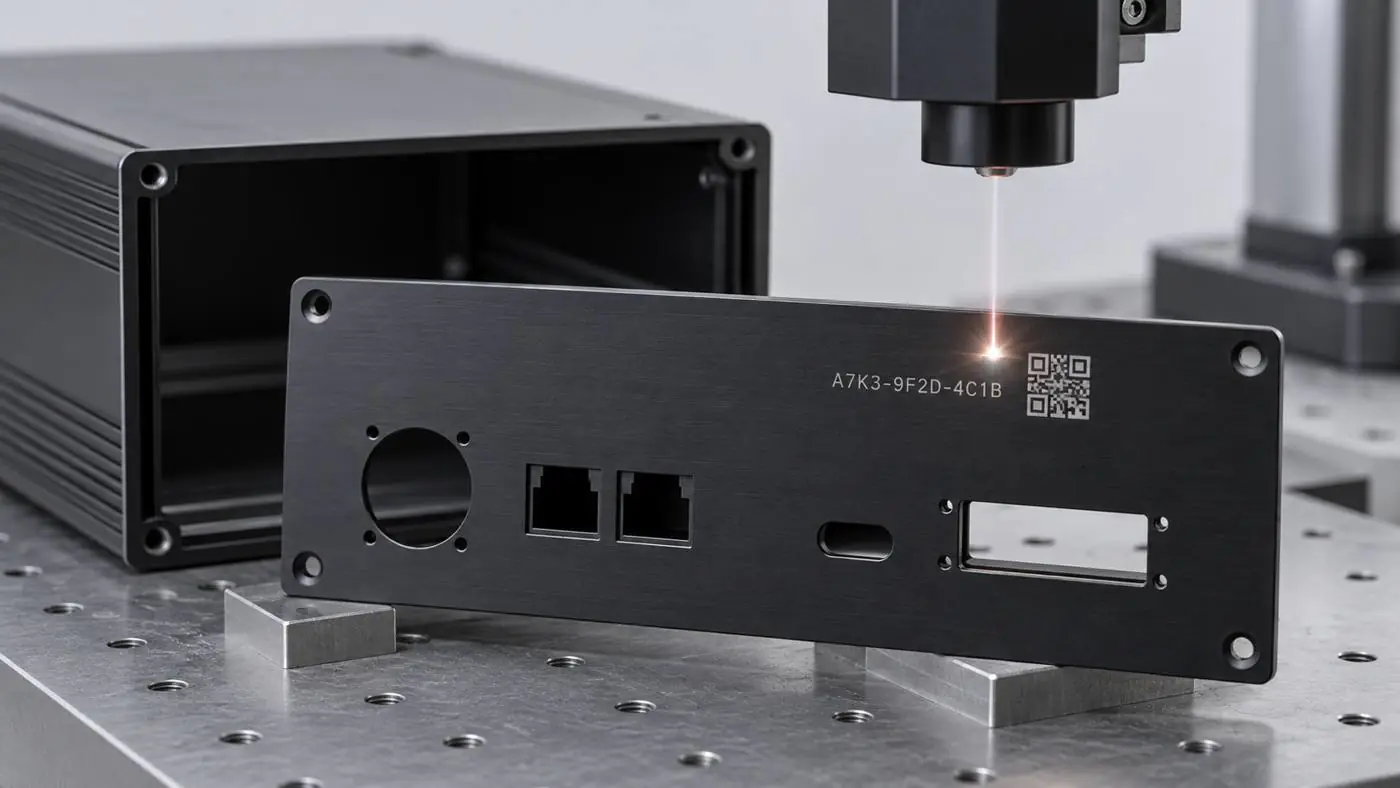
Illustration: Evaluate laser-marked identification on the actual finish and panel geometry.
- Specify the information type. Distinguish fixed model text from variable serial data; define the data format and who supplies it for each production batch.
- Confirm size by sample. Fine characters or codes should be checked for visual or scanner readability at the intended size. A digital preview alone cannot establish that the final mark works.
- Place the mark on a workable surface. Grooves, curved extrusion faces, nearby edges, and installed hardware can restrict positioning. A flat removable end panel may be easier to evaluate when the enclosure design permits it.
- Review the finish together with the mark. A marking result approved on one anodized color should not be assumed identical on another color or coating specification.
Laser marking does not itself establish resistance to all chemicals, sunlight, or abrasion. Those claims need a defined use condition and an agreed verification method.
Statement: Approval of a laser mark on one anodized color automatically approves its appearance on every other finish.
Answer: False
Explanation: Contrast and appearance can change with the finish and process settings. Approve a representative sample for each materially different requirement.
When does screen printing make more sense?
Screen printing is useful when a panel needs approved color logos, larger operating legends, or groups of consistent symbols. It should be selected with the panel finish, ink system, artwork size, handling conditions, and acceptance sample in mind.
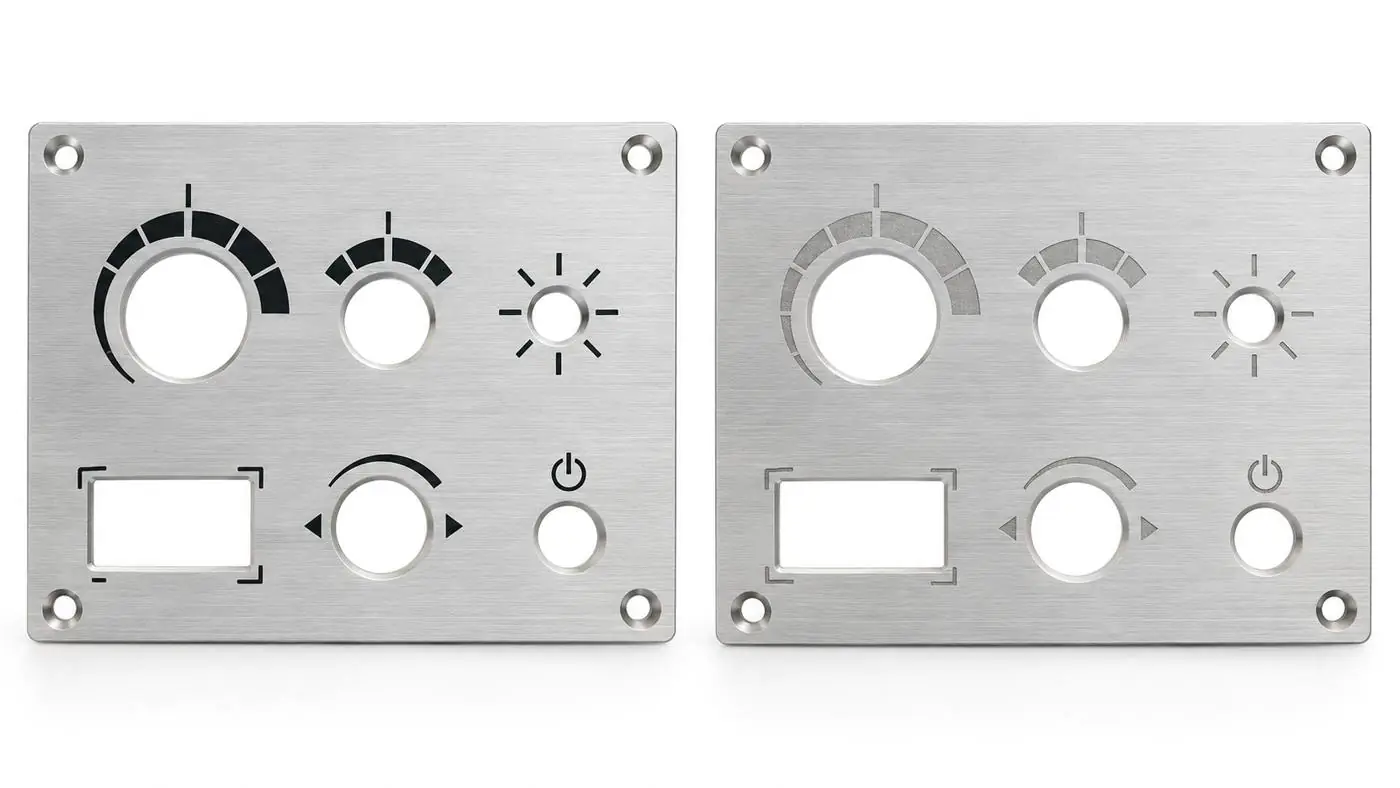
Illustration: Larger control graphics and color needs can change the marking choice.
- Define colors with a physical reference. A screen preview is insufficient for critical brand appearance. Agree on an approved color sample or other project-specific reference.
- Check line and symbol readability. The production sample should be assessed at normal viewing distance, especially around controls and display openings.
- Specify contact and cleaning exposure. Frequent touch, wipes, or cleaning agents may affect a printed surface. The customer should state relevant conditions and approve suitable checks.
- Coordinate print and finishing steps. The chosen coating and marking sequence must be confirmed for the selected panel and process; a preferred sequence should not be assumed for every finish.
PUMAYCASE's confirmed marking options include screen printing and laser marking. Other methods should not be offered as standard capabilities without project-specific confirmation.
Statement: A color graphic approved on a computer screen is enough to approve the final printed aluminum panel.
Answer: False
Explanation: The substrate, finish, ink, and viewing conditions influence appearance. Compare a representative finished sample with the agreed reference.
How do surface finish and panel geometry change the decision?
Anodizing and panel shape affect both the visible result and the available marking position. The practical choice is the process and location that can be produced and inspected on the specified finished part.
| Design factor | What to check before approval | Possible drawing action |
|---|---|---|
| Anodized color and texture | Mark contrast and graphic color on a representative sample | Record finish and marking references together |
| Extrusion grooves or curved faces | Access and visibility of the intended marking area | Move artwork to a suitable flat face or removable panel |
| Connectors, knobs, and fasteners | Whether installed hardware obscures labels | Check the customer's assembly envelope on the panel layout |
| Sealing or grounding interfaces | Whether graphics overlap controlled functional areas | Keep the marking zone outside specified contact surfaces |
Statement: Any visible surface on an aluminum enclosure is automatically an acceptable marking area.
Answer: False
Explanation: Some surfaces are needed for hardware, sealing, grounding, or inspection. Confirm the location against the finished assembly and controlled drawing.
What should the marked prototype verify?
The prototype should verify the chosen marking on a representative finished panel, with the intended cutouts and hardware. Approval should cover both visual acceptance and the customer's relevant use conditions before pilot production.
| Sample check | Decision to record |
|---|---|
| Position and orientation | Does each mark match the drawing and remain visible after customer assembly? |
| Legibility and color | Is the mark readable and visually acceptable against the agreed reference? |
| Surface and process | Is the finish and marking combination the one intended for production? |
| Use conditions | Which handling, cleaning, or exposure checks must the customer perform? |
| Version control | Which drawing, artwork, finish, and approved sample define the next order? |
- Inspect on the complete panel. A small material coupon can help choose a process, but it does not reveal every conflict with connectors, controls, and fasteners.
- Separate supplier inspection from product validation. PUMAYCASE can support enclosure and marking production; the customer validates the assembled electronic product and any required regulatory claims.
- Record changes after the sample. A moved cutout or changed finish can invalidate earlier marking approval and require another review.
What information should be frozen for repeat orders?
Repeat orders need a controlled package that ties the enclosure model, panel drawing, finish, artwork, and approved sample together. This helps an OEM compare future supply with the same agreed requirements.
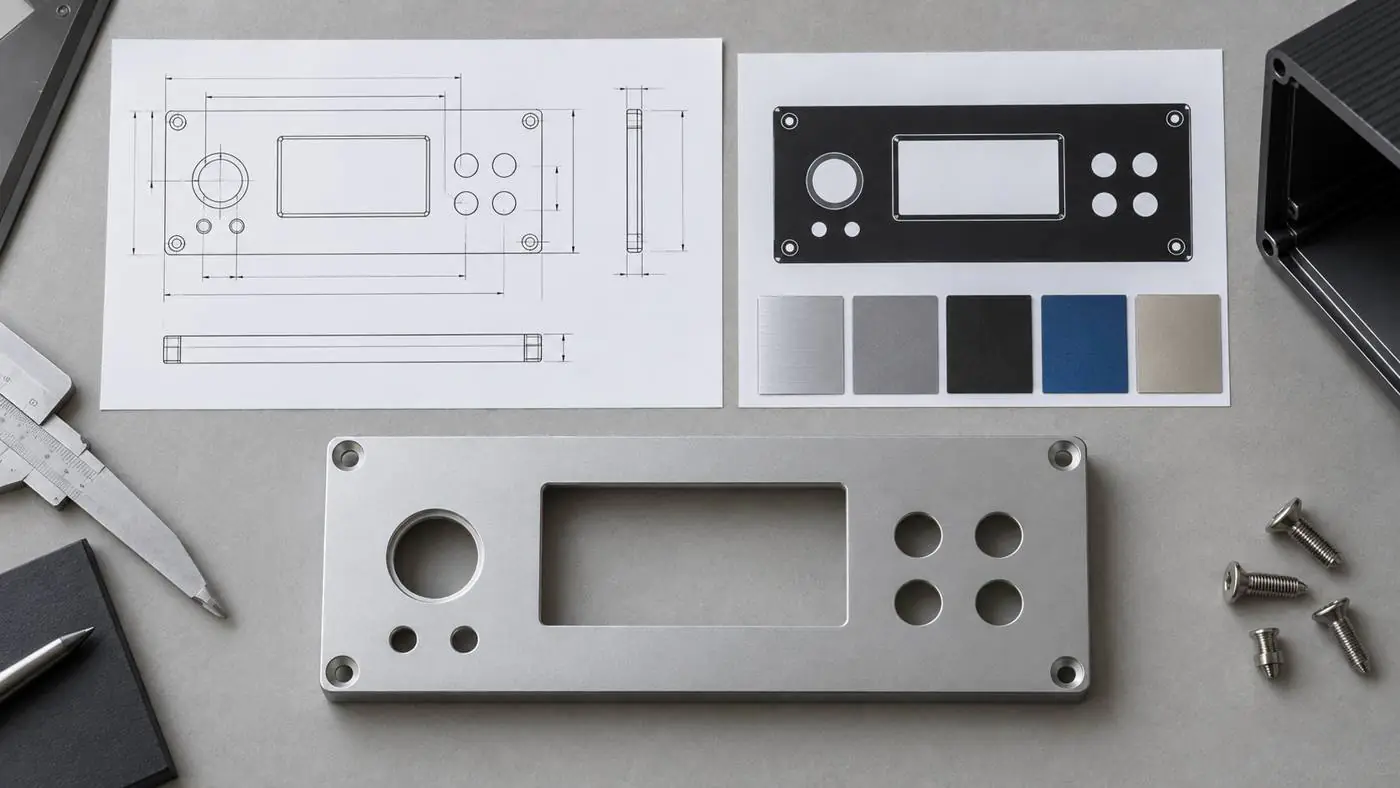
Illustration: Keep panel geometry, artwork, and appearance references in one revision-controlled package.
- Identify every applicable file. List the enclosure or profile selection, panel drawing revision, marking artwork revision, and variable-data rules.
- State the visual acceptance reference. Keep a signed-off sample or agreed image/color reference where needed, while recognizing that a photo may not fully represent surface appearance.
- Carry forward the inspection points. Mark location, legibility, finish, and any project-specific checks should remain clear in pilot and repeat orders.
- Reassess changes by SKU. New connectors, panel colors, or graphics can require a new sample even when the enclosure body is unchanged.
When an existing PUMAYCASE instrument chassis or profile meets the product's size and structural needs, it can be evaluated first and adapted through machining, finishing, and marking. A new profile or another manufacturing route still needs consideration when existing options cannot meet the requirements.
Conclusion
Choose laser marking or screen printing for an anodized aluminum enclosure by the mark's purpose, color and readability needs, panel geometry, finish, and verified use conditions. Before ordering, provide the panel drawing, artwork, finish reference, expected quantities, and the checks needed on a representative marked sample so the enclosure and marking route can be evaluated together.