
A hardware company sourcing an aluminum enclosure needs more than an attractive catalog photograph or a promising delivery estimate. Engineering and purchasing must agree on what the supplier is being asked to manufacture, how the sample will be accepted, and which requirements must remain consistent in repeat orders. Missing information can make otherwise plausible quotations difficult to compare.
For a hardware team in Finland, a practical evaluation starts with product-specific evidence: PCB fit, interfaces, mounting, manufacturing feasibility, finish requirements, and verification records. Location alone does not establish a preferred enclosure type or supplier capability. This guide helps purchasing managers build a comparison that their engineering colleagues can review before production is authorized.
What Should Be Included in the Initial Supplier Brief?
Give each supplier a controlled description of the same enclosure requirement. Explain which decisions are fixed, which remain open, and what the first purchase is intended to establish. An early feasibility review and a quotation for released production are different requests.
| Requirement | Information to share | Why it matters |
|---|---|---|
| Electronic assembly | PCB outline, component heights, connector positions | Establishes the space and interfaces to evaluate |
| Installation | Mounting arrangement and available access | Identifies constraints beyond the internal dimensions |
| Manufacturing scope | Enclosure parts, machining, finish, and marking | Defines what the quotation includes |
| Project stage | Feasibility, sample, trial batch, or repeat order | Identifies the decision the supplier must support |
| Acceptance | Critical features and proposed checks | Establishes how the deliverable will be assessed |
- Identify the reference files. Provide revision identifiers and explain which drawing controls if documents differ. A supplier should not have to infer the approved version from file dates.
- Make uncertainties visible. Mark provisional connector locations, incomplete artwork, or unresolved mounting details. Ask for clarification before those assumptions become part of a quotation.
- Specify the deliverable. Distinguish empty enclosure components from the customer's complete electronic product. PUMAYCASE does not provide PCB installation, wiring, or finished electronics assembly.
- Explain the quantities. Separate the sample request, trial quantity, and possible repeat demand. Forecasts help discussion but should not be presented as committed orders unless they are approved.
Statement: A shared drawing revision helps make supplier quotations comparable.
Answer: True
Explanation: Suppliers need a common reference for the geometry and requirements being priced.
When Should Existing Profiles Be Considered?
Consider an existing profile when its cross-section and structural features can accommodate the hardware design. Evaluate compatibility before treating a standard profile as a shortcut, and confirm what customization is feasible for the selected option.
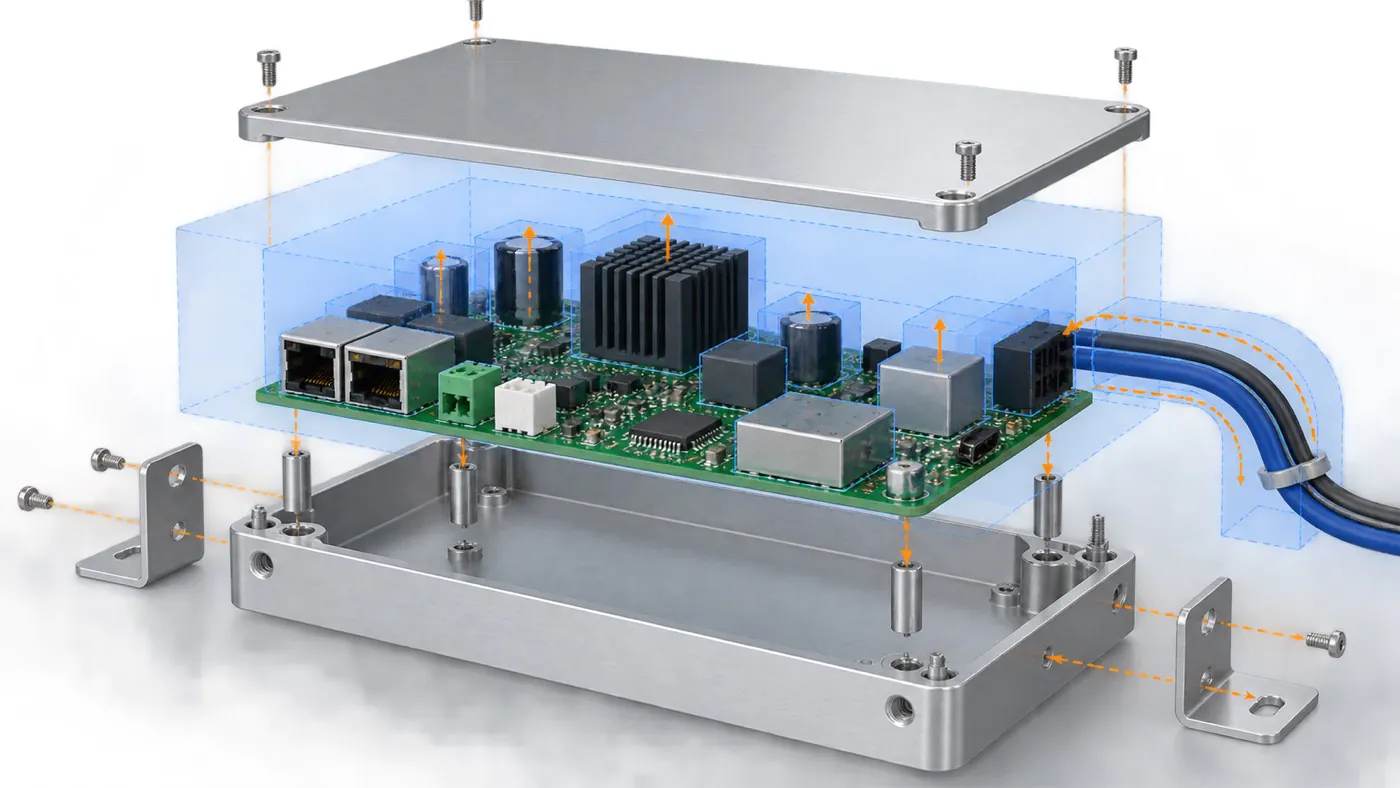
Concept clearance review; reuse is useful only when the existing geometry suits the project.
- Check fixed geometry. Internal width, height, wall features, and board slots are part of the profile. Cutting it to length does not freely alter its cross-section.
- Review the complete assembly. Include component heights, connector hardware, and access for the customer's installation process. Board dimensions alone are not a fit assessment.
- Confirm the customization route. Discuss the required holes, openings, end panels, finish, and markings against the specific enclosure structure.
- Compare alternatives when necessary. A different profile, assembled enclosure structure, dedicated tooling, or another manufacturing route may be appropriate if the existing option cannot meet the requirements.
PUMAYCASE's standard-profile-plus-custom-machining approach can help when an existing solution fits. It is not a guarantee of lower cost, shorter development, no tooling, or immediate availability.
Statement: An existing standard profile guarantees stock availability for the requested order.
Answer: False
Explanation: Availability, configuration, machining, and other order requirements still need project-specific confirmation.
How Can Buyers Compare the Scope of Quotations?
Compare the quoted scope before comparing totals. A price is difficult to interpret when one quotation includes end panels, markings, or packaging while another leaves those items undefined.
| Comparison item | Clarification to request | Record to keep |
|---|---|---|
| Parts supplied | Enclosure components and included accessories | Agreed part list |
| Machining | Features covered by the drawing revision | Referenced drawings and exceptions |
| Surface and marking | Finish, artwork, and appearance requirements | Approved specifications |
| Development items | Samples or tooling included in the offer | Separate description of each item |
| Delivery scope | Packing, destination, and shipping responsibilities | Written commercial clarification |
- Align the basis. Use the same quantity, revision, finish requirements, and delivery destination when requesting comparable offers.
- Ask about exceptions. A supplier's stated exclusions can be as important as the included work. Resolve them before treating the quotation as a complete supply proposal.
- Define the Finnish receiving location. Give the actual address, postal code, and receiving constraints rather than requesting delivery to Finland without further detail. Confirm which party coordinates each shipping step and which documents are included.
- Avoid assumed terms. MOQ, prices, sample quantities, production periods, and shipping arrangements must be confirmed for the project. Distinguish preliminary estimates from confirmed order terms.
Statement: Two quotations with the same total price necessarily cover the same work.
Answer: False
Explanation: Their parts, machining, finishes, packaging, and other included items may differ.
Which Finish and Marking Details Need Early Agreement?
Finish and marking requirements should be part of the technical review, not an informal addition after machining is complete. Define the surfaces the customer will see, the artwork to use, and how appearance will be accepted.
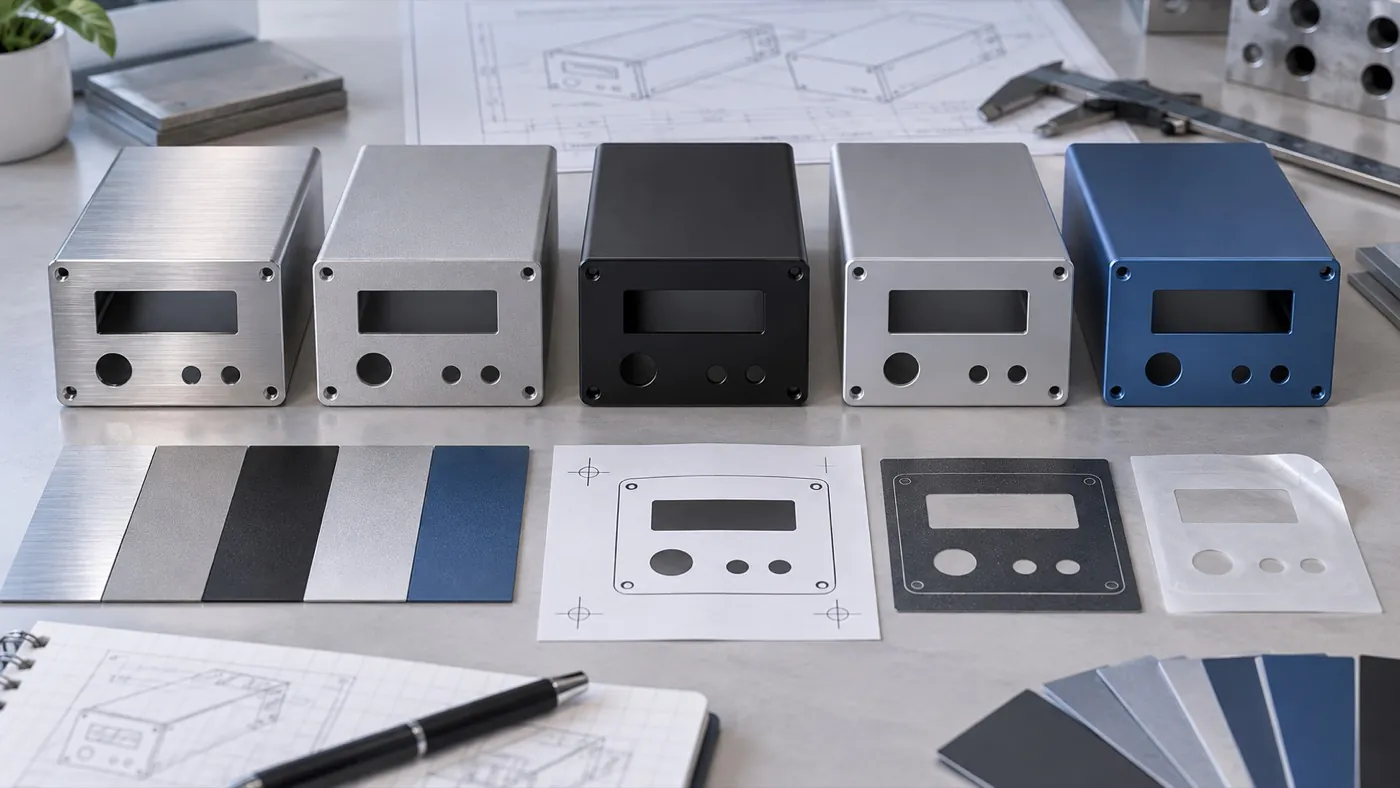
Concept finish comparison; approve actual appearance requirements alongside the mechanical configuration.
- Identify visible areas. Distinguish cosmetic surfaces from internal or functional areas. Record requirements that would affect acceptance rather than relying on a general request for a premium finish.
- Control the artwork. Include placement, orientation, and revision information for connector labels, logos, and other markings. Confirm which file is approved for production, including any required language versions.
- Use agreed references. A reference sample or another agreed appearance specification gives both parties something concrete to review. Photographs alone may leave important details unresolved.
- Review functional interfaces. Bring surfaces involved in fit, electrical contact, or thermal interfaces to engineering review before approving the finish combination.
PUMAYCASE supports finishes and marking options including anodizing, powder coating, screen printing, and laser marking. The appropriate combination and acceptance requirements depend on the project.
Statement: Artwork should be controlled by revision when it forms part of the supplied enclosure.
Answer: True
Explanation: Repeat production needs an identifiable reference for the approved labels and their placement.
What Should a Sample Review Establish?
A sample review should resolve the specific risks that could prevent the enclosure from fitting the product or meeting the agreed appearance requirements. Define those checks before sampling so that approval has a clear meaning.
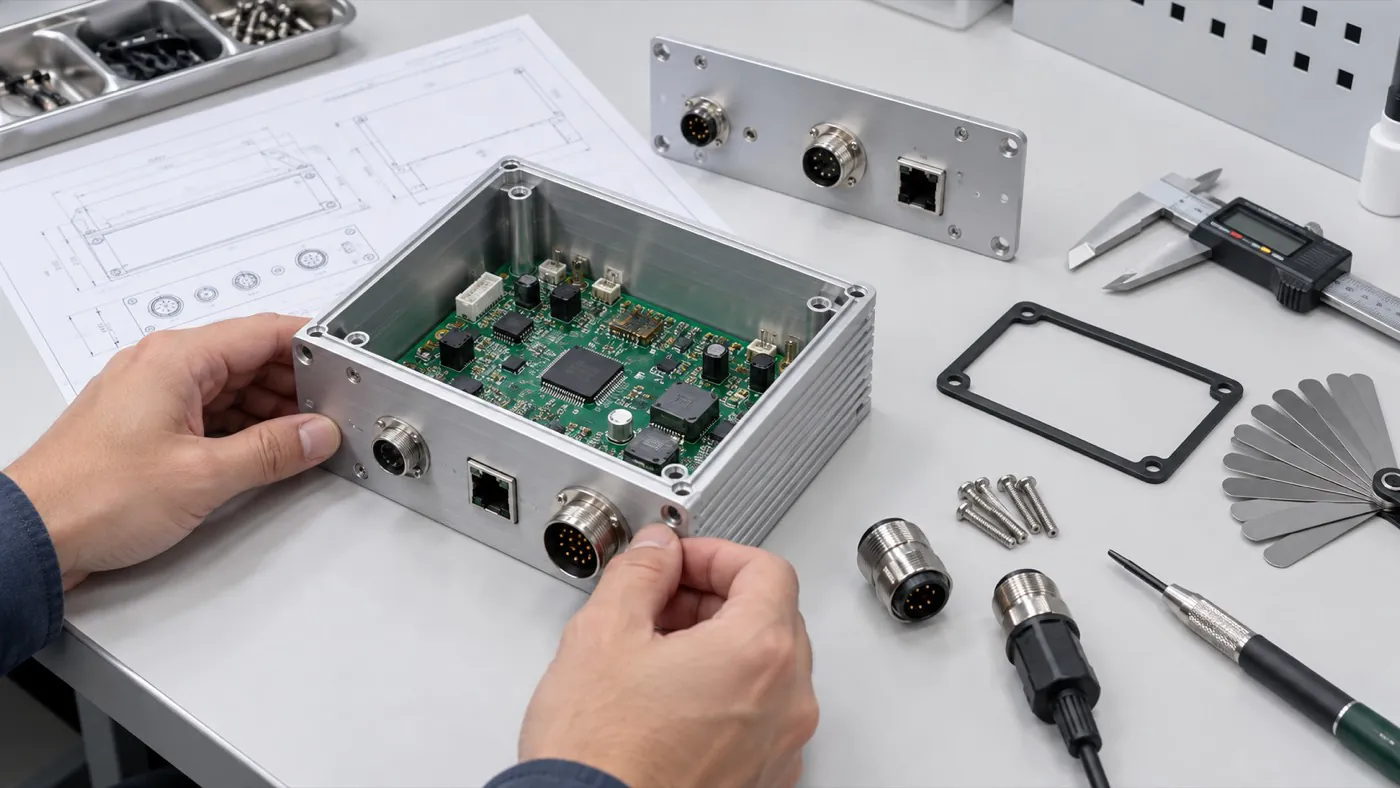
Concept customer-side fit review, not a factory assembly service or a passed performance test.
- Trial the real interfaces. Use the intended PCB assembly, connectors, and mechanical hardware where possible. Substitutes can leave the critical fit question unanswered.
- Check actual use conditions. An indoor cabinet controller and an exposed outdoor monitor have different requirements, even when both are sold in Finland. Define the product's installation and exposure instead of assigning a universal IP rating by country.
- Record deviations. List any agreed changes and identify whether a further sample or another form of verification is needed before production.
- Keep responsibilities clear. Enclosure inspection does not automatically include the customer's complete-product functional, thermal, EMC, safety, or certification validation.
Statement: Approving an enclosure sample proves that the complete electronic product passes all required tests.
Answer: False
Explanation: Complete-product validation requires the appropriate customer-defined configuration, procedures, and evidence.
How Should Repeat Supply Be Controlled?
Repeat orders should reference the approved configuration and any subsequent changes. Keeping mechanical files, artwork, appearance references, and acceptance records together reduces ambiguity when different people handle engineering and purchasing.
| Controlled item | Review before reordering |
|---|---|
| Drawing revision | Confirm geometry and machining changes |
| Artwork revision | Confirm labels and identification |
| Finish reference | Confirm the required appearance |
| Sample exceptions | Confirm that approved changes were incorporated |
| Quantity and packaging | Confirm the requirements for this order |
- Assign ownership. Identify who can release engineering changes and who can approve the purchase. Avoid using informal comments as an undocumented revision process.
- Review product changes. A new connector or PCB layout may affect the enclosure even when the product name is unchanged.
- Specify records needed. Agree on the inspection or other supply records required for the project. Do not assume a standard record package that has not been confirmed.
What Should Be Resolved Before Selecting the Supplier?
Select the supplier after resolving the requirements that materially affect feasibility, acceptance, and repeat supply. Unanswered questions should remain visible rather than being treated as implicit promises.
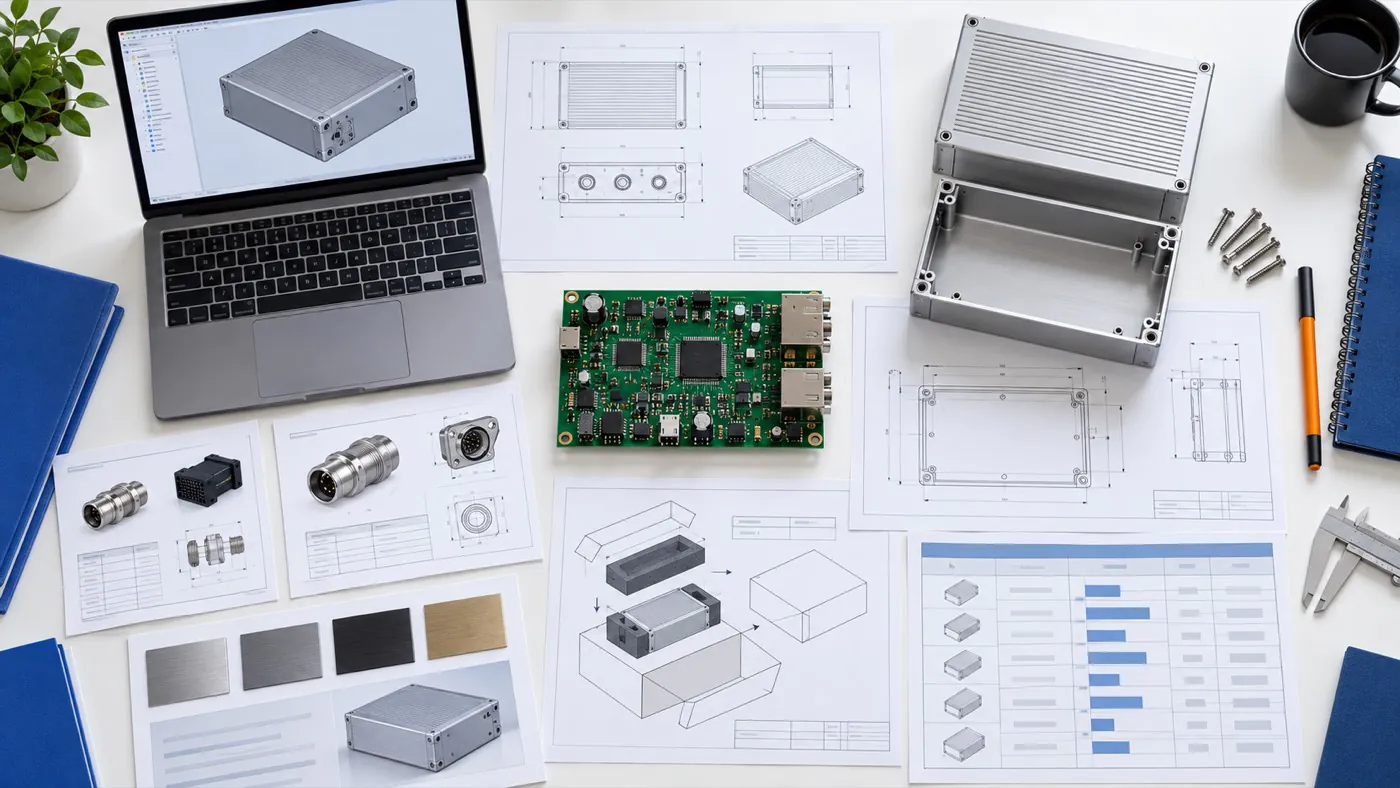
Illustrative review package; base the decision on agreed requirements and evidence.
- Close technical exceptions. Identify any requirement the proposed enclosure route cannot meet and decide whether to change the design or evaluate another route.
- Confirm the next stage. State whether the order authorizes a sample, a trial batch, or production of an approved version.
- Retain the decision basis. Keep the quotation, revisions, approval records, and outstanding actions together for later reference.
A documented decision gives the hardware team a useful starting point for managing both the first order and subsequent supply.
Conclusion
Hardware companies in Finland should evaluate custom aluminum enclosure suppliers against their actual product requirements, comparable quotation scopes, sample evidence, and repeat-order controls. The buyer's location does not establish a universal material preference or prove supplier capability. Send PUMAYCASE your PCB envelope, drawings, interfaces, mounting requirements, finish needs, and target quantities to evaluate a suitable enclosure and customization route.