
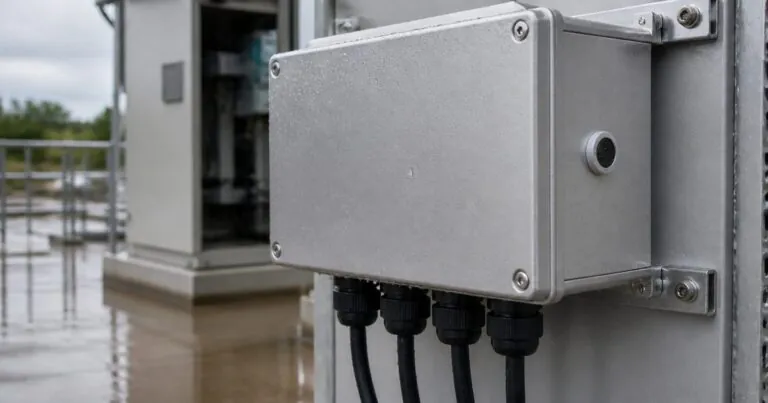
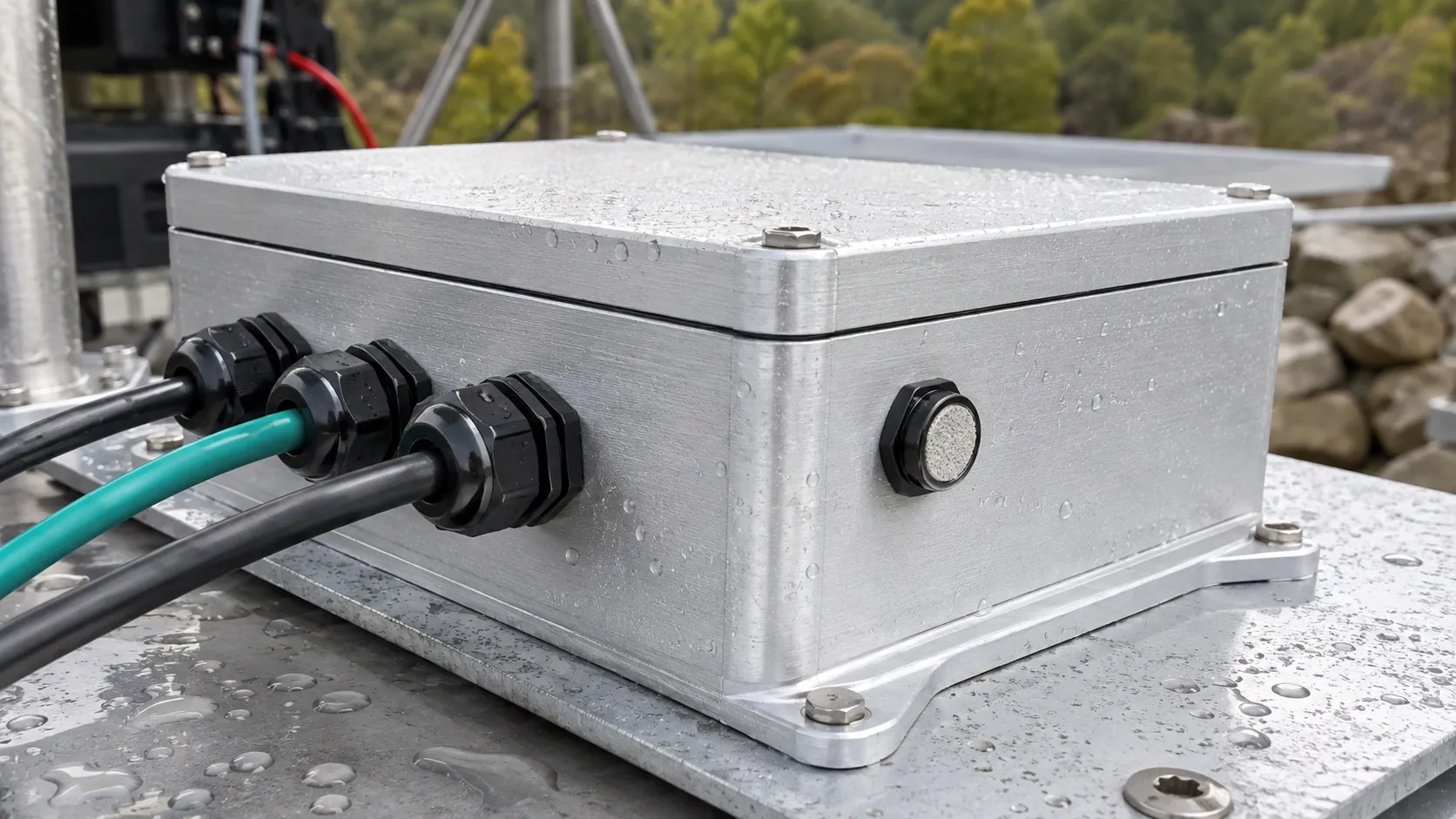
Waterproof boxes still breathe through pressure changes. Heat, rain, altitude, and sunlight can stress seals. A pressure vent can help when the application is right.
I use vent discussions often for outdoor sensors, gateways, charging controllers, and renewable energy monitors. This guide explains when a vent helps and when design teams should be careful.
1. Why does a sealed enclosure need pressure control?
A sealed enclosure needs pressure control because internal air expands and contracts during temperature changes, and this pressure cycling can stress gaskets and cable entries.
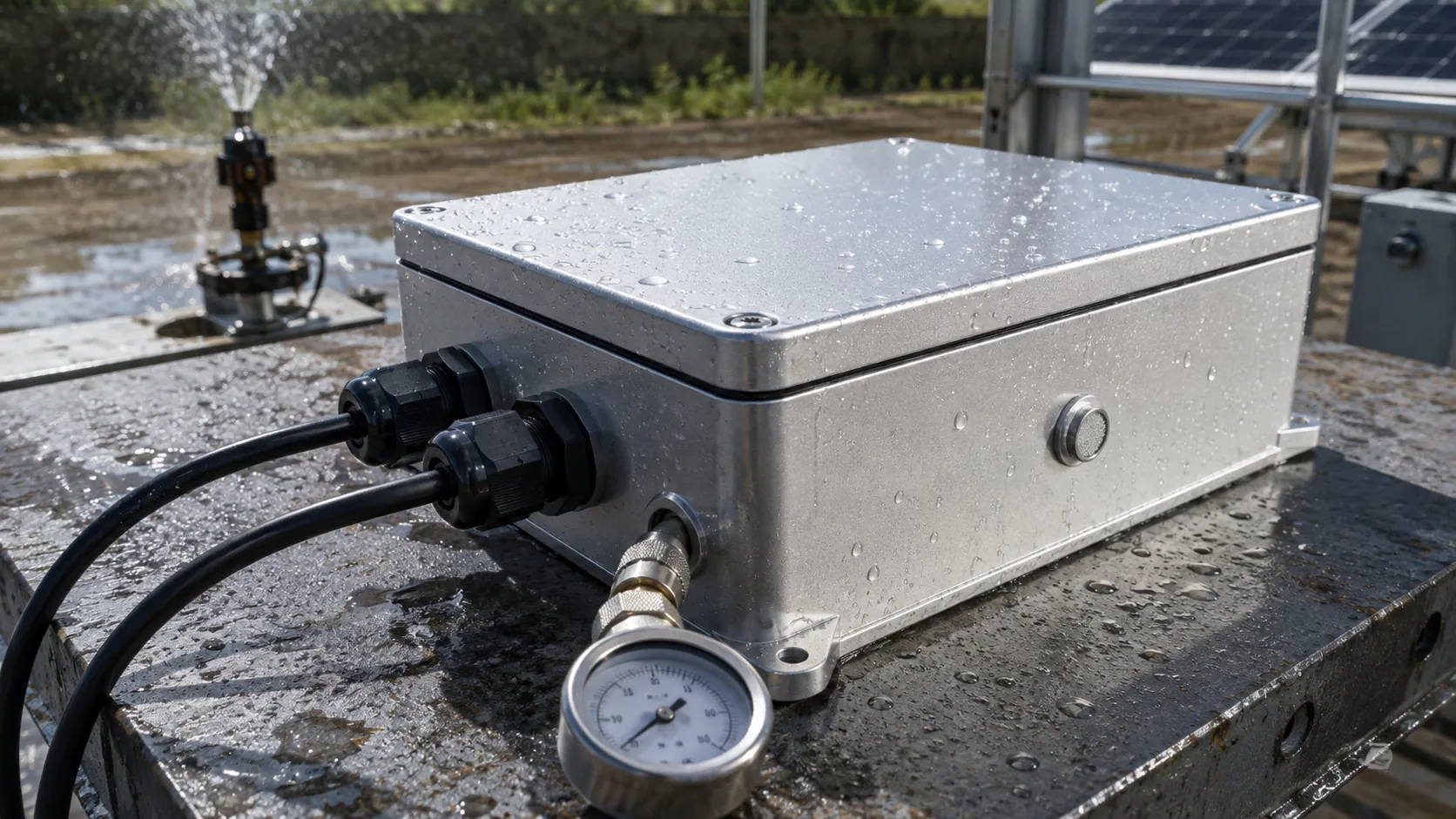
An IP67 enclosure is not a magic box. It protects against dust and temporary immersion under defined conditions, but outdoor use adds daily temperature cycles. Hot sun warms the air inside. Cold rain cools the case quickly. This can create pressure difference.
The IEC IP ratings explanation is a useful starting point because it helps engineers understand what the IP code describes. Field reliability still depends on cable glands, assembly, mounting direction, and pressure stress.
| Outdoor Factor | What Happens | Risk |
|---|---|---|
| Hot sun | Internal air expands | Seal stress |
| Cold rain | Pressure drops fast | Moisture can be pulled inward |
| Altitude change | Pressure changes | Gasket load changes |
| Power cycling | Heat rises and falls | Condensation risk |
Pressure cycling can hurt waterproof performance.True
This is true because the seal is tested as a system, not only as a rubber part.
2. When should engineers add a pressure vent?
Engineers should consider a pressure vent when the enclosure is sealed, installed outdoors, exposed to temperature cycling, or has a large internal air volume.
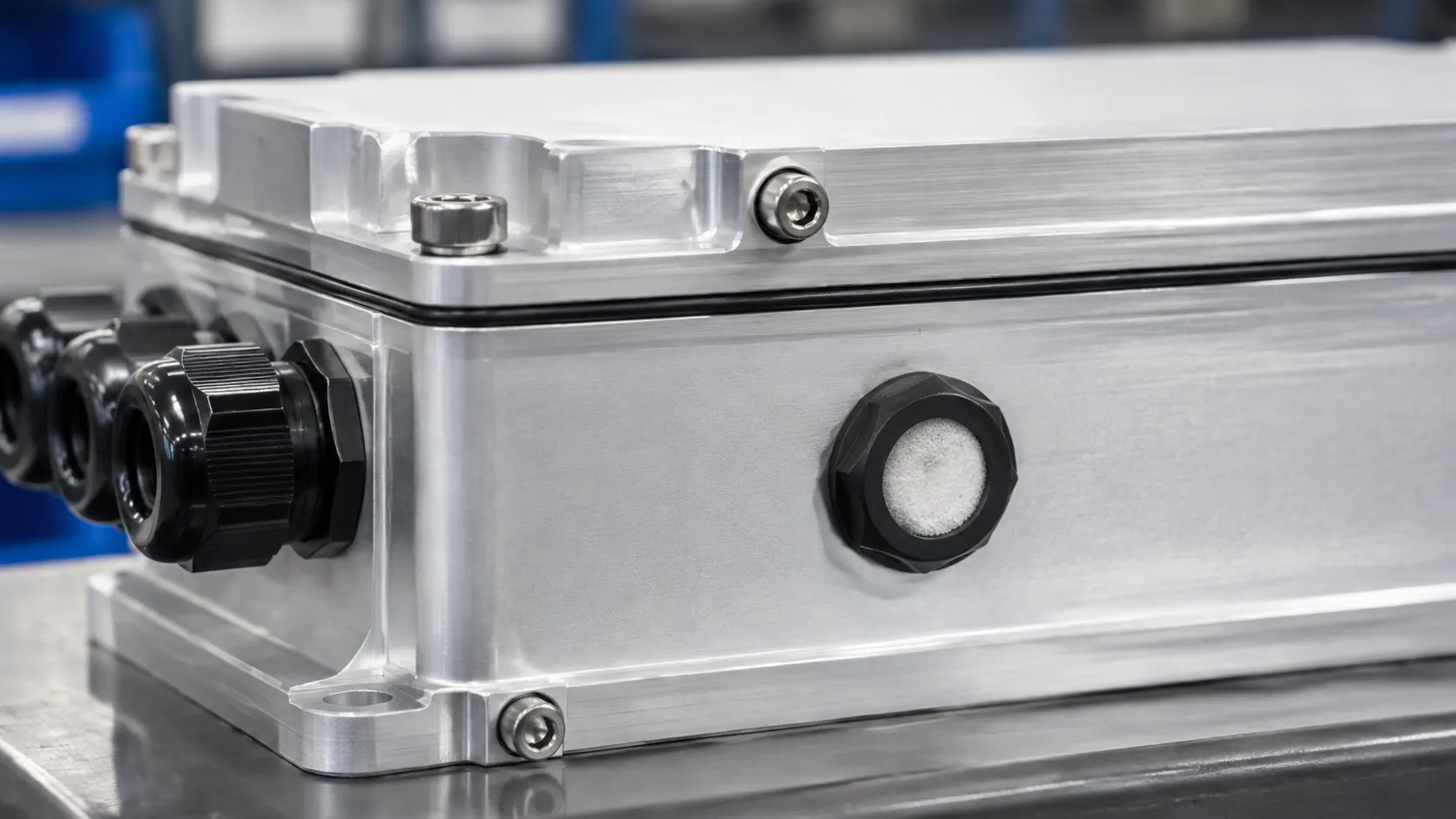
A pressure vent allows air pressure to equalize while helping block liquid water. It can reduce seal stress and help manage condensation risk. It is common in outdoor electronic devices, lighting, sensors, and control modules.
Gore explains that protective vents are used to equalize pressure and protect enclosures in changing environmental conditions. Their protective vent FAQ is a useful reference for the concept.
| Use Case | Vent Usually Helps? | Note |
|---|---|---|
| Outdoor sensor | Yes | Temperature cycling is common |
| Indoor controller | Sometimes | Depends on heat and washdown |
| Fully submerged device | Be careful | Vent rating and placement are critical |
| Small sealed module | Sometimes | Volume and heat matter |
A vent is not a replacement for a gasket.True
This is true because the enclosure still needs a stable sealing path, screw pressure, and rated cable entries.
3. Where should the vent be placed?
The vent should be placed on a flat, protected surface away from direct water impact, dirt buildup, cable strain, and handling damage.
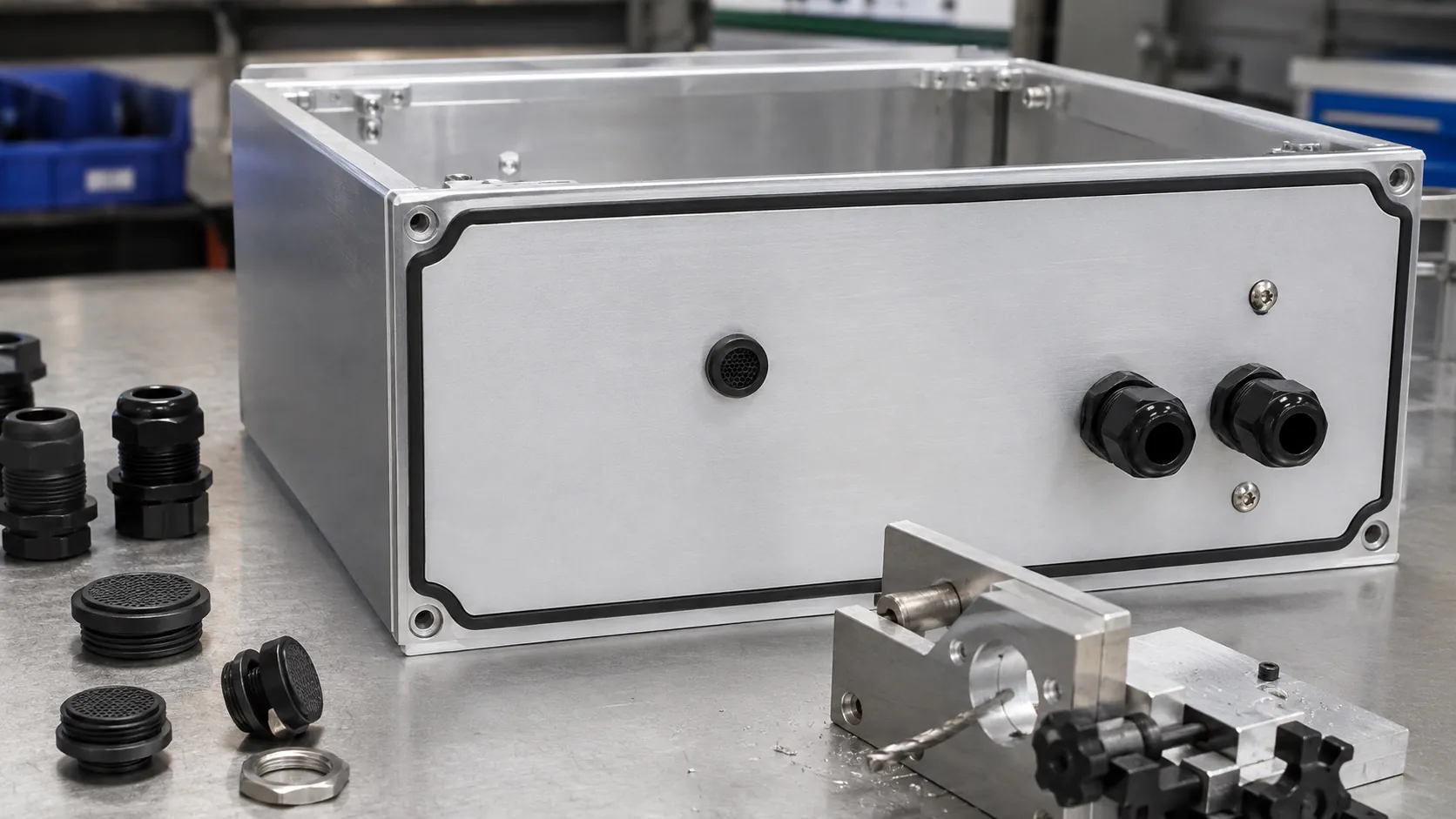
Placement matters. A vent on the top face may collect water. A vent too close to a cable gland may be damaged during installation. A vent on a thin wall may not seal well. I prefer to review vent position before the PCB and connectors are fully locked.
For waterproof aluminum enclosures, CNC machining can prepare the vent hole, thread, or flat boss. The drawing should state the vent model and mounting requirement.
| Placement Point | Better Practice | Risk If Ignored |
|---|---|---|
| Surface | Flat machined area | Poor sealing |
| Direction | Shielded from direct spray | Water impact |
| Service | Easy but protected access | Damage during installation |
| Thickness | Match vent requirement | Loose thread or weak panel |
Vent placement should be designed early.True
This is true because late vent placement can conflict with PCB parts, labels, or connectors.
4. What should be checked before IP testing?
Before IP testing, engineers should check vent model, gasket condition, cable glands, connector seals, screw torque, blanking plugs, and the complete assembled test configuration.
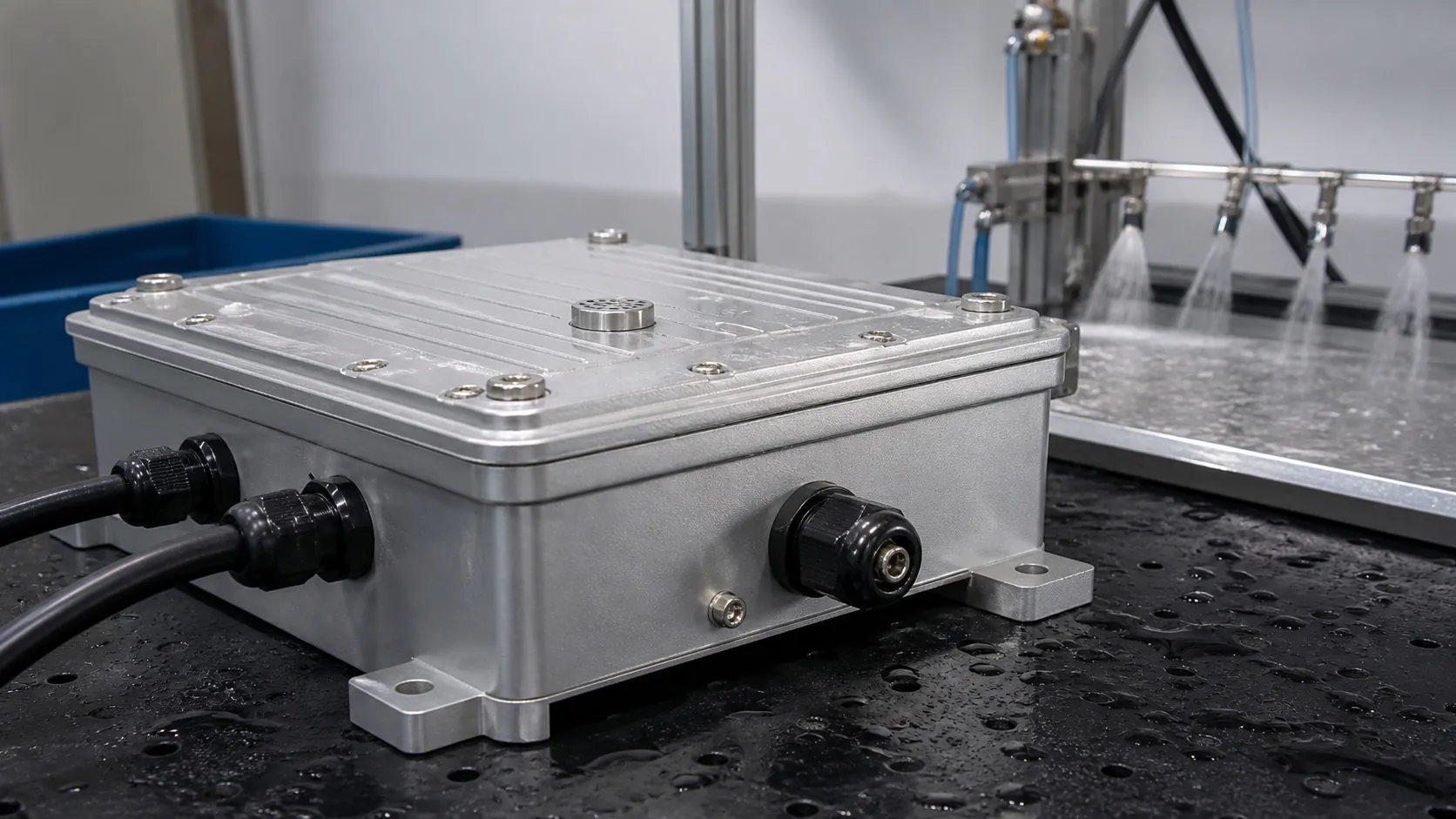
I always ask whether the test uses the real assembled unit. A bare enclosure may pass, but the final product may fail when cable glands, connectors, or vents are installed incorrectly.
For custom aluminum enclosure solutions, I suggest building one complete test sample with the same vent, cable glands, screws, gaskets, and finish planned for production.
Complete assembly testing is more useful than shell-only testing.True
This is true because water usually finds the weakest assembled detail.
Conclusion
Waterproof aluminum enclosure venting helps when pressure cycling, condensation, and outdoor exposure are real risks. Engineers should plan the vent with sealing, CNC machining, and IP testing together.