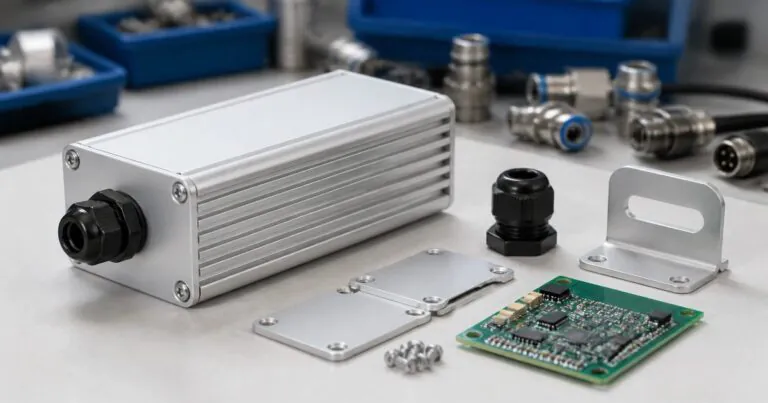
Smart sensor projects move quickly. But enclosure tooling can slow the whole schedule. An extruded aluminum enclosure helps engineers test electronics sooner when the size is close.
I write this article for engineers who need a practical path from PCB test to small-batch production. I will explain when extrusion helps, what still needs CNC machining, and how to avoid late assembly problems.
1. Why does extrusion shorten prototype lead time?
Extrusion shortens prototype lead time because engineers can use an existing aluminum profile body and customize mainly the length, end plates, holes, finish, and marking.
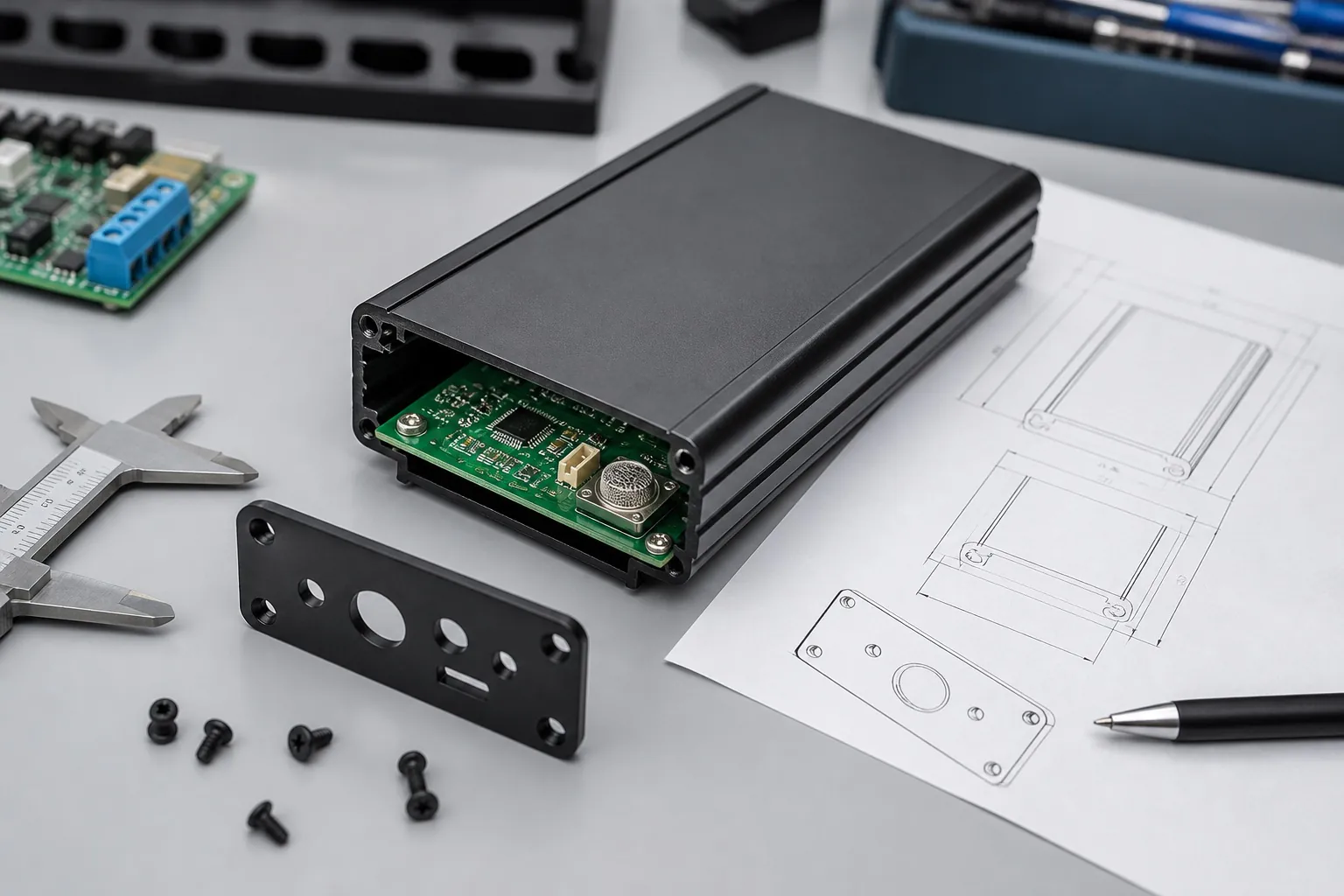
When a smart sensor is in development, the enclosure shape may not need a new mold. Many devices can fit an existing profile. The body can be cut to length. The front and rear panels can be CNC machined.
This method is useful for environmental sensors, industrial IoT nodes, data loggers, gateway modules, and energy monitoring devices. It protects the development schedule because the engineering team can test the PCB, cable entry, heat, and sealing early.
| Prototype Need | Extrusion Advantage | Practical Limit |
|---|---|---|
| Fast sample | Existing body size | Must fit available profile |
| Connector changes | CNC end plate update | Panel space still limited |
| Small batch | Stable repeat body | Custom shape may be limited |
| Heat spreading | Aluminum shell | Heat path still needs contact |
| Branding | Anodizing and marking | Artwork must be confirmed |
Existing extrusion reduces tooling pressure.True
This is true because Jeff can test the product before paying for a new profile mold.
2. What smart sensor details should be checked first?
Engineers should check PCB size, connector side, cable diameter, antenna location, heat source, mounting method, IP target, and service access before choosing the enclosure.
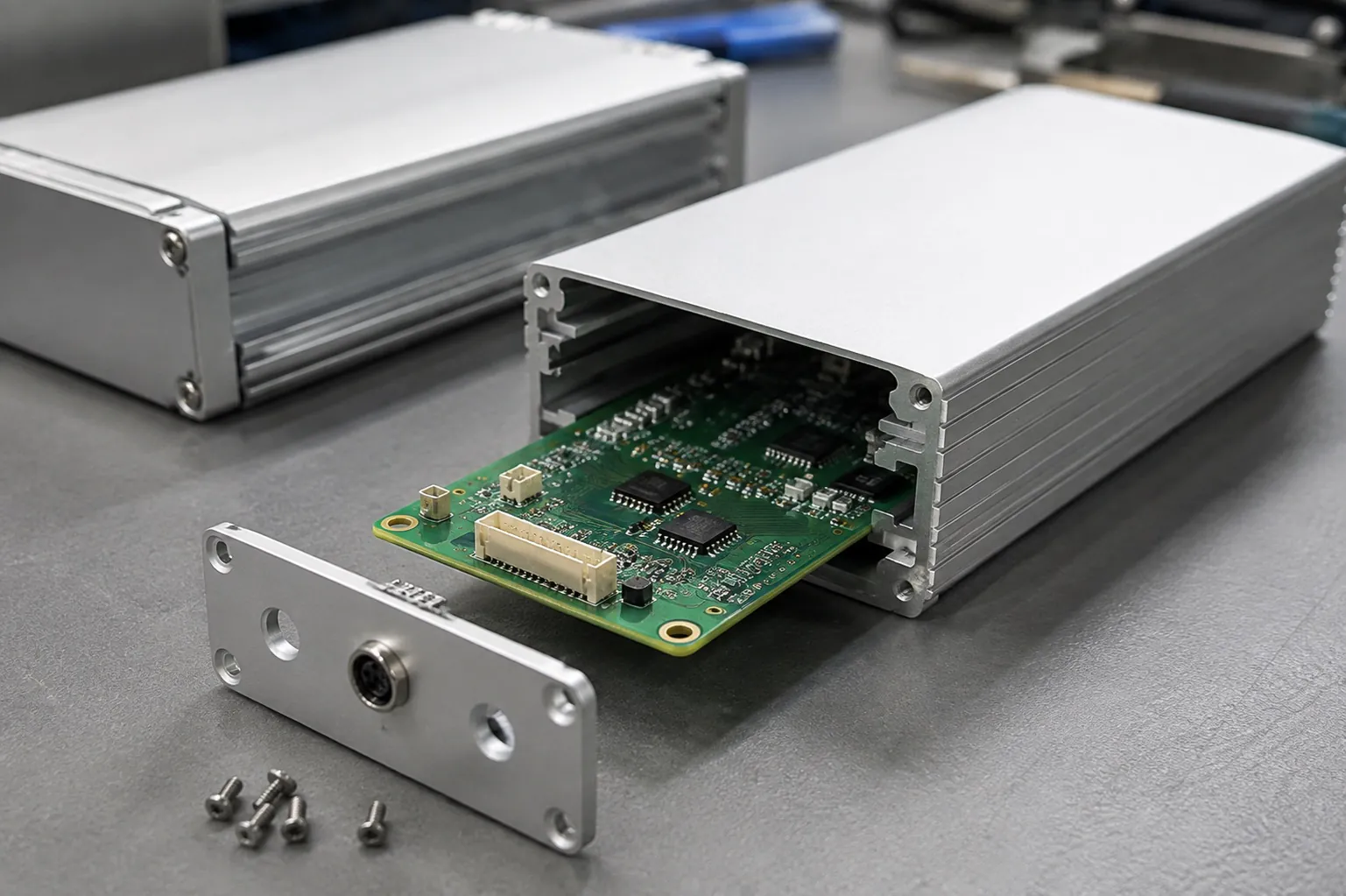
I like to start with the PCB and connector direction. If the cable leaves from the wrong side, installation becomes awkward. If the antenna sits inside a full aluminum shell, signal strength may drop. If the heat source sits far from the wall, aluminum cannot help enough.
The Aluminum Association notes that aluminum properties are affected by alloy and temper choices. Their standards information helps engineers understand why material notes should not be vague.
| Sensor Detail | Question to Ask | Why It Matters |
|---|---|---|
| PCB | Does it slide into internal grooves? | Reduces brackets and screws |
| Cable | What is the real cable OD? | Controls gland selection |
| Antenna | Internal or external? | Affects RF performance |
| Heat | Where is the hot component? | Guides contact design |
| Mounting | Wall, rail, pole, or machine? | Changes bracket design |
The PCB should guide the enclosure choice.True
This is true because the enclosure must support real assembly, not only outside size.
3. How should CNC end plates support fast changes?
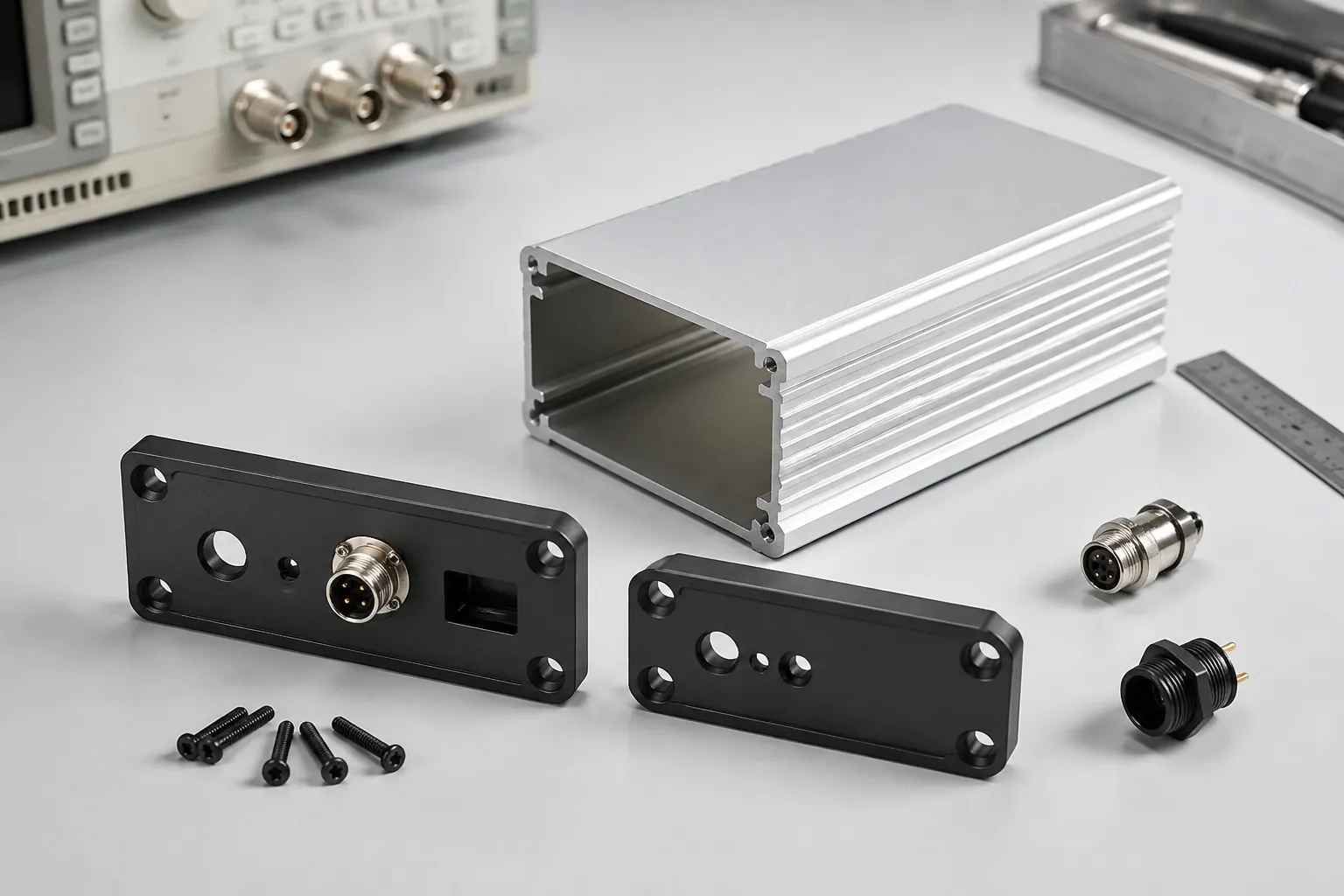
CNC end plates support fast changes by carrying connector cutouts, LED windows, cable glands, antenna ports, mounting holes, and product labels.
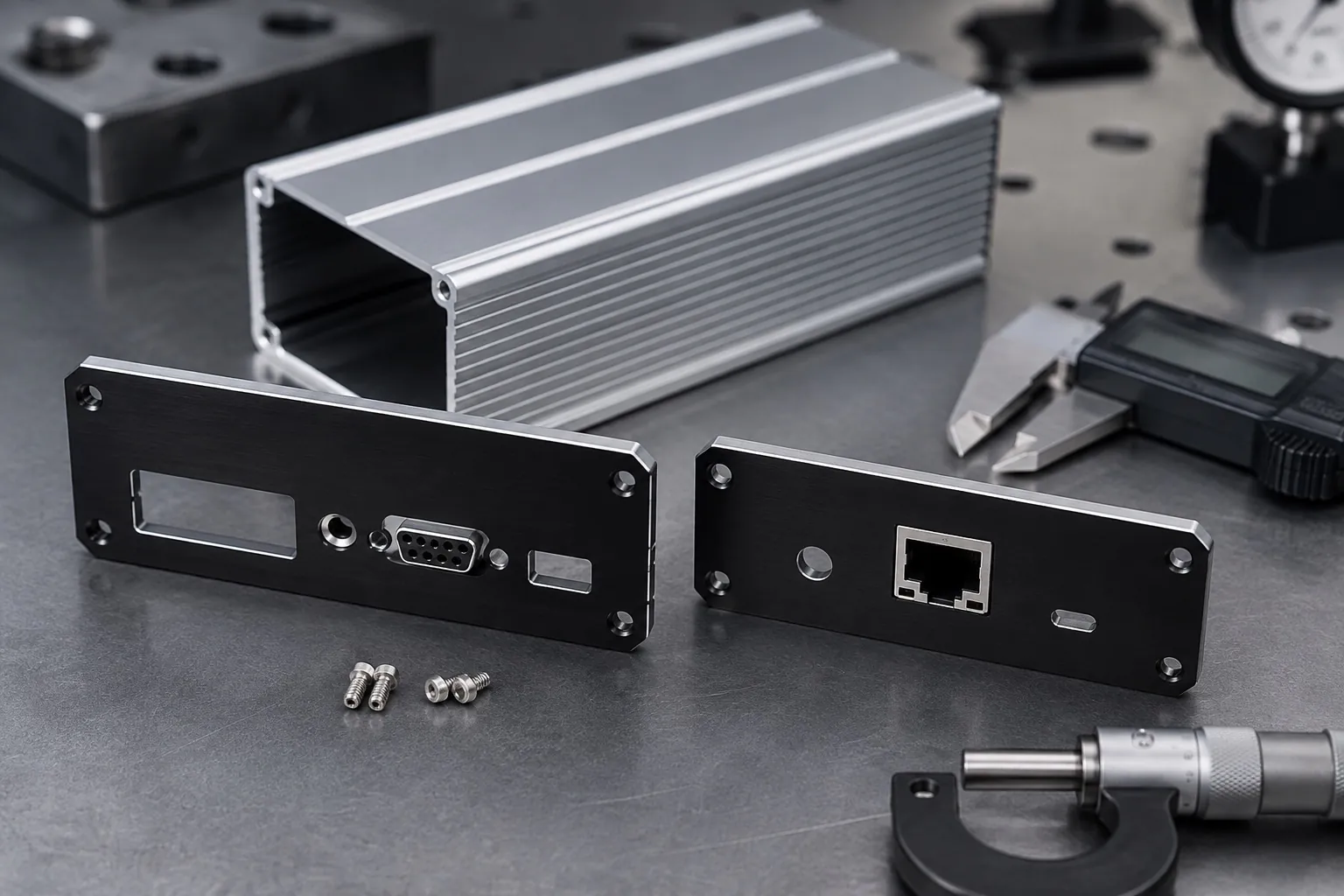
For extruded aluminum enclosures, I often suggest keeping the body stable and changing the end plates as the project develops. This is helpful when the first PCB test changes the connector layout. PUMAYCASE can also support CNC aluminum enclosure machining when the same profile needs different connector versions.
A prototype may start with one M12 connector and later need two. A SIM slot may move. A reset button may be added. A status LED may need a clearer position. CNC machining handles these changes faster than new tooling.
| Change | CNC Response | Schedule Benefit |
|---|---|---|
| Connector moves | Update machining file | Fast panel remake |
| New LED window | Add small cutout | No body change |
| Cable gland changes | Change hole and thread | Keeps enclosure route |
| Label changes | Update laser marking file | Supports product versions |
Modular customization helps small batches.True
This is true because small production often needs product variants before the design becomes stable.
4. When is a fully custom mold still needed?
A fully custom mold is needed when the required size, internal rails, heat fins, wall thickness, appearance, or assembly structure cannot fit an existing profile.
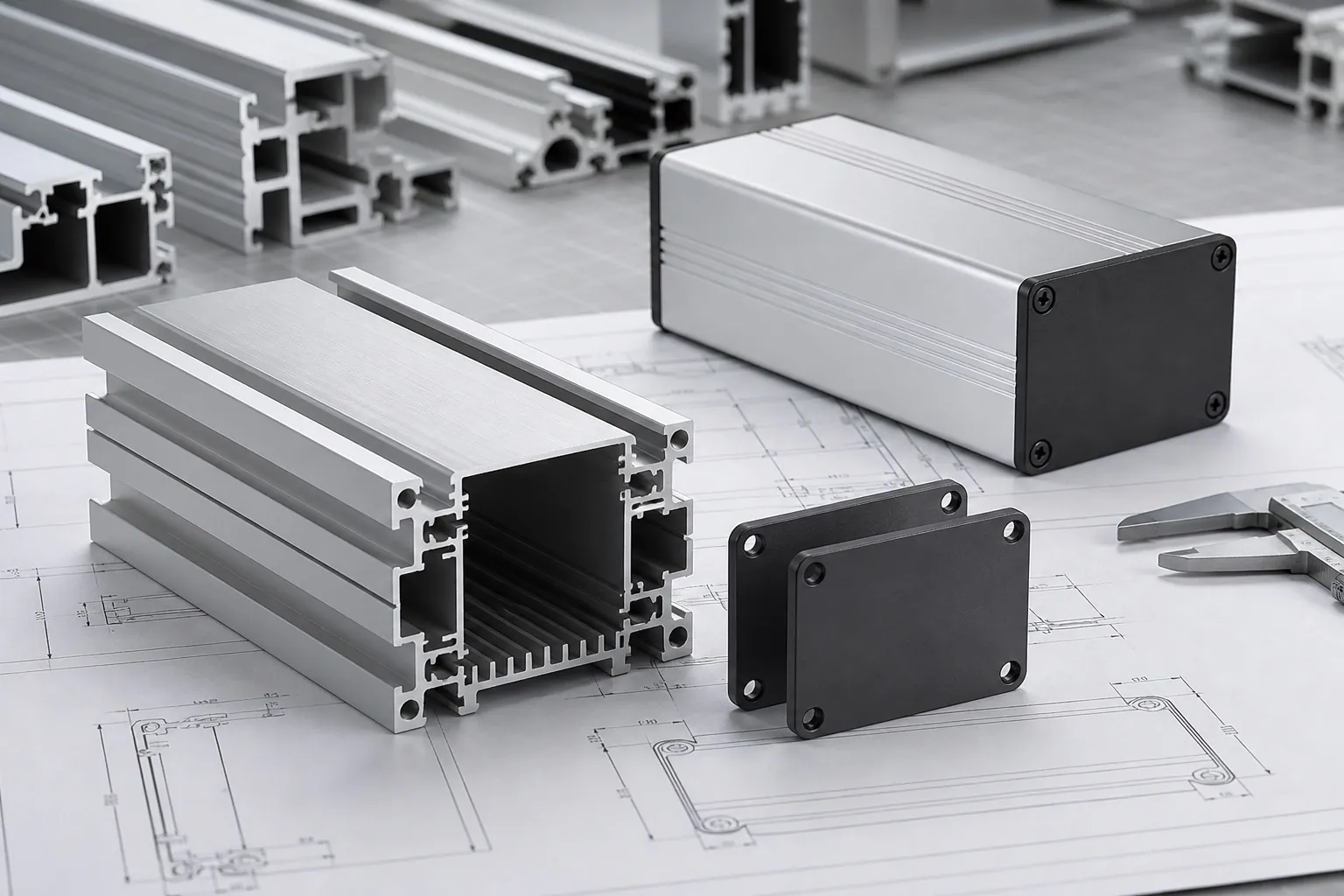
I do not force every project into a standard body. Sometimes the product needs a special shape. A smart sensor may need a curved surface, integrated mounting rail, deep heat fins, or a special internal board slot.
In that case, a custom extrusion mold can be the better long-term decision. But I still suggest using a standard enclosure for early tests when possible. This gives the customer faster feedback before they lock a mold.
Custom molds are best after function is proven.True
This is true because mold changes cost more time than CNC panel changes.
Conclusion
An extruded aluminum enclosure can shorten smart sensor prototype lead time when engineers match the PCB, connectors, sealing, heat path, and CNC end plates early.