
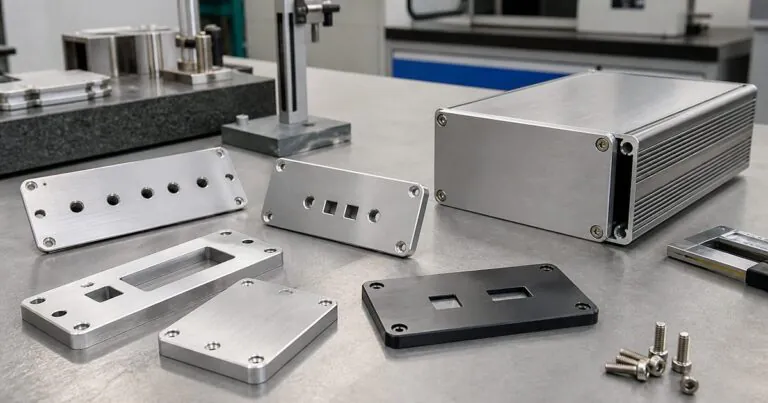
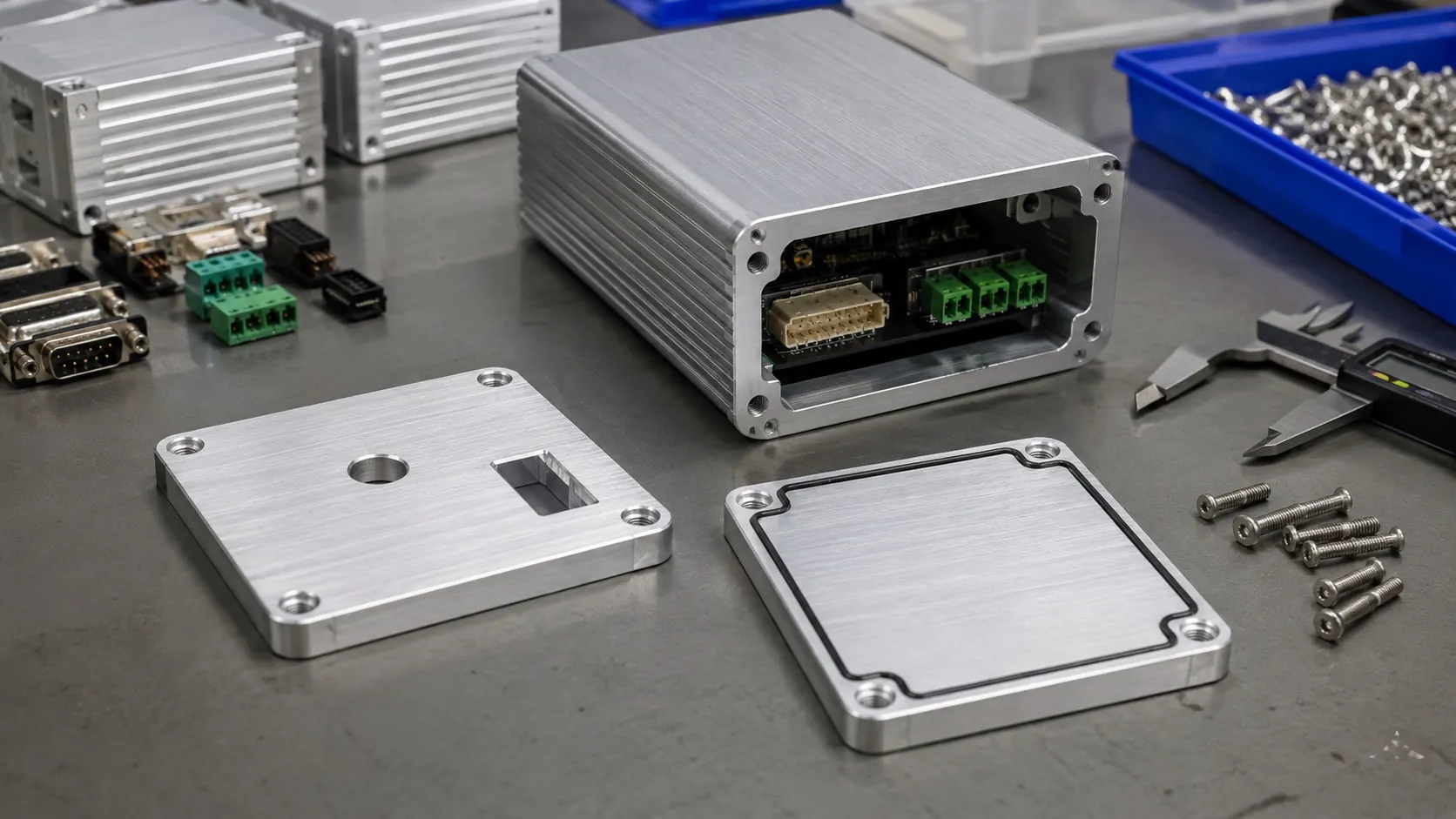
Small-batch production can fail because of small panel details. A connector may not fit. A screw may miss the thread. A CNC machined end plate checklist helps engineers reduce these delays before release.
I write this guide for Jeff, the product engineer who needs fast samples, clear tolerances, and stable repeat production. I will explain the end plate details I check before machining aluminum enclosure panels for industrial electronics.
1. Why should engineers check CNC machined end plates before production?
CNC machined end plates should be checked because they control connector fit, sealing pressure, screw alignment, labeling position, and final assembly speed.
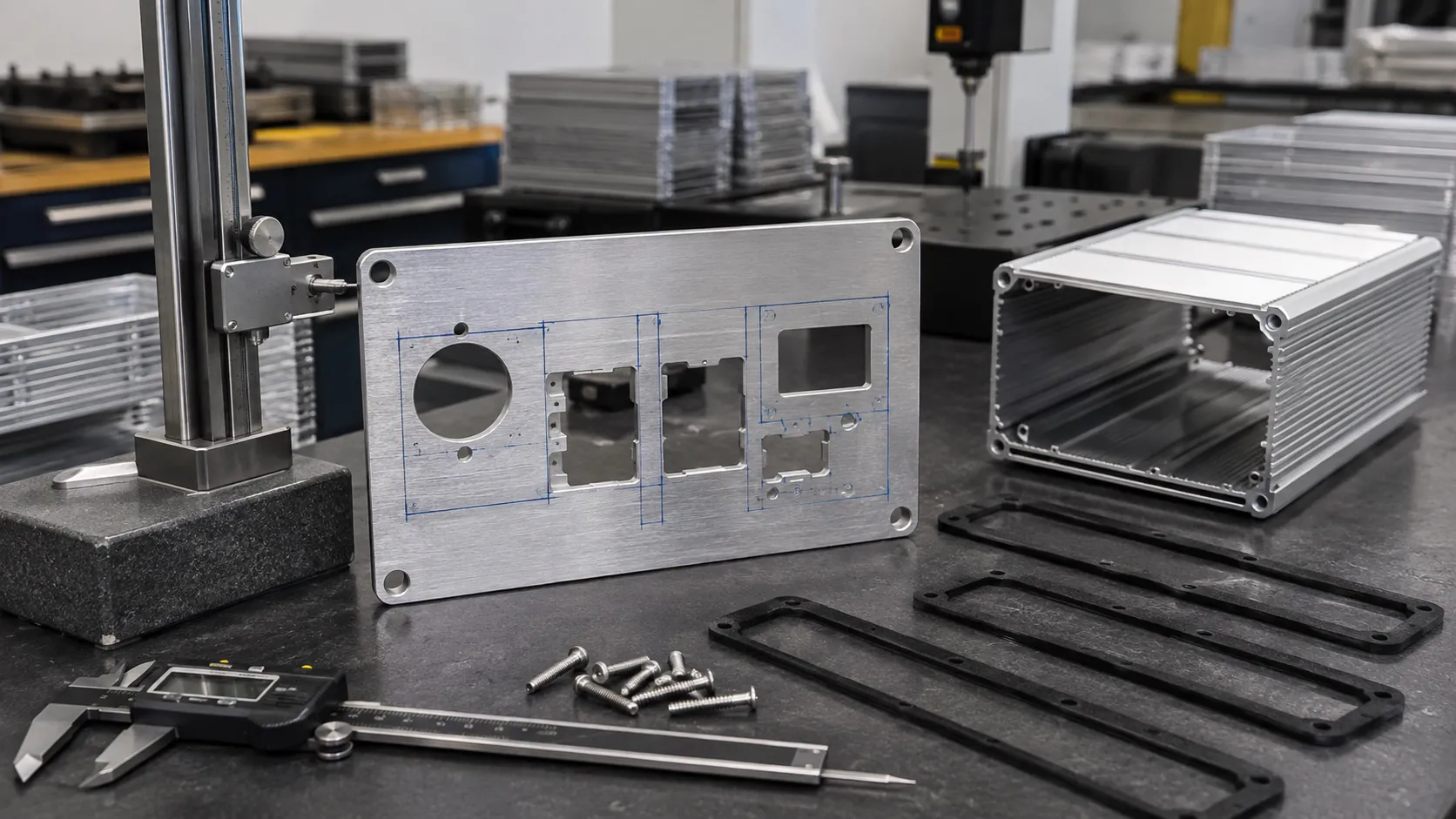
In many custom aluminum enclosure solutions, the extrusion body is stable. The end plates carry most of the customization. That means one small error on the end plate can stop the whole project.
I usually check the end plate against the real PCB and connector datasheets. A drawing may show a round hole, but the connector nut may need extra wrench space. A USB opening may look fine in CAD, but the cable plug may need clearance around the outside face.
| Check Point | Common Risk | Practical Check |
|---|---|---|
| Connector holes | Plug cannot enter smoothly | Check connector datasheet and real plug size |
| Screw holes | End plate does not close flat | Match extrusion thread position |
| Gasket area | Leak around panel | Keep enough flat sealing land |
| Labels | Marking conflicts with ports | Review final port order before printing |
| Board height | Connector is off-center | Check PCB standoff and soldered part height |
CNC end plate review reduces production risk.True
This is true because most small-batch enclosure problems appear during assembly, not during machining. A 15-minute drawing review can save a full remake.
2. How should connector cutouts be checked?
Connector cutouts should be checked with the connector body, nut, washer, cable bend radius, and PCB position, not only with the nominal hole size.
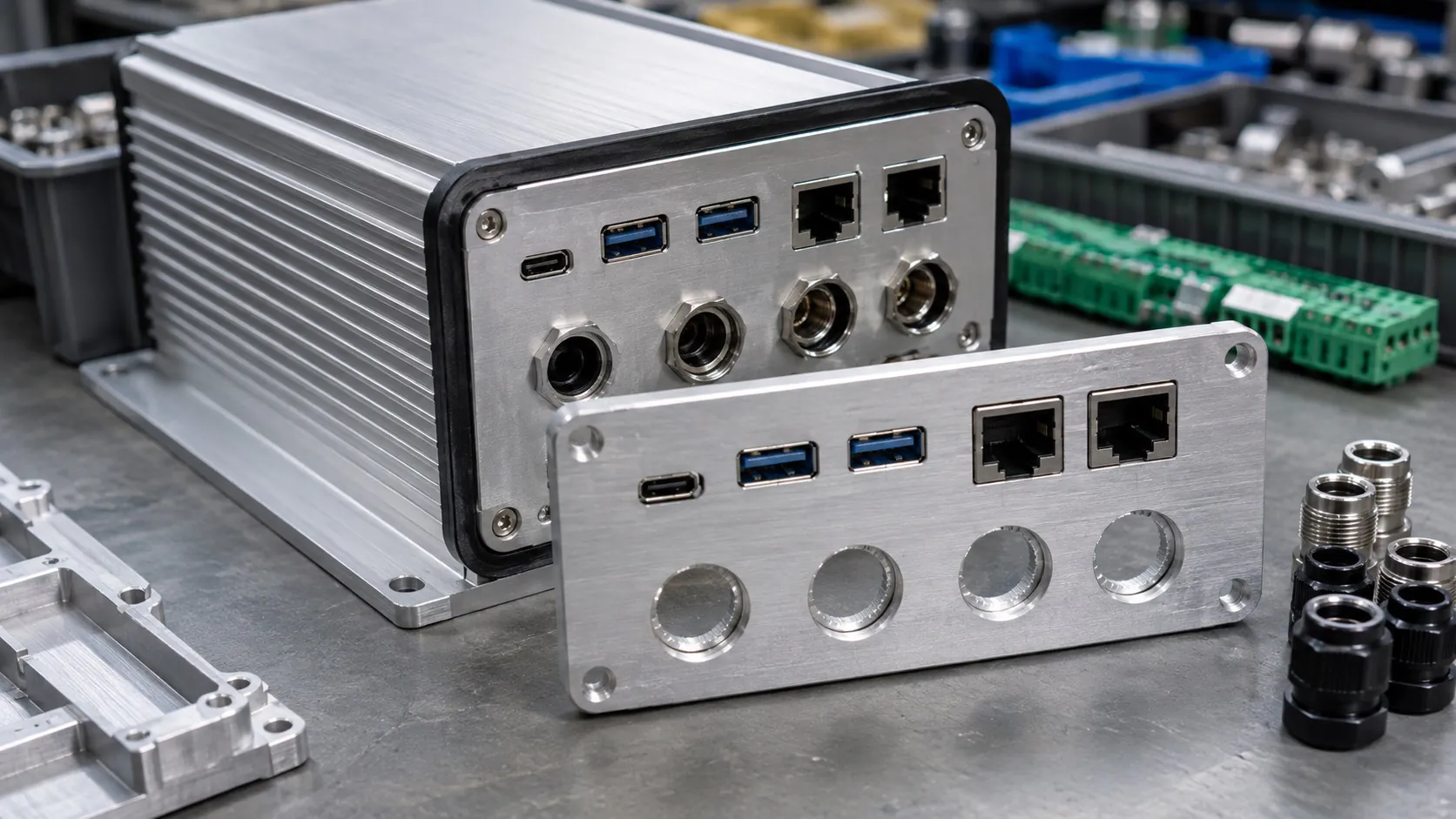
I ask customers to send connector model numbers when possible. M12 connectors, cable glands, SMA antenna connectors, RJ45 sockets, USB ports, and terminal blocks all need different clearance rules.
The FCC equipment authorization resources are useful when a device has radio modules, because connector and antenna placement can affect RF compliance work. The enclosure is not the only factor, but it can support or hurt the test plan.
| Connector Type | What I Check | Why It Matters |
|---|---|---|
| M12 connector | Thread, washer, panel thickness | Prevents leakage and loose mounting |
| Cable gland | Cable OD and nut clearance | Avoids wrong sealing range |
| SMA antenna | Flat face and grounding note | Helps RF and sealing repeatability |
| USB or RJ45 | Plug clearance outside panel | Prevents field connection problems |
| Terminal block | Wire entry direction | Helps installer access |
Nominal hole size is not enough.True
This is true because a connector is an assembly. The body, washer, nut, plug, and cable all need physical space.
3. What tolerance and finish notes should be included?
End plate drawings should include critical hole tolerances, datum references, burr removal notes, anodizing requirements, grounding areas, and marking positions.
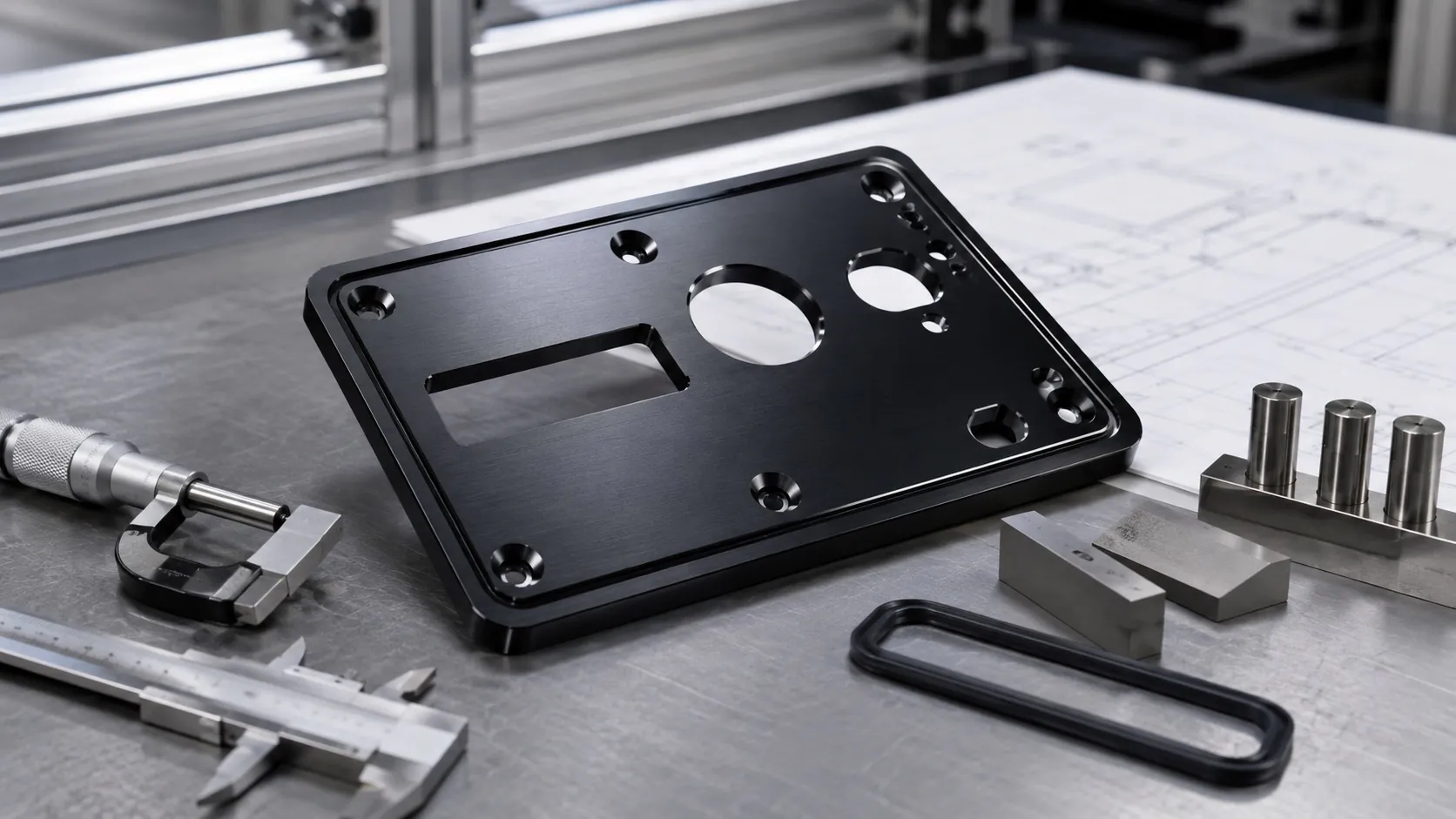
For simple panels, general tolerance may be enough. For connector alignment, I prefer to mark the important holes. If all dimensions use the same tight tolerance, the cost can increase without helping the real function.
Anodizing also needs attention. The Aluminum Anodizers Council explains that anodizing creates a durable anodic oxide finish and that alloy, finish, environment, and coating requirements should be specified clearly. Their anodized aluminum finish guidance is useful when engineers compare surface options.
| Drawing Note | Better Wording | Reason |
|---|---|---|
| Critical holes | Mark connector centerline tolerance | Controls visible and functional fit |
| Burrs | Deburr all connector openings | Protects gasket and cables |
| Finish | Black anodized after machining | Avoids late finish confusion |
| Grounding | Mask this contact area if needed | Supports EMC contact |
| Marking | Laser marking per final artwork | Keeps port labels repeatable |
Finish notes belong on the engineering drawing.True
This is true because surface treatment affects appearance, grounding, and sometimes tight fits.
4. How can PUMAYCASE reduce small-batch risk?
PUMAYCASE reduces risk by reviewing 2D drawings, 3D files, connector details, CNC feasibility, anodizing needs, and assembly order before machining starts.
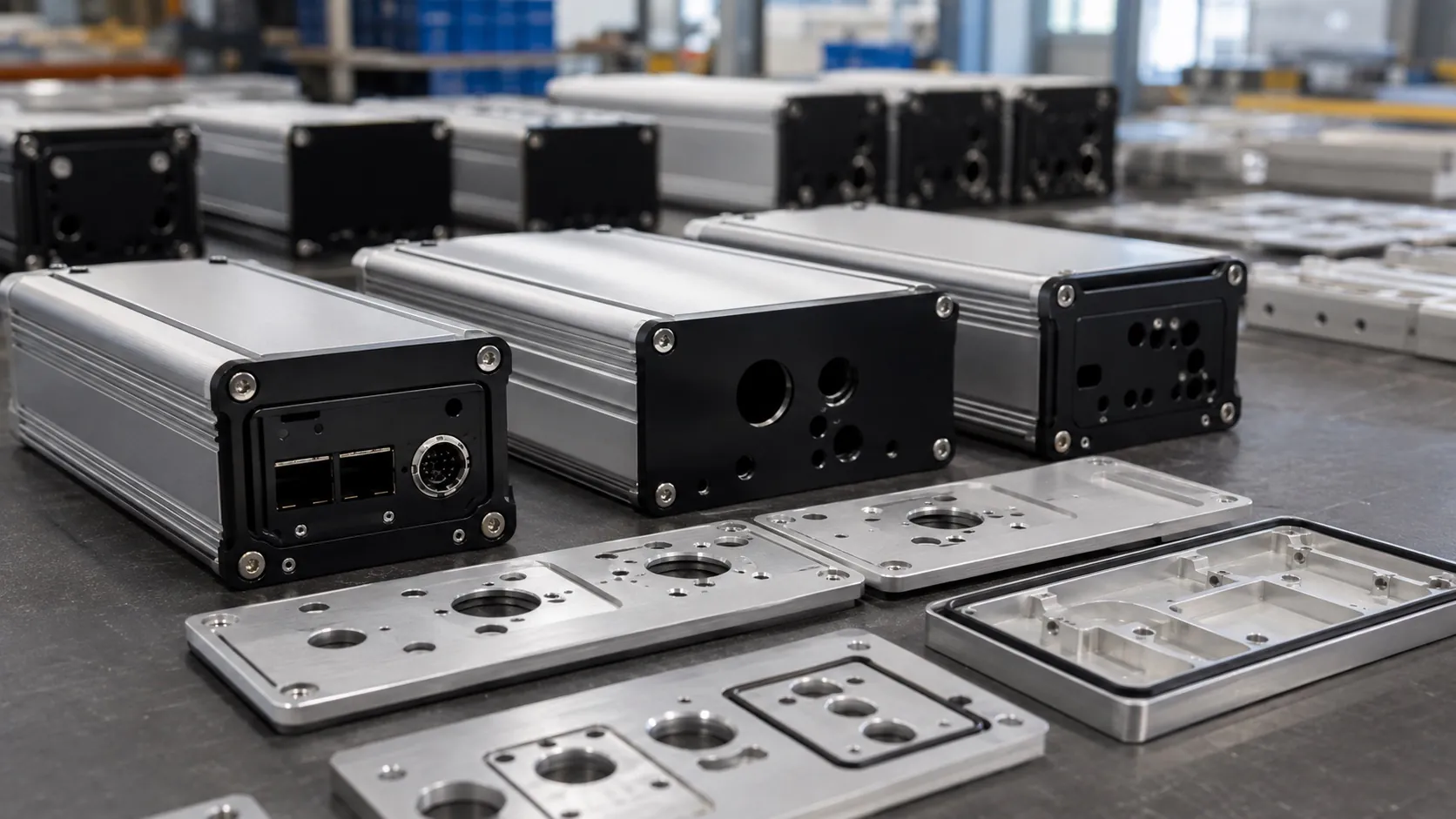
I like standard extrusion plus CNC end plates for many small-batch electronics. This route keeps the body stable and lets engineers change panels without new tooling. It is useful for gateways, controllers, instruments, sensor modules, and test devices.
When Jeff sends a project, I want the STEP file, 2D drawing, PCB outline, connector list, finish requirement, quantity, and schedule. Our team can then check CNC aluminum enclosure machining details and reply with practical comments.
Small-batch production needs flexible manufacturing.True
This is true because early product versions change. CNC panels allow changes without rebuilding the whole enclosure concept.
Conclusion
CNC machined end plates decide whether a custom aluminum enclosure assembles smoothly. Engineers should check connectors, tolerances, sealing, finish, marking, and lead time before small-batch production.