Edge AI Aluminum Enclosure: How Can Engineers Control Heat, EMC, and IP67 Protection?
Edge AI devices run hot. Sealed outdoor boxes make heat worse. I use an edge AI aluminum enclosure to protect electronics and move heat safely.
An edge AI aluminum enclosure should combine heat paths, IP67 sealing, EMC contact, CNC connector cutouts, and suitable anodizing. The best design protects the PCB without slowing prototype changes.
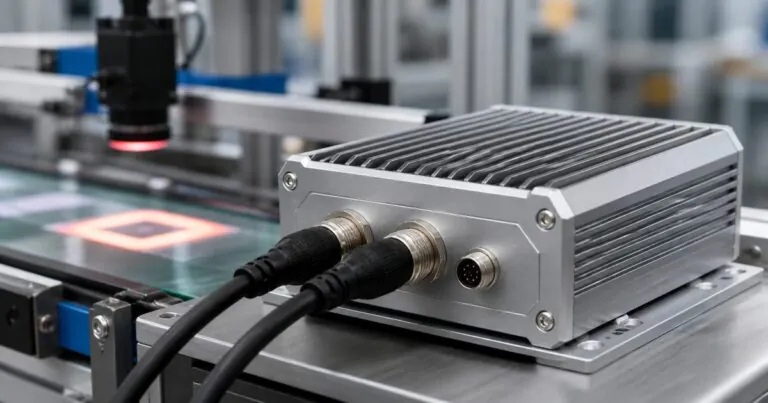
%edge AI aluminum enclosure with CNC machined heat dissipation fins and IP67 sealing
I see more product teams putting AI processors near sensors, cameras, motors, and outdoor control points. This creates a difficult enclosure question. The box must be compact, sealed, strong, and easy to customize. It must also help the electronics pass real use conditions, not only look good in CAD.
Table of contents
- 1. How Should an Edge AI Aluminum Enclosure Manage Heat?
- 2. How Can IP67 Sealing and EMC Shielding Work Together?
- 3. How Can CNC Customization Reduce Prototype Risk?
- Conclusion
1. How Should an Edge AI Aluminum Enclosure Manage Heat?
AI modules create heat. A sealed box traps that heat. A good aluminum enclosure turns the case into part of the thermal path.
An edge AI aluminum enclosure should move heat from the processor or power module to the aluminum wall through pads, mounting bosses, heat spreaders, or external fins.
%edge AI aluminum enclosure thermal path with heat pads and aluminum wall cooling
Start With the Heat Source
I always ask engineers where the main heat comes from before I discuss the enclosure shape. In many edge AI devices, the hottest parts are the AI module, modem, power conversion area, or LED driver. If these parts sit in the center of a PCB with only air around them, the enclosure cannot do much. The heat must have a clear bridge to the aluminum body.
Aluminum is useful because it has much better thermal conductivity than most plastics. The Aluminum Association explains that aluminum is valued for lightweight strength, corrosion resistance, and useful thermal properties. This is why I often suggest custom aluminum enclosure solutions when the device needs passive cooling and outdoor strength.
| Heat Problem | Enclosure Design Choice | Engineering Note |
|---|---|---|
| Hot AI processor | Add a thermal pad to the enclosure wall | Keep compression controlled |
| Small sealed volume | Use thicker contact areas or external fins | Check available surface area |
| Power module heat | Mount the module near the base or side wall | Reduce long heat travel |
| Outdoor sunlight | Use surface finish and placement carefully | Test worst-case ambient temperature |
In prototype projects, I prefer to keep the first housing flexible. CNC machining can add small bosses, flat heat contact pads, and fin features after Jeff confirms the PCB layout. If the first test shows a hot spot, we can adjust the inner pocket, increase the wall thickness near the processor, or add a machined heat spreader.
Heat design should not wait until the end. If the enclosure drawing only shows outside size and connector holes, the supplier may miss the real thermal function. I ask customers to mark heat source locations in the 3D file. This small step helps us machine the right contact surfaces and avoid a late redesign.
Edge AI heat needs a direct path to the aluminum wall.True
This is true because I see the same pattern in real enclosure projects. A small design note can prevent a larger prototype delay.
2. How Can IP67 Sealing and EMC Shielding Work Together?
Waterproof sealing needs compression. EMC shielding needs electrical contact. If anodizing covers every mating face, the enclosure may seal well but shield poorly.
IP67 and EMC can work together when the enclosure keeps a gasket compression path and also keeps selected conductive contact areas for grounding continuity.
%IP67 aluminum enclosure with EMC shielding contact zones and gasket groove
Separate the Seal Path From the Ground Path
Many engineers ask for IP67, anodizing, and EMC shielding in the same project. This is possible, but the drawing must be clear. The sealing path and the grounding path are related, but they are not always the same surface.
The IEC explains that IP ratings describe protection against solids and liquids, and IP67 includes dust-tight protection and temporary immersion protection under defined test conditions. You can read the basic IP code explanation from the IEC IP ratings guide. This rating does not automatically prove long-term outdoor corrosion resistance, condensation control, or EMC performance.
| Requirement | Common Risk | Better Design Practice |
|---|---|---|
| IP67 sealing | Uneven gasket pressure | Machine a clean groove or flat seal face |
| EMC shielding | Insulated anodized joints | Mask contact zones or use conductive treatment |
| Cable entry | Leaks around connectors | Use matched waterproof glands or sealed connectors |
| Field service | Gasket damage after opening | Choose durable gasket material and screw spacing |
Anodizing helps corrosion resistance and appearance, but it forms an insulating oxide layer. For EMC-sensitive products, I often suggest selective masking on internal contact surfaces. In some cases, engineers may also consider conductive gaskets or conversion coating. The right choice depends on the test target, product environment, and cost.
For waterproof aluminum enclosures, I want Jeff to define the real test condition early. Will the enclosure be tested with cable glands installed? Will blanking plugs be used? Will the device be opened in the field? These details change the sealing structure.
EMC also depends on screw spacing, joint flatness, coating thickness, and connector grounding. A beautiful anodized box can still fail if the lid has poor metal contact. This is why I ask for EMC needs before surface treatment, not after samples are finished.
IP67 sealing and EMC contact need separate but coordinated paths.True
This is true because I see the same pattern in real enclosure projects. A small design note can prevent a larger prototype delay.
3. How Can CNC Customization Reduce Prototype Risk?
Prototype schedules change quickly. A wrong connector cutout can stop assembly. CNC customization lets engineers update panels, bosses, and holes without new tooling.
CNC customization reduces prototype risk by keeping connector layouts, PCB mounts, sealing grooves, and heat contact surfaces adjustable during small-batch development.
%CNC customized aluminum enclosure prototype with connector cutouts and PCB mounting bosses
Use CNC Where the Design Still Changes
In real projects, the enclosure drawing often changes after the first PCB test. A camera connector moves. A USB opening becomes larger. An antenna position changes because the signal is weak. A customer adds a reset button, a SIM slot, or an M12 connector. These are normal prototype changes.
For this reason, I like standard extrusion plus CNC machined panels for many compact edge devices. The extrusion gives a stable aluminum body. The CNC end plates give fast changes. This approach can shorten development time because Jeff does not need a new mold for every port update. It also helps small-batch production because the same base enclosure can support different product versions.
| Prototype Change | CNC Response | Benefit |
|---|---|---|
| Connector moves 2 mm | Update panel machining file | Avoid new enclosure tooling |
| PCB height changes | Adjust standoff height or boss position | Improve assembly fit |
| Heat test fails | Add contact pad or fin area | Improve passive cooling |
| IP test leaks | Refine groove, screw layout, or gland hole | Reduce retest waste |
When customers send files for CNC aluminum enclosure machining, I check more than hole size. I also check edge distance, tool access, screw clearance, gasket space, and whether the connector nut can be tightened during assembly. These small details can decide whether a prototype feels smooth or painful.
EMC and radio behavior also matter for edge AI devices. The FCC has guidance about radio frequency devices and equipment authorization through its equipment authorization resources. If the device has wireless modules, Jeff should plan antenna placement early. Aluminum blocks RF signals, so the design may need external antennas, plastic windows, or isolated antenna areas.
Good CNC customization is not only cutting holes. It is supplier communication. I prefer to return clear 2D and 3D comments within 24 hours when possible. This helps engineers protect their schedule and avoid surprises during sample assembly.
CNC customization protects prototype schedules when connector layouts change.True
This is true because I see the same pattern in real enclosure projects. A small design note can prevent a larger prototype delay.
Conclusion
An edge AI aluminum enclosure works best when heat, IP67 sealing, EMC contact, CNC machining, anodizing, and lead time are planned together from the first prototype.