
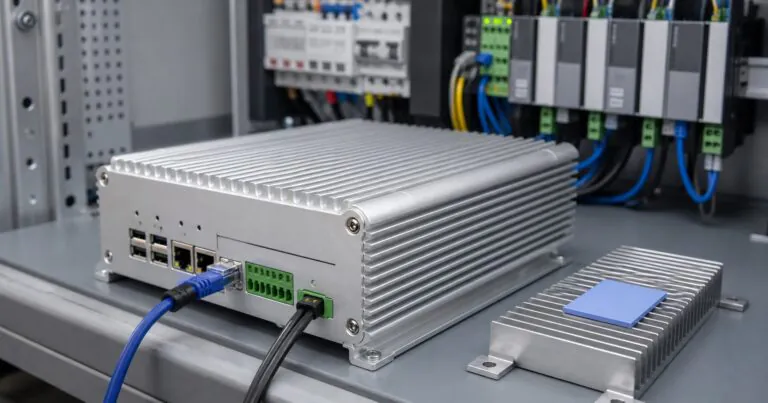
Fanless Edge Controller Aluminum Enclosure: How Can Engineers Design Passive Cooling Without Vents?
Compact edge controllers generate heat. Sealed boxes trap that heat and shorten component life. A fanless edge controller aluminum enclosure must guide heat into the metal body.
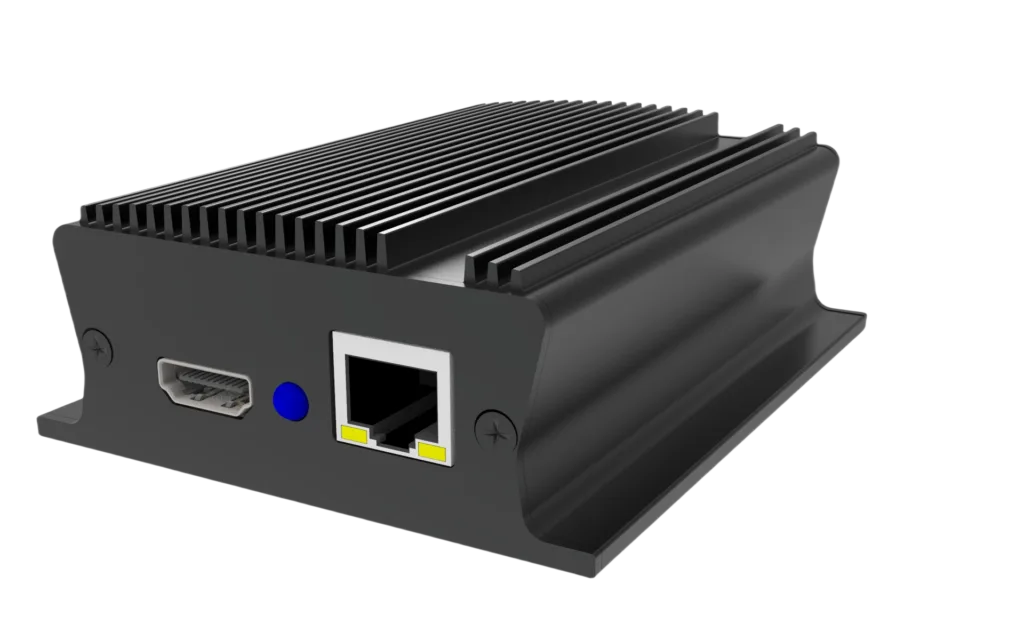
A fanless edge controller aluminum enclosure uses aluminum walls, direct thermal contact, CNC-machined panels, and planned mounting surfaces to move heat away without vents or fans.
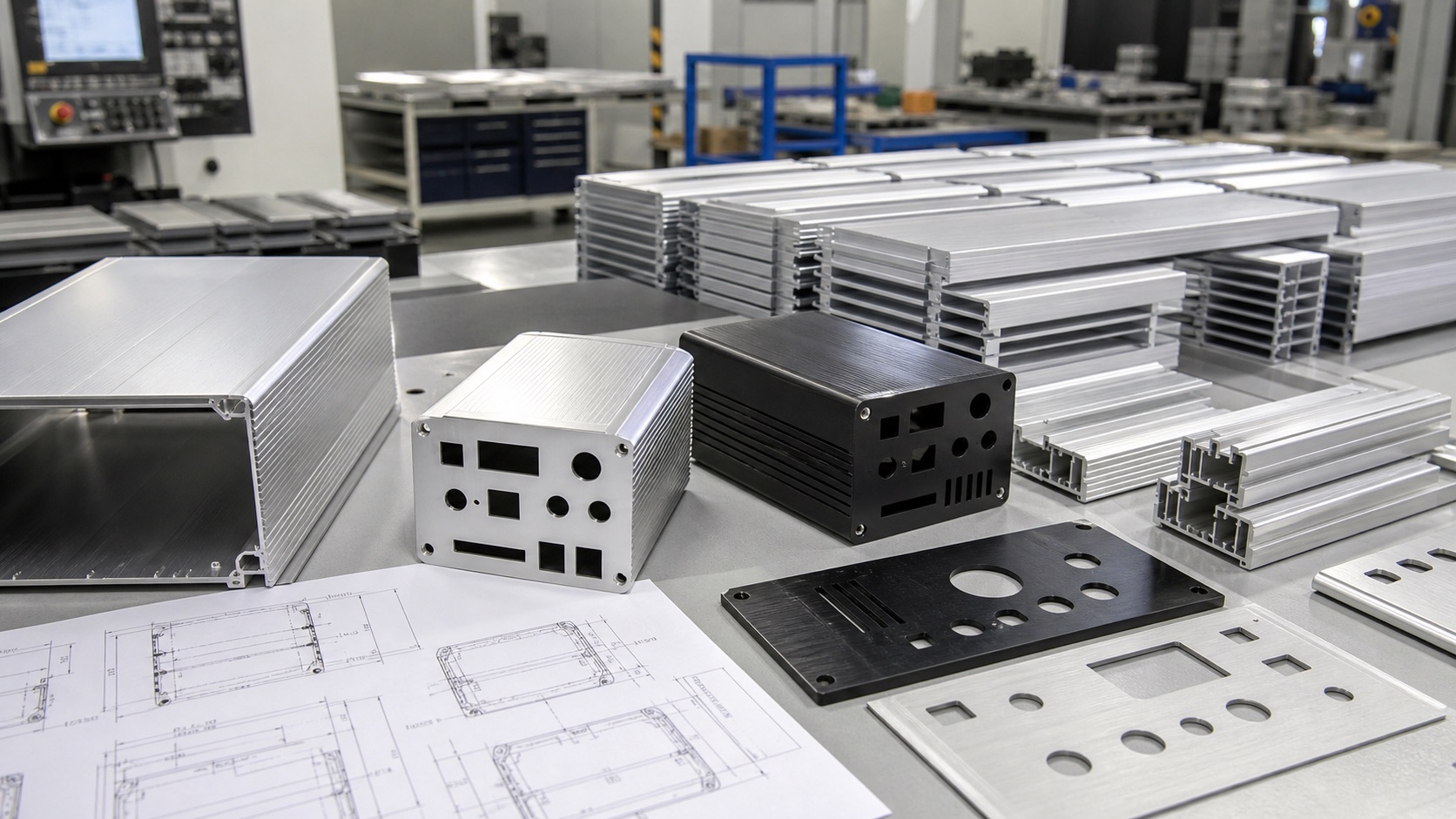
I see more engineers building compact edge devices for factories, machine tools, logistics systems, and outdoor control cabinets. The trend is clear. More processing is moving closer to sensors and machines, but the enclosure still has to stay sealed, quiet, and reliable. That is why passive cooling is no longer a small detail. It is part of the enclosure design from the first drawing.
Why Does A Fanless Edge Controller Aluminum Enclosure Need A Planned Heat Path?
Many teams place hot chips inside sealed housings. The heat stays inside and creates field failures. A planned heat path turns the enclosure into a heatsink.
A fanless edge controller aluminum enclosure needs a planned heat path because heat must move from chips to the aluminum body, then from the body to outside air.
Start With The Hot Components
When I review a fanless edge controller project, I first ask where the processor, power IC, wireless module, and voltage regulator are located. These parts usually decide the thermal risk. The aluminum shell can help a lot, but only when the heat can reach it.
Many engineers show me a nice 3D model with enough internal space, but the processor is floating in the middle of the PCB. In that case, the enclosure cannot work as a heatsink by itself. The team may need a thermal pad, a machined boss, a copper spreader, or a thicker aluminum wall near the heat source.
This is why early communication matters. A small change in PCB position can reduce CNC complexity and improve cooling. It can also reduce sample delays because the supplier does not need to guess the thermal contact area. For projects like edge gateways and industrial controllers, I usually suggest using custom aluminum enclosure solutions with clear 2D and 3D files from the start.
| Design Area | Common Mistake | Better Choice |
|---|---|---|
| Processor location | Processor sits far from the wall | Move it near a flat contact area |
| Thermal pad | Pad thickness is guessed | Confirm compression and tolerance |
| Wall thickness | Thin wall near hot chip | Add local thickness or a boss |
| Mounting | Enclosure hangs in still air | Use a metal rail or panel as extra heat path |
Siemens thermal design guidance also shows why enclosure thermal design should start early, because cooling choices affect layout, airflow, material, and product reliability.
How Can Extruded Aluminum Enclosures Improve Passive Cooling?
Flat boxes can struggle with heat. Small controllers often have limited surface area. Extruded aluminum enclosures can add fins, PCB slots, and stable heat paths.
Extruded aluminum enclosures improve passive cooling by increasing surface area, spreading heat along the profile, and giving PCBs repeatable slots for better thermal planning.
Match The Profile To The Heat Load
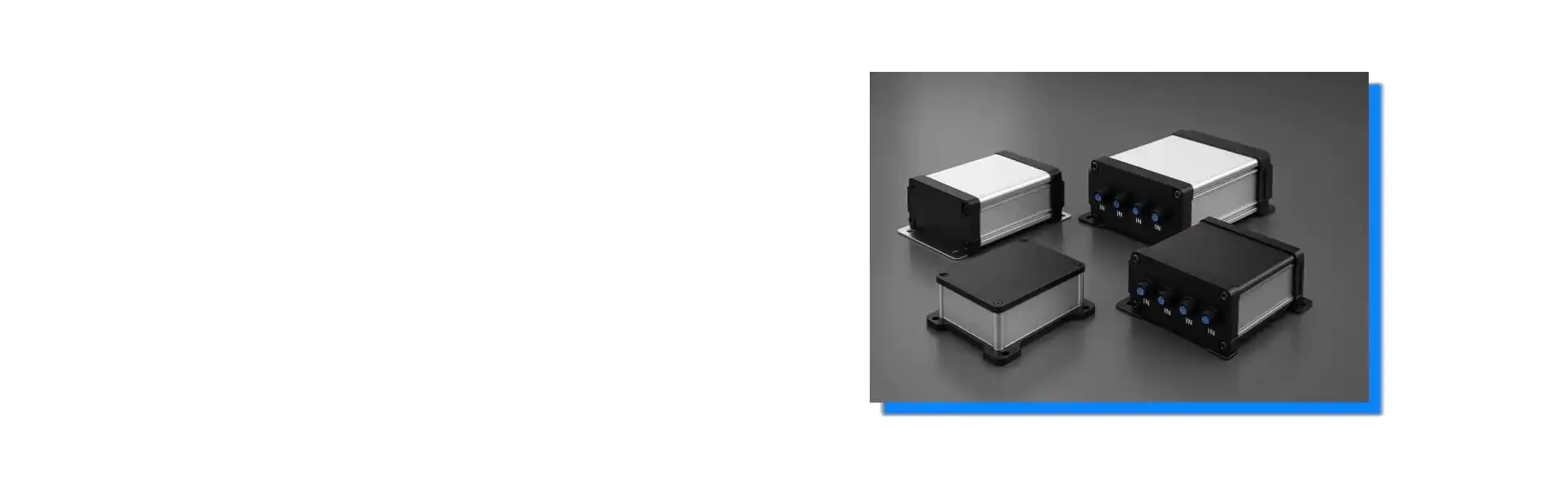
Extrusion is useful because the profile repeats along the length. This gives engineers a stable body size, stable PCB slots, and optional external fins. For small-batch edge controller projects, this can be faster than making a new die-cast housing. The end plates can be CNC machined for connectors, LEDs, antennas, and mounting holes.
I do not tell every customer to choose the biggest fin profile. A tall fin may look strong, but it may not fit inside a cabinet. It may also collect dust if the device is mounted in a poor direction. I prefer to ask about installation first. Will the controller sit on a DIN rail, a machine frame, or an outdoor box wall? Will air move naturally across the fins? Will the hot surface face another hot device?
For many projects, an extruded aluminum enclosure with a clean internal contact point is enough. For higher power boards, we may combine the extrusion body with a machined heat block or a thermal pad stack. The goal is not only lower temperature. The goal is repeatable assembly.
| Profile Choice | Best Use | Design Note |
|---|---|---|
| Smooth extrusion | Low-power controller | Good for clean appearance and easy marking |
| Finned extrusion | Processor or power module heat | Check fin direction during installation |
| Thick side wall | Direct thermal contact | Good for thermal pads or machined bosses |
| Internal PCB slots | Repeatable board position | Helps avoid tolerance mismatch |
Aluminum is often selected for enclosures because it has useful thermal conductivity and low weight. Basic thermal property references, such as Engineering ToolBox aluminum data, can help engineers compare material behavior before detailed testing.
How Can Engineers Keep IP Protection Without Adding Vents?
Engineers sometimes add vents to solve heat. Vents can weaken sealing and invite dust or moisture. Better passive design keeps the enclosure sealed.
Engineers can keep IP protection without vents by using aluminum conduction paths, sealed connectors, gaskets, controlled screw torque, and CNC-machined flat sealing surfaces.
Treat Sealing And Heat As One Design Problem
In real projects, IP protection and heat dissipation often fight each other. If an engineer opens vents, heat may escape, but water and dust protection becomes harder. If the enclosure is fully sealed, the internal temperature may rise. A good fanless edge controller aluminum enclosure must balance both.
I usually start with the sealing line. The gasket groove, end plate flatness, screw position, and cable gland location must be clear. Then I look at the thermal contact points. A hot processor may need contact with the top cover, while the cable connectors need the front panel. These features must not compete for the same space.
For IP67 or IP68 goals, the enclosure should be designed around the test condition, not only around the label. IEC 60529 is the official standard for ingress protection classification. The exact test plan should be confirmed with the customer, because IP68 conditions can vary by depth and time. NI enclosure selection guidance also reminds engineers to consider temperature, cable entry, clear space, and enclosure material together.
| Requirement | Risk If Ignored | Practical Check |
|---|---|---|
| Gasket compression | Leakage or gasket damage | Confirm groove size and screw torque |
| Connector sealing | Water path through panel | Use rated connectors and flat panel surfaces |
| Thermal pad contact | Poor heat transfer | Check tolerance stack before prototype |
| Surface finish | Poor sealing or corrosion risk | Use suitable anodizing and protect sealing faces |
At PUMAYCASE, I often help customers combine waterproof aluminum enclosures with CNC aluminum enclosure machining so the sealing surface, connector holes, and heat contact areas are made by one supplier. This reduces mismatch and saves time during prototype changes.
Conclusion
A fanless edge controller aluminum enclosure works best when heat path, IP sealing, CNC machining, anodizing, and lead time are planned together from the first design.