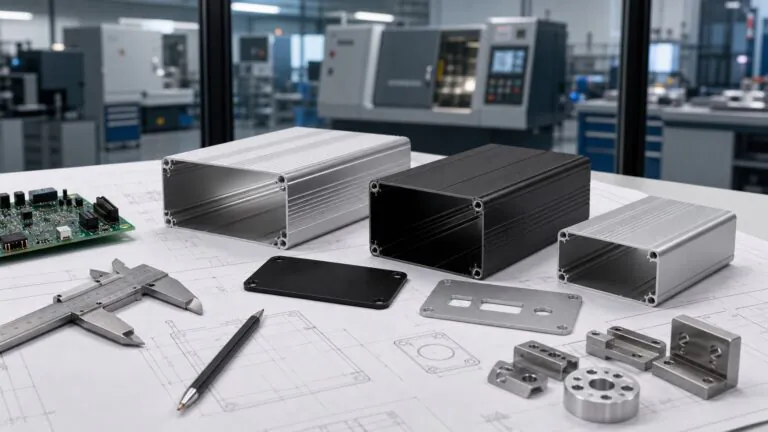
A request such as “we need an aluminum box for this PCB” can start a conversation, but it cannot support a comparable production quotation. Missing dimensions, interfaces, finish requirements, or project-stage information force both buyer and supplier to make assumptions that may later change the enclosure route, price, or sample scope.
For a custom aluminum enclosure quote, prepare enough information to define fit, machining, appearance, environment, and supply expectations. The package does not need to be perfect at the first contact, but it should clearly separate confirmed requirements from items that still need engineering review.
Why Does RFQ Completeness Affect the Quotation?
An RFQ is useful when it lets a supplier identify the enclosure platform, required operations, open technical questions, and commercial scope. More files do not automatically create clarity; the information must be consistent and tied to a controlled revision.
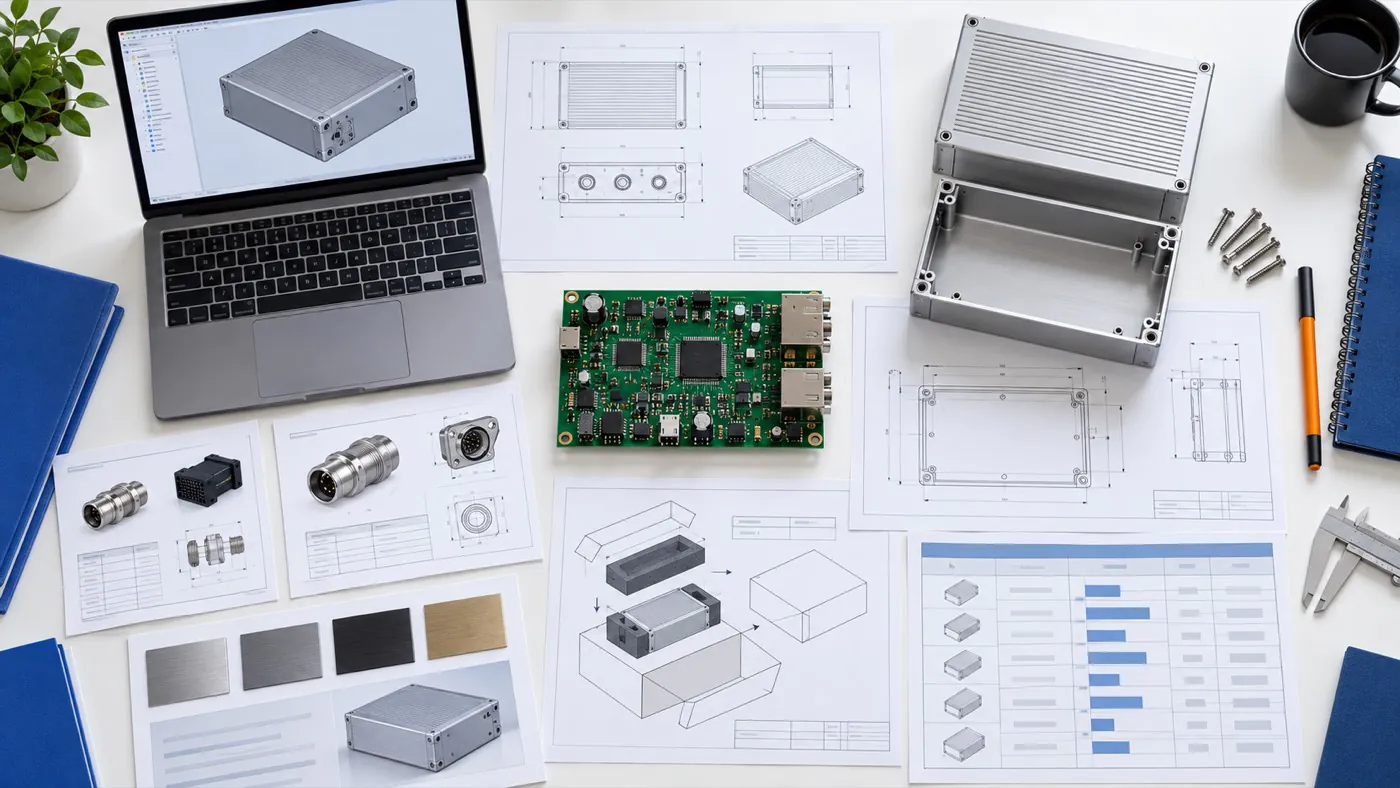
A consistent RFQ package lets suppliers evaluate the same scope and assumptions.
| RFQ condition | Likely quotation result | Buyer action |
|---|---|---|
| Requirements are controlled and consistent | Supplier can define a specific manufacturing route and assumptions | Compare scope as well as price |
| Some design items are open | A budgetary or conditional quotation may be appropriate | Mark each open item and decision owner |
| Files conflict or key interfaces are missing | Pricing and feasibility remain uncertain | Resolve revision and interface questions first |
- State the quotation purpose. Tell the supplier whether you need an early budget, a prototype quotation, or a production-ready offer.
- Label confirmed and provisional inputs. This prevents an early preference from being treated as a released requirement.
- Use one revision package. A PDF, STEP model, connector list, and artwork should describe the same enclosure version.
- Request explicit assumptions. If the supplier must estimate a material, finish, accessory, or process, that assumption should appear in the quotation.
Statement: Sending more files always produces a more accurate enclosure quotation.
Answer: False
Explanation: Accuracy depends on consistent, relevant, revision-controlled information rather than file quantity alone.
What Product and PCB Information Should Be Included?
Start with the product envelope and the PCB assembly because these define the usable internal space. The supplier needs both nominal dimensions and the clearances that allow the customer to install boards, connectors, cables, and fasteners.
| Design input | Information to provide | Enclosure decision affected |
|---|---|---|
| PCB assembly | Board outline, mounting holes, maximum component heights, and keep-outs | Internal width, height, slots, and standoffs |
| Product envelope | Maximum external size and restricted areas | Profile or housing selection |
| Installation | Desktop, wall, panel, rack, rail, machine, or other mounting method | Flanges, brackets, fasteners, and orientation |
| Service access | Which panels open and how often | Closure layout and customer assembly access |
- Provide the populated PCB envelope. Bare-board length and width omit component height, connector projection, and cable space.
- Show mounting relationships. Identify PCB holes, slots, standoffs, rails, internal brackets, and external mounting points.
- Allow access for customer assembly. Include tool paths, screw access, connector mating space, and a practical order of installation.
- Identify hard limits. Mark dimensions that cannot change because of equipment layout, adjacent parts, or an established product platform.
If the mechanical design is still open, PCB data can support an initial search among existing profiles or standard housings. A match is possible only when the section, length range, closure, and interface layout suit the project.
Statement: Bare PCB length and width are sufficient to select an enclosure.
Answer: False
Explanation: Component height, connectors, cables, mounting features, tolerances, and assembly access also determine the required internal space.
Which Drawings and Interface Details Matter Most?
The quotation package should describe geometry in both a reviewable and a manufacturable form. A dimensioned 2D drawing controls requirements, while 3D data and interface datasheets help identify interference and machining constraints.
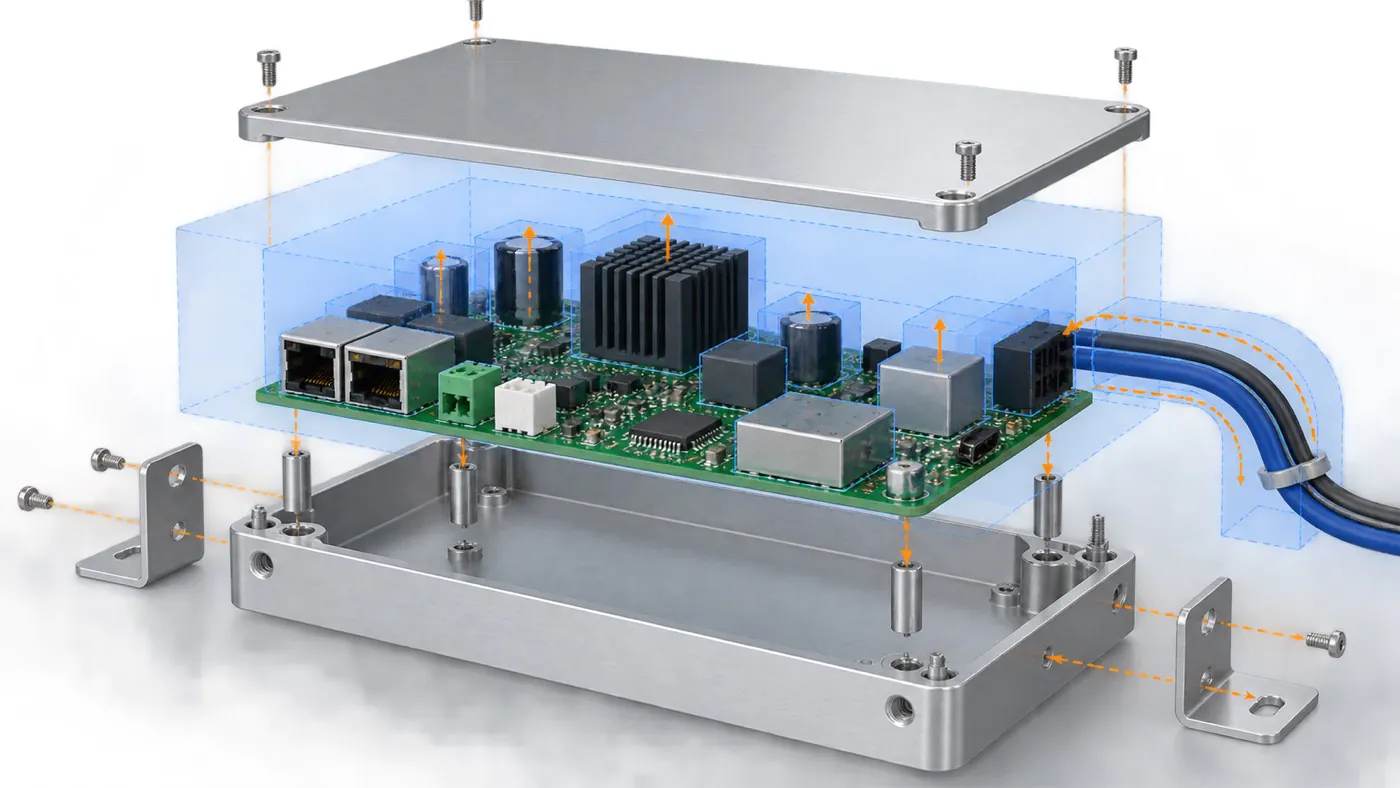
Board geometry, mounting references, and interface locations should be connected in the quotation package.
| File or record | Main use | Important control |
|---|---|---|
| Dimensioned PDF | Dimensions, datums, tolerances, threads, notes, and inspection | Revision and units |
| STEP/STP model | Geometry, fit, and machining review | Must match the released 2D drawing |
| DXF/DWG profile | Panel cutouts or laser/CNC geometry | Scale, origin, and revision |
| Connector datasheet | Cutout, hardware, panel thickness, and seal details | Exact manufacturer and part number |
| Vector artwork | Logo, legends, symbols, and product identification | Size, color, position, and revision |
- Dimension openings from defined datums. Consistent origins reduce interpretation differences between programming and inspection.
- Identify every secondary feature. Threads, countersinks, counterbores, corner radii, and sealing lands affect operations and inspection.
- Attach interface part numbers. A name such as “M12 connector” is not enough to define a panel cutout or mounting hardware.
- Mark function-critical dimensions. Tight tolerances should follow fit, alignment, sealing, or thermal needs rather than being applied to every feature.
Statement: A 3D model automatically replaces the need for controlled dimensions and manufacturing notes.
Answer: False
Explanation: A model helps review geometry, but the quotation and inspection scope still need controlled requirements and notes.
How Should Finish, Marking, and Environment Be Specified?
Finish and marking are part of the manufacturing route and acceptance criteria. The RFQ should connect appearance choices with exposure, electrical contact, sealing, wear, and brand requirements.
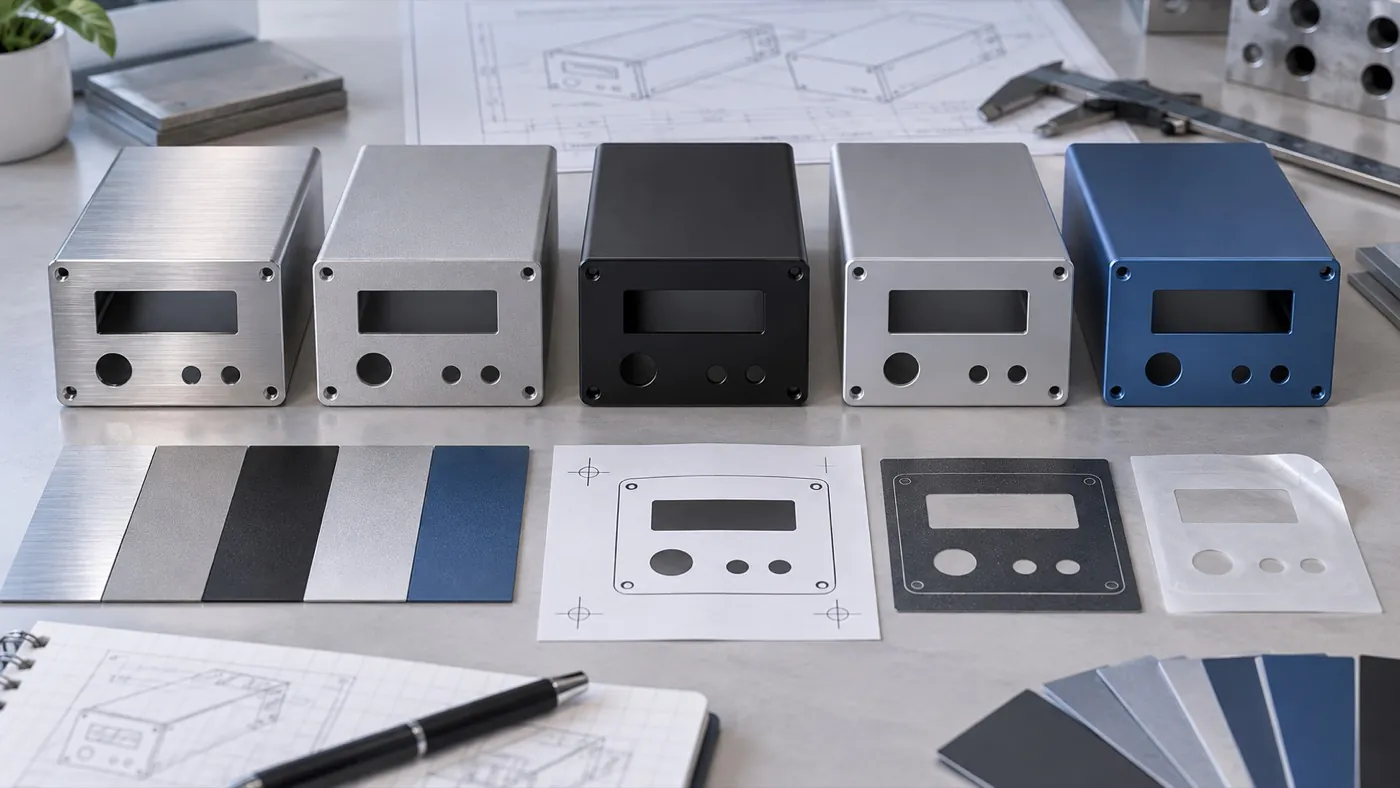
Define appearance, marking, and use conditions clearly enough for project-specific process review.
| Requirement | Useful information | Question to resolve |
|---|---|---|
| Surface finish | Brushing, sandblasting, anodizing, or powder-coating preference | Which surfaces and acceptance sample apply? |
| Color and texture | Reference, gloss/texture expectation, and visible surfaces | How will variation be judged? |
| Marking | Vector artwork, position, color, and method preference | Silk screen or laser marking suitability? |
| Environment | Indoor/outdoor use, water, dust, UV, salt, chemicals, and temperature conditions | Which material, seal, finish, and validation need review? |
- Define visible surfaces. Cosmetic expectations can differ between a front panel, an internal face, and a hidden mounting surface.
- Reserve functional contact areas. Grounding or thermal interfaces may need controlled masking or post-finish preparation.
- Treat an IP level as a verification target. The complete enclosure configuration, including openings and installed interfaces, needs project-specific review.
- Provide final artwork early. Logo size, port legends, color count, and location affect process planning and inspection.
PUMAYCASE can support brushing, sandblasting, anodizing, powder coating, silk screen printing, and laser marking. The suitable process combination and acceptance standard must be confirmed for the selected product and application.
Statement: Choosing an anodized color fully defines the surface-finish requirement.
Answer: False
Explanation: Surface preparation, texture, visible areas, functional masking, artwork, and acceptance references may also need definition.
What Should Quantity and Project Stage Tell the Supplier?
Quantity should be presented as a project scenario, not as one isolated number. Prototype, pilot, production, and repeat-order expectations can affect setup, process selection, packaging, and the questions that must be resolved before release.
| Project stage | Information to state | Expected quotation scope |
|---|---|---|
| Prototype | Required pieces, open design items, finish level, and validation purpose | Sample route and stated limitations |
| Pilot or market validation | Target range, approved sample status, and likely changes | Small-batch controls and change conditions |
| Production/replenishment | Order quantity, forecast assumptions, packaging, and revision control | Repeatable supply scope |
- State current and expected quantities. Separate the immediate order from forecasts so neither is mistaken for a commitment.
- Explain what the sample must prove. Fit, appearance, sealing, thermal contact, or another criterion may require different preparation.
- Identify the release gate. Say who approves drawings, samples, finishes, and later changes.
- Include packaging needs. Surface protection, labels, part separation, and custom packaging can affect the quoted scope.
There is no universal MOQ, sample quantity, price, or lead time for these projects. Each depends on the enclosure platform, machining, finish, marking, packaging, quantity, and validation requirements.
Statement: A forecast quantity should be treated as a confirmed purchase quantity.
Answer: False
Explanation: Forecasts help planning, but the RFQ should distinguish expected demand from the quantity authorized for quotation or purchase.
How Can Buyers Make Supplier Quotations Comparable?
Buyers should compare the same technical baseline, included operations, exclusions, and verification responsibilities. A lower unit price may describe a different revision, finish, accessory set, inspection plan, or packaging scope.
| Comparison item | Confirm in each offer | Risk if omitted |
|---|---|---|
| Manufacturing basis | Existing enclosure/profile, modified platform, tooling, or fully machined route | Offers may describe different solutions |
| Included scope | Machining, finish, marking, accessories, packaging, and samples | Apparent price gaps may be incomplete scope |
| Acceptance and records | Drawing revision, inspection points, sample approval, and test responsibility | Production release may be ambiguous |
| Commercial assumptions | Quantity, validity, logistics basis, and change conditions | Later revisions may cause unexpected requoting |
- Issue one RFQ baseline. Give each supplier the same controlled files and clarification responses.
- Compare exclusions explicitly. Note customer-supplied components, external testing, certification, and electronics assembly responsibilities.
- Check revision control. The quoted drawing and the released purchase drawing must be traceable.
- Separate enclosure supply from finished-device performance. PUMAYCASE prepares customized enclosures but does not provide PCB installation, wiring, box-build, or default system certification.
Quotation comparison should expose uncertainty rather than hide it. Open technical items can remain open if every offer states how they affect scope and price.
What Should the Final RFQ Package Contain?
The final package should let engineering, procurement, and the supplier refer to the same requirements without reconstructing decisions from email history. A short cover sheet can index the controlled files and list every open item.
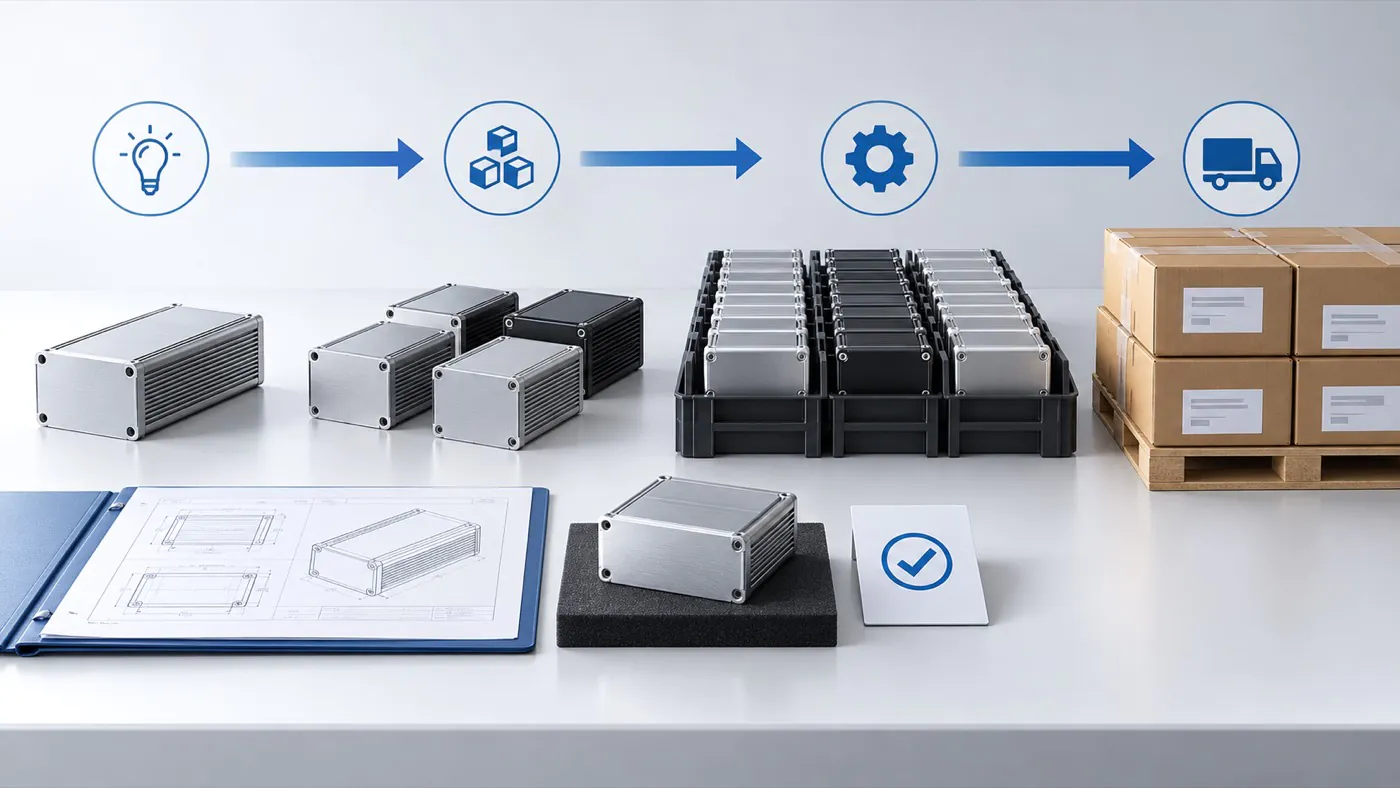
Approved files, sample decisions, and revision control support pilot production and repeat orders.
- Product definition: PCB envelope, target external size, installation method, service access, and application.
- Controlled design files: 2D drawing, 3D model when available, interface datasheets, and artwork.
- Manufacturing requirements: Preferred enclosure route, machining, finish, marking, accessories, and packaging.
- Commercial and validation scope: Current quantity, stage, forecast context, sample purpose, acceptance criteria, and responsibilities.
PUMAYCASE can use this package to evaluate an existing enclosure or profile first, then define the necessary machining, surface treatment, and marking. If an existing solution cannot meet the space, interface, mounting, or protection requirements, tooling or another custom route should be assessed.
Conclusion
A useful custom aluminum enclosure quote starts with a consistent package covering the populated PCB, product envelope, mounting, interfaces, drawings, finish, marking, environment, quantity, stage, validation, and packaging. Buyers should distinguish confirmed requirements from open items and compare supplier assumptions as carefully as price. For a project review, send the controlled drawings, PCB and connector information, mounting method, finish, target quantity, and the questions that still require verification.