How to Choose the Right Aluminum Enclosure for Your Electronics Project
Choosing an aluminum enclosure is not only about finding a box that fits your PCB. The enclosure affects product protection, heat dissipation, installation, connector layout, appearance, service life, and manufacturing cost. For industrial electronics, a good enclosure should protect the internal components while making assembly and maintenance easier.
This guide explains the main factors engineers and buyers should review before selecting a standard or custom aluminum enclosure.
1. Confirm the Internal Space
Start with the size of your PCB, components, connectors, cables, and mounting hardware. The internal space should allow enough clearance for assembly and heat dissipation.
Check these details before requesting a quote:
- PCB length, width, and height
- Tallest component height
- Connector positions
- Cable routing direction
- Required mounting holes or internal brackets
- Space for screws, nuts, and assembly tools
If your product is still in development, send the enclosure supplier a STEP file, PDF drawing, or even a basic sketch. An experienced manufacturer can help match your design to an existing aluminum profile and reduce tooling cost.
2. Choose the Right Enclosure Structure
Aluminum electronic enclosures are available in several structures.
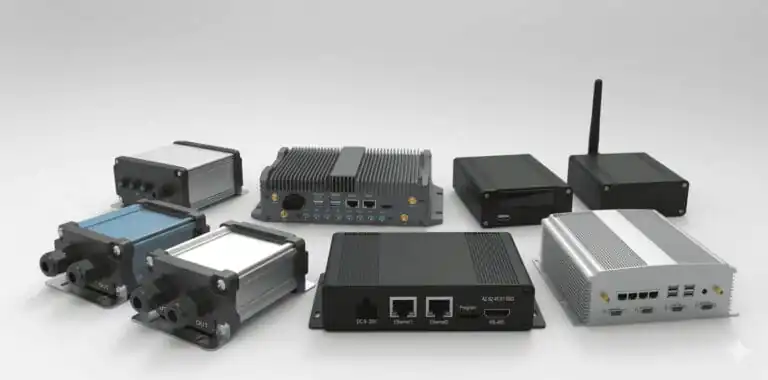
Extruded aluminum enclosures are widely used for PCB modules, power electronics, sensors, control devices, and communication products. They usually include an aluminum body with front and rear panels.
Split-body aluminum enclosures are useful when the internal assembly needs easier access from the top or side.
Flanged aluminum enclosures are suitable for wall mounting, machine installation, or fixed industrial equipment.
Heatsink aluminum enclosures help dissipate heat from high-power electronics such as amplifiers, power supplies, and control modules.
The best structure depends on how the product will be assembled, installed, cooled, and serviced.
3. Review the Operating Environment
The enclosure must match the environment where the device will be used.
For indoor electronics, a standard anodized aluminum enclosure may be enough. For outdoor or harsh industrial environments, you may need a waterproof or sealed enclosure with gaskets, cable glands, corrosion-resistant coating, and stronger wall thickness.
Consider:
- Indoor or outdoor use
- Dust, moisture, or water exposure
- Temperature range
- Chemical or coastal corrosion
- Vibration or mechanical impact
- Required IP rating
For outdoor electronics, review the complete sealing design rather than only the enclosure body. Cable entries, screws, gaskets, and assembly quality all affect waterproof performance.
4. Plan CNC Cutouts Early
Most electronic products need custom openings for connectors, displays, switches, LEDs, buttons, fans, cable glands, or ventilation slots. These details should be planned before production.
Accurate CNC machining helps ensure:
- Connectors align correctly
- Panels fit cleanly
- Assembly time is reduced
- The final product looks professional
- Rework and scrap are minimized
If possible, provide DXF drawings for panels and STEP files for the enclosure assembly. This helps the manufacturer check interference, hole positions, and machining feasibility.
5. Select the Surface Finish
Surface finish affects both appearance and durability.
Anodizing is a popular option for aluminum enclosures because it provides a clean metallic appearance and improved corrosion resistance.
Powder coating offers wider color options and a thicker protective layer, which can be useful for outdoor or branded products.
Brushing and sandblasting improve the texture and visual quality of the enclosure.
Laser engraving, silk screen printing, and UV printing can be used for logos, labels, port names, warning marks, and front panel graphics.
6. Consider Thermal Management
Aluminum is often chosen because it conducts heat better than plastic. For electronics with power components, heat dissipation should be considered early.
Useful design options include:
- Heatsink-style enclosure profiles
- Ventilation slots
- Thermal pads between components and the enclosure
- Thicker aluminum walls
- External fins
- Proper internal spacing
For power electronics, amplifiers, motor controllers, and communication equipment, the enclosure may become part of the thermal design.
7. Balance Standard Molds and Custom Design
A fully custom enclosure can be ideal, but it may require higher tooling cost and longer lead time. Many projects can save cost by starting with an existing aluminum enclosure mold and customizing the length, panels, cutouts, finish, and printing.
This is often the most efficient choice for prototypes, small batches, and OEM products that need fast development.
8. Prepare the Right Information for Quotation
To get an accurate quote, prepare:
- Enclosure dimensions or internal component size
- 2D or 3D drawings
- Required quantity
- Surface finish and color
- Cutout drawings
- Printing or logo requirements
- Waterproof, EMI, or thermal requirements
- Target sample and production schedule
The more complete the information, the faster the manufacturer can provide a practical solution.
Conclusion
The right aluminum enclosure should fit your electronics, protect them in the working environment, support thermal and assembly needs, and present your product professionally. By reviewing size, structure, environment, machining, finish, and production quantity early, you can reduce development risk and avoid costly redesigns.
PUMAYCASE provides standard and custom aluminum enclosures for industrial electronics, including CNC machining, anodizing, powder coating, printing, prototype samples, and production support.
Ready to discuss your enclosure project?
Send your drawing, sample photo, or enclosure dimensions to PUMAYCASE for a fast engineering review and quotation.